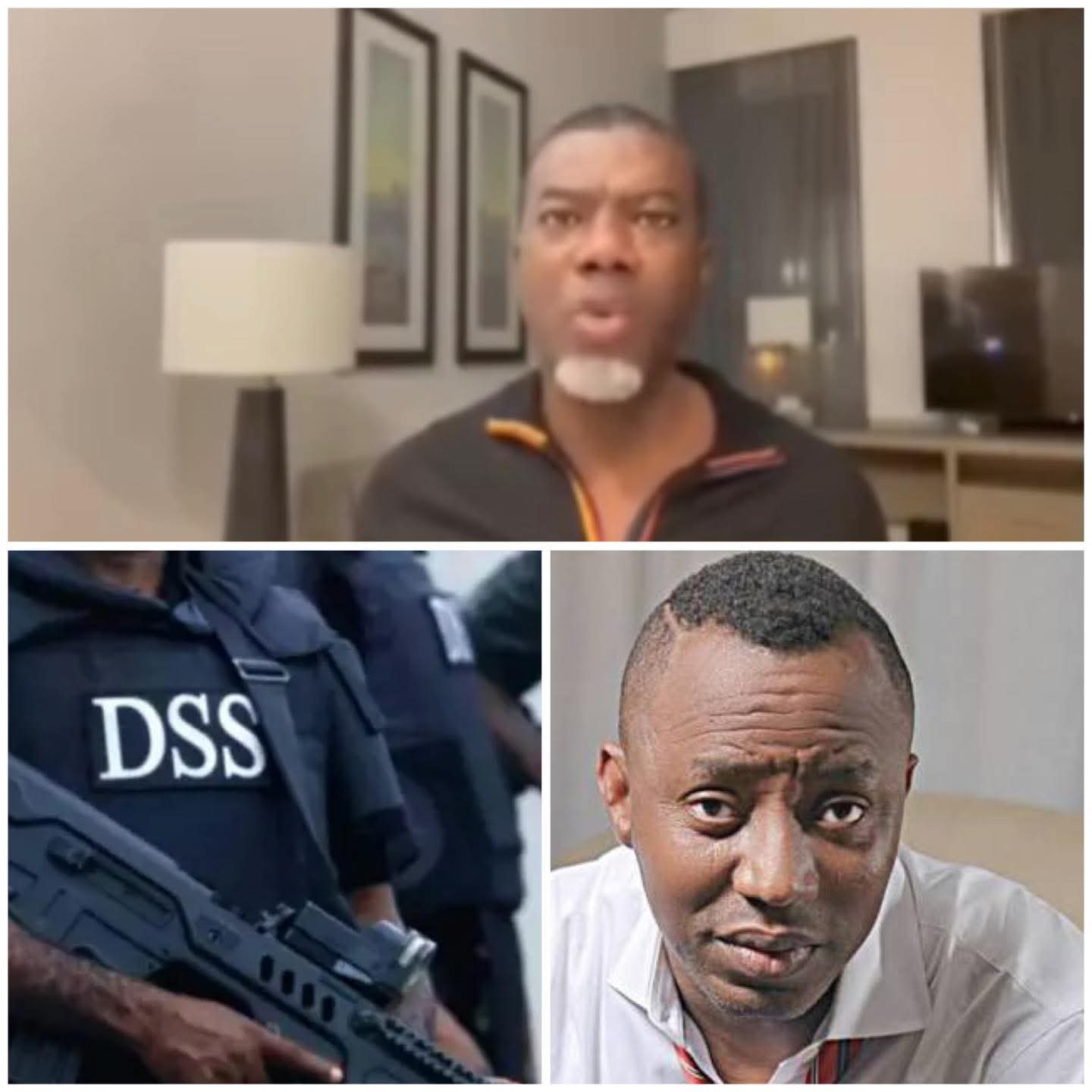
The trial of activist and former presidential candidate Omoyele Sowore took a dramatic turn on Tuesday at the Federal High Court in Abuja, as video evidence presented by the defence raised pointed questions about the Department of State Services’ (DSS) approach to criticism of President Bola Ahmed Tinubu.
Tension heightened during cross-examination when Sowore’s counsel, Marshal Abubakar, played video clips of former presidential aide Reno Omokri making harsh allegations against Tinubu on national television—remarks that, according to the defence, did not attract any known legal consequences.
The videos, tendered through a flash drive and admitted by the court, were played in open session as Cyril Nosike, a DSS operative and the prosecution’s first witness, watched. In one clip from a 2023 ARISE News interview, Omokri claimed he was in possession of court documents from the United States allegedly linking President Tinubu to drug-related offences.
“Bola Tinubu is a known drug lord. I have documents to prove it,” Omokri was heard saying in the broadcast.
Another video showed Omokri distancing himself politically from Tinubu, stating he would never align with him.
Abubakar used the footage to question what he described as selective enforcement by the DSS, asking why Omokri was later cleared for an ambassadorial appointment despite the televised remarks, while Sowore is being prosecuted for referring to the President as a “criminal” in an online post. Nosike told the court he could not explain the agency’s decision regarding Omokri.
Attempts by the prosecution, led by Akinlolu Kehinde (SAN), to block the admissibility of the videos were unsuccessful. Justice Mohammed Umar ruled that the clips were relevant and allowed them to be admitted as evidence.
Sowore is facing a two-count amended charge under the Cybercrimes Act, linked to a social media post dated August 25, 2025. The post followed President Tinubu’s public statement in Brazil that corruption had been eliminated under his administration.
According to testimony before the court, the DSS subsequently wrote to X (formerly Twitter) and Meta Platforms Inc., requesting the removal of the post and the suspension of Sowore’s social media accounts. The agency also directed Sowore to delete the content himself.
When the post remained online, the DSS initiated prosecution, alleging that the publication was capable of undermining public order and injuring the President’s reputation.
Further cross-examination exposed additional gaps in the prosecution’s case, as Nosike confirmed that the DSS neither obtained a statement from President Tinubu nor verified whether the President was aware of the post allegedly made against him.
Justice Umar adjourned proceedings to February 4, as the case continues to fuel wider debate over free speech, accountability, and the scope of state power in Nigeria’s democracy.



 Energy7 days ago
 Crime6 days ago
 Football7 days ago
 Business7 days ago
 Crime6 days ago
 Business7 days ago
 Business7 days ago