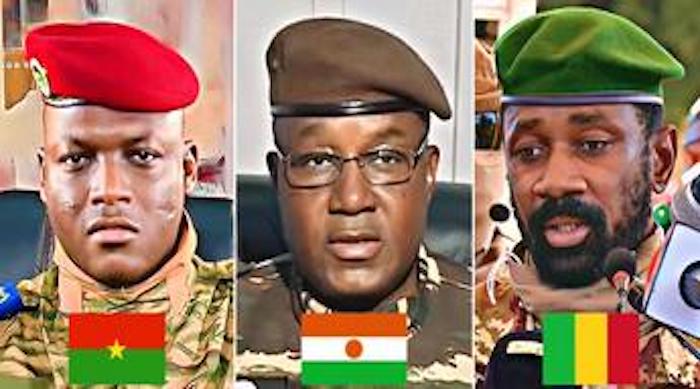
The just-concluded ECOWAS summit in Lagos was expected to chart a new course for regional integration and economic stability. But beneath the speeches and policy declarations, one issue overshadowed all others — the geopolitical rupture caused by the recent withdrawal of Mali, Niger, and Burkina Faso from the West African bloc.
For the first time since their coordinated exit earlier this year, the ECOWAS leadership faced the full weight of the consequences. The three countries, now part of the self-declared Alliance of Sahel States, have not only walked away from ECOWAS but are building parallel economic and security frameworks with strong backing from Russia and other non-traditional allies.
Diplomats and analysts alike noted that despite attempts to focus on trade, currency reform, and regional infrastructure, the absence of the Sahel trio loomed large over the two-day gathering.
“It was the elephant in the room,” said Dr. Ayo Bello, a regional affairs expert at the University of Lagos. “Every conversation about integration or security ran into the same wall — how do you achieve unity without three of the bloc’s most strategically placed states?”
Sources within the summit say several sessions behind closed doors were dedicated to contingency planning, including how to reroute trans-Sahel trade corridors, address border security risks, and mitigate the economic fallout of the split.
The security implications were a top concern. Since the withdrawal, coordination between ECOWAS military chiefs and their Sahelian counterparts has broken down. Joint operations against jihadist groups across the Mali-Burkina Faso-Niger belt have been halted, raising fears of a resurgence in extremist activity along vulnerable borders.
“Without joint intelligence and military frameworks, we’re seeing a widening security vacuum,” warned General Kabir Yusuf (rtd.), a former ECOWAS military liaison. “This benefits armed groups, not the people of the region.”
ALSO READ: New Power Play in the Sahel: Captain Ibrahim Traoré rises as Russia deepens its African footprint
The rise of Russia’s influence, particularly through military cooperation and resource deals with the Sahel trio, was also noted. Experts say Moscow’s presence has complicated ECOWAS’ traditional security and diplomatic leverage in the region.
Beyond security, the exit has disrupted trade flows. Goods that previously passed freely through Sahelian states are now subject to delays, higher tariffs, and rerouting. For landlocked nations, including ECOWAS members like Togo and Benin, this is already affecting export timelines and revenue projections.
ECOWAS officials at the summit acknowledged the impact, with calls for emergency infrastructure investments to create alternative routes through coastal and central corridors.
In the summit’s closing statement, ECOWAS reiterated its commitment to regional unity and left the door open for reengagement with Mali, Burkina Faso, and Niger — but on the bloc’s terms. No formal sanctions were announced, but sources say diplomatic backchannels remain active.
“We must preserve the vision of one West Africa,” said ECOWAS Chair and Nigerian President Bola Ahmed Tinubu in his closing remarks. “Disagreements can be resolved, but disintegration is a luxury we cannot afford.”
Still, analysts caution that without a new political formula that addresses the grievances of the Sahel governments — particularly around sovereignty, security, and foreign partnerships — the split may become permanent.
As the summit ends, one thing is clear: ECOWAS faces a critical inflection point. The road to regional unity is now more complicated, and the bloc’s response to the Sahel fracture will likely define its future relevance — or irrelevance — in West African affairs.



 Health6 days ago
 Energy6 days ago
 Latest6 days ago
 Trending Stories6 days ago
 Latest6 days ago
 Latest4 days ago
 Business1 week ago
 Latest5 days ago