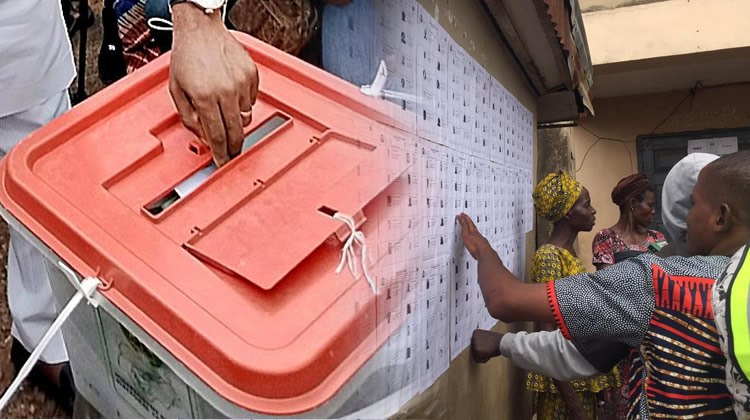
The recently concluded Lagos State local government election has sparked a new round of questions about the credibility of Nigeria’s grassroots democracy, following a disturbingly low voter turnout that saw most polling units deserted, ballot boxes barely filled, and many residents unaware that an election even held.
In a city of over 20 million people, the silence of ballot papers spoke louder than campaign slogans.
Deserted Polling Units, Disengaged Citizens
Across major local government areas like Surulere, Ikeja, Alimosho, Mushin, and Eti-Osa, polling units were largely empty from morning until the close of polls. Election observers and journalists documented widespread apathy, with some centers not recording more than 15 voters out of hundreds registered.
“I didn’t even know there was an election today,” said Ijeoma Nwankwo, a shop owner in Ajegunle. “Nobody came to tell us anything. We just went about our day.”
Many attributed the poor turnout to distrust in the electoral process, citing a belief that winners had already been predetermined, rendering their votes meaningless.
Credibility Under Scrutiny
Despite the clear lack of participation, the Lagos State Independent Electoral Commission (LASIEC) released results just hours after polls closed, declaring sweeping victories for candidates of the ruling All Progressives Congress (APC) across most of the 20 local government areas and 37 LCDAs (Local Council Development Areas).
Critics have questioned how such results were quickly compiled given the visible voter apathy and lack of transparency in collation processes.
“How can you declare landslide wins when most polling units were practically empty?” asked Taiwo Ajayi, a policy analyst. “This is no longer about winning or losing—it’s about whether the people even took part in the process.”
Local observer groups, including the Centre for Democracy and Development (CDD), also flagged the exercise for poor logistics, lack of voter education, and minimal security presence in some areas.
Polling Figures: A Missing Puzzle
While LASIEC released the names of winners, official polling figures by LGAs were noticeably absent from its website and press briefings. As of this report, attempts to obtain detailed turnout numbers per LGA were unsuccessful.
Unofficial reports estimated voter turnout in some areas to be as low as 5–7%, with entire polling stations recording less than 50 voters in constituencies with thousands of registered names.
ALSO READ: Why Nigeria’s election petition system is unconstitutional
This vacuum of data has further cast doubt on the integrity of the process, with civil society organizations urging LASIEC to publish polling unit-level results to validate its outcome.
What’s Next for Local Governance?
Despite the controversy, newly elected chairmen are expected to be sworn in later this month. But with such a weak public mandate, many question the legitimacy and moral authority these officials will wield over their communities.
“The local government system is supposed to be the closest to the people,” said Abiola Ogunleye, a community organizer in Agege. “But how do you lead people who didn’t even choose you?”
The Bigger Picture
Lagos’ local government elections are a microcosm of Nigeria’s broader electoral challenges—low trust, elite capture, weak institutions, and growing disinterest from the electorate. Without urgent reforms, analysts warn, the apathy witnessed may continue into higher-stakes elections in the future.
As 2027 draws closer, the question isn’t just who wins—but whether citizens still believe in the game at all.



 Football3 days ago
 Crime1 week ago
 Crime1 week ago

 Business1 week ago
 Latest1 week ago
 News1 week ago
 Latest1 week ago