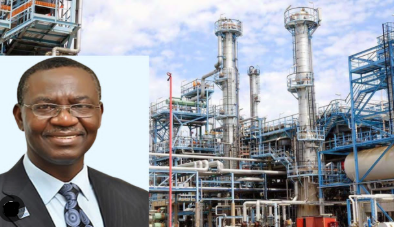
Professor Emeritus of Petroleum Economics at Louisiana State University, Prof. Wumi Iledare, has urged the Federal Government to place sustainable growth at the forefront of its agenda for Nigeria’s vital oil and gas industry.
Speaking to the press on Monday in Lagos, Iledare specifically called upon the Bola Tinubu administration to rigorously adhere to the provisions of the Petroleum Industry Act (PIA) 2021 and to maintain unwavering policy consistency to both attract and retain much-needed investors in the sector.
Prof. Iledare also stressed the importance of ensuring complete transparency in all oil transactions and refinery operations, advocating for greater accountability within the industry. He highlighted a pressing need for investment in human capital development, enhanced local content initiatives, and strengthened public engagement to truly foster comprehensive sector growth.
As President Bola Tinubu’s administration marks its second year in office, Iledare noted that public attention has increasingly shifted towards the performance of Nigeria’s crucial oil and gas sector. While acknowledging the administration’s efforts to reform and revitalize the industry, he underscored several ongoing and significant challenges.
ALSO READ :NiMet forecasts three days of thunderstorms and rainfall across Nigeria
“Nigeria’s crude oil production remains below its 1.8 million barrels per day (bpd) OPEC quota, fluctuating between 1.2 million and 1.4 million barrels per day,” Iledare explained.
He identified persistent problems such as rampant oil theft, widespread pipeline sabotage, inadequate upstream investments, and the slow implementation of the PIA as key factors continuing to limit the nation’s production potential.
In the downstream sector, Prof. Iledare pointed out that despite some improvements in local refining capacity, including the partial commencement of operations at the Dangote Refinery, Nigeria still heavily relies on imported refined petroleum products.
He further identified delays in rehabilitating state-owned refineries, inconsistent regulations for modular refineries, and the continued reliance on fuel imports as major obstacles to achieving affordable and widely available transportation fuel across the country.
“Over the past two years, structural challenges have been compounded by incomplete fuel subsidy reforms, which lacked adequate measures to protect the economy from inflationary effects,” he stated.
He lamented that although fuel subsidies were removed in 2023, inflation surged significantly without sufficient social safety nets to cushion the impact on citizens.
Iledare also expressed concern over the slow pace of reforms within regulatory bodies such as the Nigerian Upstream Petroleum Regulatory Commission (NUPRC) and the Nigerian Midstream and Downstream Petroleum Regulatory Authority (NMDPRA).
He noted that the ongoing depreciation of the Naira has further exacerbated the situation by increasing operational costs for industry players. “A coherent gas-to-power or clean energy roadmap has yet to be implemented,” Iledare emphasized, highlighting a critical gap in the nation’s energy strategy.
To effectively boost crude oil production, Prof. Iledare recommended that the government strengthen security partnerships with host communities and private operators.
He also stressed the necessity of implementing attractive fiscal incentives to draw in investments and resolving persistent joint venture funding bottlenecks, all of which he deemed essential actions to achieve the national target of three million barrels per day.
To improve fuel availability and affordability, Iledare called for additional policy measures, including the full operationalization of the Dangote Refinery with transparent supply chains.
He also urged the acceleration of existing refinery rehabilitation projects and the establishment of clear, stable regulations for private refineries.
While acknowledging the Tinubu administration’s vital reform efforts, Prof. Iledare cautioned that systemic issues continue to limit their overall impact.
He concluded by stating that with decisive, bold, and well-coordinated policy actions, Nigeria’s oil and gas sector possesses the immense potential to become a powerful catalyst for inclusive economic transformation.











 Business1 week ago
 Latest6 days ago
 Business1 week ago
 Football5 days ago
 Health1 week ago
 Business5 days ago
 Football1 week ago
 Latest1 week ago