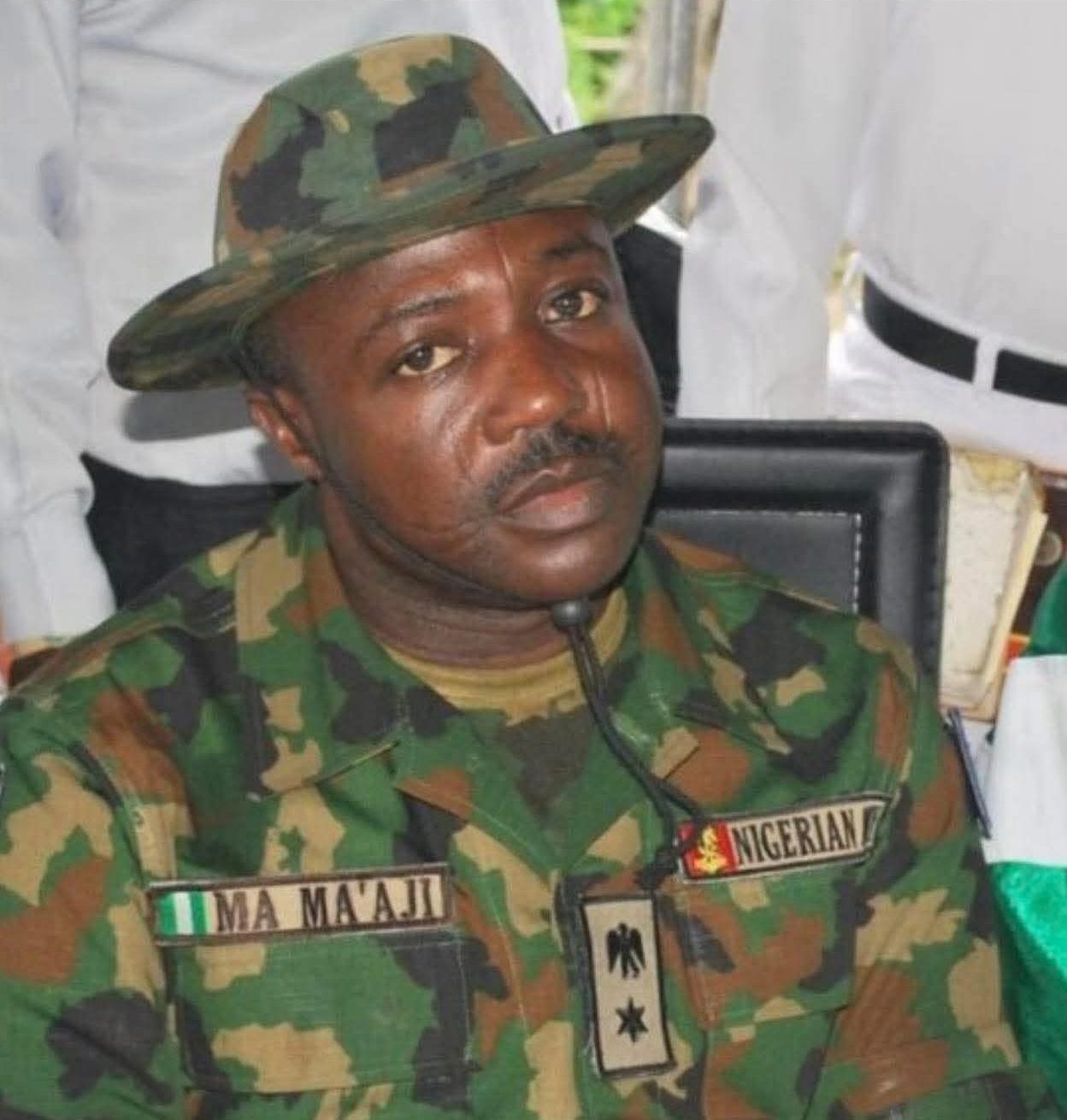
Fresh details have emerged on the foiled coup plot allegedly aimed at overthrowing the administration of President Bola Ahmed Tinubu, with Nigerian Army Colonel Mohammed Ma’aji named as the central figure behind the failed attempt.
Reports indicate that the alleged coup plot was uncovered in October 2025, triggering widespread tension and speculation across the country at the time.
While the authorities initially dismissed the reports as unfounded, the Defence Headquarters (DHQ) on Monday, January 26, confirmed that an internal investigation had uncovered a plot involving senior military personnel.
According to the DHQ, no fewer than 16 military officers were implicated in the alleged attempt to destabilise the current administration. A panel constituted to probe the matter released the list of indicted officers on Monday, with Colonel M. A. Ma’aji listed as the first name, effectively identifying him as the prime suspect in the case.
The official confirmation has reinforced earlier reports that pointed to Ma’aji as the alleged leader of the failed coup plot.
Colonel Ma’aji is a seasoned military officer with a background in both security operations and political advisory roles.
READ ALSO: Alleged coup plot: Names, ranks of 16 military officers indicted
During the 2015 Bayelsa State governorship election, he served as a security adviser to former Minister of State for Petroleum Resources, Timipre Sylva.
Born in 1976 to Nupe parents in Niger State, Ma’aji is a graduate of the Nigerian Defence Academy (NDA), where he was a member of Regular Course 47. Over the course of his military career, he held several strategic command positions across the country.
He previously served as the Commanding Officer of the 19 Battalion in Okitipupa, Ondo State. In 2017, he was redeployed to Koko, the headquarters of Warri North Local Government Area in Delta State, where he continued his military service.
The Defence Headquarters has maintained that investigations into the alleged coup plot are ongoing, while those indicted are expected to face further military and legal processes in line with existing laws and regulations.
The development has once again brought national attention to issues of internal security, loyalty within the armed forces and the broader implications for Nigeria’s democratic stability.



 Entertainment1 week ago
 Crime1 week ago
 Crime1 week ago
 Football6 days ago
 Business6 days ago
 Politics6 days ago
 News6 days ago
 Latest6 days ago