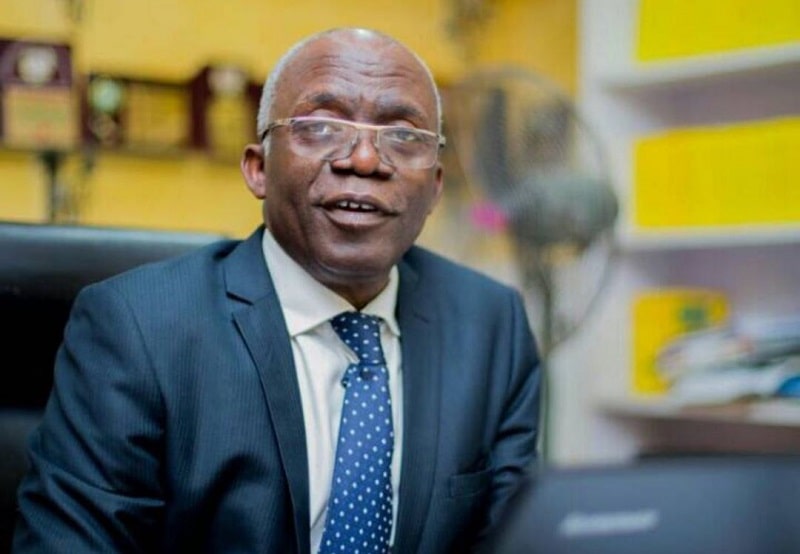
Prominent human rights lawyer and Senior Advocate of Nigeria (SAN), Femi Falana, has mounted a sustained public campaign against the premature electioneering sweeping Nigeria ahead of the 2027 general elections, declaring the activities a clear violation of the Electoral Act and a dangerous distraction from governance.
Speaking on Channels Television’s Politics Today, Falana urged the Independent National Electoral Commission (INEC) to caution politicians and ensure compliance with the Electoral Act, 2022. “As far as the Electoral Act, 2022 is concerned, the ongoing election campaign is illegal, totally illegal,” Falana said. “It’s also diversionary, because what Nigerians expect now, and what the law provides, is governance of the country without disruption.”
He urged INEC to caution politicians, including state governors, who are already engaging in pre-election activities.
Falana argued that the consequences of premature electioneering go beyond legal violations. He questioned when the government intended to govern, noting that politicians had commenced campaigns several months before the official window. “When is the government going to govern the country? And that is why the law has set out when election campaigns will start, when they can end. It cannot be a business of four years,” he said.
Commenting on President Bola Tinubu’s charge to APC governors to “wet the ground” at the grassroots, Falana said the matter had gone beyond such appeals: “As far as the masses of our people are concerned, things are getting tougher by the day because of the harsh economic crisis in the country.” He challenged politicians who seek to unseat those in power to instead offer concrete solutions: “If you say you want to replace those in power, what is your solution to the electricity crisis, the crisis in the education system, the bad roads and other problems confronting Nigeria?”
ALSO READ: Akpabio declares three senate seats vacant, directs INEC to conduct by-elections within 30 days
Falana subsequently escalated his demands, calling on INEC to take direct legal action against violators. “The Electoral Act empowers INEC to regulate campaigns, but politicians are exploiting loopholes,” he said. “INEC must drag these violators to court and let them argue there’s no punishment for early campaigning.” He warned that disobedience to any resulting court order would constitute contempt, potentially carrying a jail term.
His intervention comes amid broader concern about the link between premature campaigns and Nigeria’s security crisis. Analysts have noted that the current multi-dimensional security crisis poses a serious threat to the 2027 elections, with insurgency, banditry, communal conflicts, and organised criminal violence continuing to overstretch Nigeria’s security architecture — raising fears that instability may constrain INEC’s ability to organise elections in volatile areas and lead to voter disenfranchisement.
Falana’s criticism of electoral conduct has since moved beyond rhetoric into legal action. In March 2026, the Movement for Credible Elections (MCE), a coalition led by Falana, former Minister Oby Ezekwesili, political economist Pat Utomi, and former House of Representatives member Usman Bugaje, filed a lawsuit at the Federal High Court in Abuja against the Federal Government, the National Assembly, and the Nigeria Police, challenging the forceful dispersal of peaceful protesters at the National Assembly complex on February 17, 2026, who were demanding the inclusion of key provisions in electoral reform bills.
Falana has also called on the media to play a stronger role when campaigns officially begin. “The media must help Nigeria, particularly when it’s time to campaign. We must take politicians out of the cocoon of ethnicity, religion and other primordial considerations,” he said.
As of the time of this report, INEC had not issued a formal public response to Falana’s repeated calls for enforcement action against early campaigners.


 Football1 week ago
 Business1 week ago
 News1 week ago
 Football1 week ago
 Energy7 days ago
 Energy5 days ago
 Football7 days ago