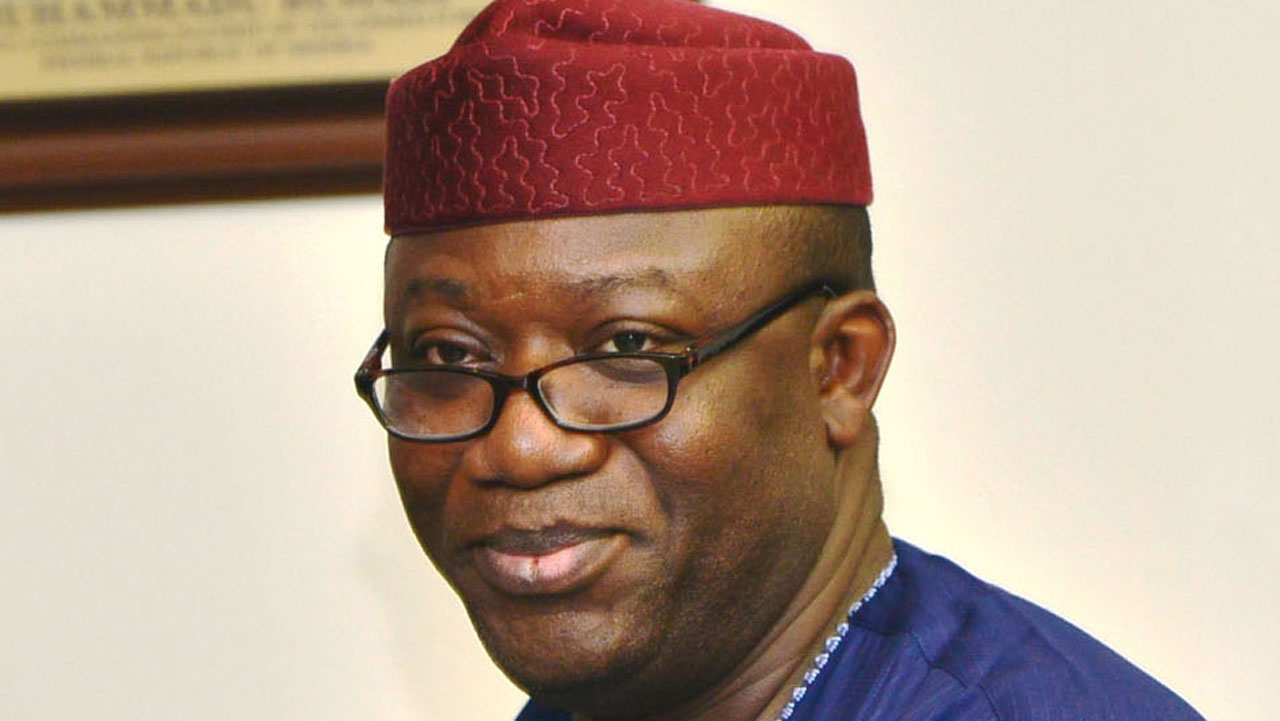
Former Ekiti State Governor and elder statesman Kayode Fayemi has paid tribute to the late Chief Obafemi Awolowo on his posthumous birthday anniversary, describing the nationalist leader’s pioneering free education policy as one of the most consequential acts of governance in Nigeria’s history.
In a statement released by the Fayemi Media Office on Friday and signed by its head, Ahmad Sajoh, Fayemi described Awolowo as one of Nigeria’s most visionary leaders whose ideas continue to influence the country’s development trajectory, saying that Awolowo’s life symbolised principled leadership and an unwavering commitment to the welfare of Nigerians.
Fayemi singled out the introduction of free primary education under the Awolowo administration as a defining achievement, noting that “his introduction of free primary education was not merely a policy initiative; it was transformative and expanded opportunity for millions of people.
Awolowo’s landmark Universal Primary Education programme was launched on January 17, 1955, making Western Nigeria the first region in Africa to implement free and compulsory primary education at such a scale. The programme mandated schooling for all children between the ages of 5 and 13, and the results were swift and dramatic the number of schoolchildren in the region more than doubled from 381,000 in 1952 to over 811,000 just three years later.
Awolowo and his Education Minister Stephen Awokoya grounded the policy in three core principles: reducing societal inequality, empowering citizens to resist tyranny, and accelerating economic development. Scholars and historians have since credited the programme with giving Western Nigeria a lasting advantage in literacy, professional development, and public leadership across post-independence Nigeria.
Beyond education, Fayemi used the occasion to reflect on Awolowo’s broader political character. He described the late statesman as a moral compass in Nigerian politics, stressing that his dedication to integrity, discipline and ideological clarity remains a benchmark for present and future leaders, and called on Nigerians, particularly those in leadership positions to draw inspiration from Awolowo’s example of service and sacrifice.
ALSO READ: Education Minister Alausa denies resignation rumours, says he remains focused on duties
“As we remember him today, we must recommit ourselves to the values he represented good governance, social justice, and the pursuit of a fair and inclusive society,” Fayemi said.
The tribute coincided with a broader season of reflection on Awolowo’s legacy. The Obafemi Awolowo Foundation this week held its 2026 Annual Memorial Lecture at the historic Efunyela Hall in Ikenne, under the theme “Politics as Future-Making: Awolowo and Leadership as Theory of Action,” with the event chaired by former Commonwealth Secretary-General Chief Emeka Anyaoku.
Anyaoku, speaking at the lecture, noted that Awolowo’s record as Premier of the Western Region, opposition leader in the First Republic, and Vice-Chairman of the Federal Executive Council during the military era had earned him the enduring reputation as “the best President Nigeria never had.”
While admiration for Awolowo’s foundational contributions remains strong across Nigeria’s political class, commentators have noted that the ideals he championed — universal access to education and investment in human capital have been difficult to sustain in subsequent decades. The 2026 lecture’s keynote, delivered by Professor Wale Adebanwi, argued that Nigeria’s enduring leadership crisis stems from structural issues in state composition, political economy, and elite formation, urging contemporary leaders to adopt Awolowo’s approach of rigorous, evidence-based policymaking and long-term planning.
Fayemi closed his tribute with a prayer that the late leader’s legacy would continue to inspire a new generation. He expressed hope that Awolowo’s memory would motivate Nigerians to work towards building a nation anchored on justice, equity and shared prosperity.



 Entertainment4 days ago
 Comments and Issues1 week ago
 Comments and Issues1 week ago
 Comments and Issues1 week ago
 Health1 week ago
 Latest6 days ago
 Business7 days ago
 Health1 week ago