The Federal Government of Nigeria has expressed grave concern over the alarming rate of undiagnosed hypertension cases across the country, highlighting it as a significant factor in the nation’s growing burden of non-communicable diseases (NCDs).
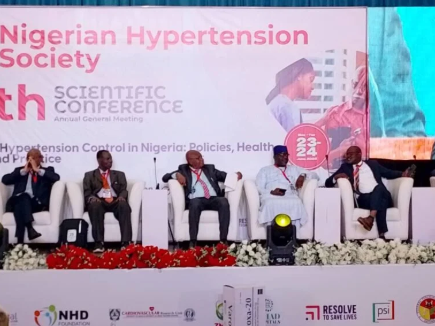
Dr. Salma Anas, Special Adviser to President Bola Tinubu on Health, brought this issue to light on Monday in Abuja, during the opening of the 25th Annual Scientific Conference and General Meeting of the Nigerian Hypertension Society.
The conference’s theme, “Scaling up Hypertension Control in Nigeria: Policies, Health Systems and Practice,” underscored the urgency of the situation.
Dr. Anas, represented by her Technical Adviser, Mr. Umar Tanko, cited compelling data indicating that nearly one in three Nigerian adults has hypertension, yet a substantial number remain unaware of their condition.
Furthermore, even among those who have been diagnosed, control rates remain alarmingly low. She attributed this critical situation to the rising cost of medications, limited access to healthcare facilities, and inadequate financial support for patients requiring long-term management.
“Hypertension is not just a physical condition; it is a threat to national productivity, stability, and sustainable development,” she asserted, emphasizing the broader societal impact of uncontrolled hypertension.
According to Dr. Anas, the Federal Government is prioritizing hypertension control through several structural reforms. These include:
- Integration of hypertension screening into primary healthcare, ensuring early detection at the grassroots level.
- Implementation of health insurance reforms, aiming to expand coverage and reduce out-of-pocket expenses for patients.
- Rollout of a national health sector strategic development plan, providing a comprehensive roadmap for healthcare improvement.
- Expanding the Global Action on Non-Communicable Diseases (GAC) platform, to improve access to care for NCDs.
- Increasing financial protection for patients requiring lifelong management of hypertension and related conditions.
She added that efforts are also underway to strengthen surgical and vascular care capacity, reduce the nation’s dependence on imported drugs, and ensure the consistent availability of high-quality medications within Nigeria.
Speaking at the event, Prof. Simon Isezuo, President of the Nigerian Hypertension Society, described hypertension as a “silent killer” and a major public health challenge in Nigeria.
He reiterated that many individuals are unaware they have the condition, and among those on treatment, fewer than 10 per cent achieve proper blood pressure control.
“This is why stroke, kidney disease, heart failure, and sudden death continue to rise. In many of these cases, uncontrolled hypertension is the underlying cause,” he warned, painting a grim picture of the consequences.
ALSO READ : UEFA bars four clubs from UCL
Professor Isezuo called for intensified efforts to raise awareness, improve diagnosis, and crucially, reduce salt consumption, identifying it as a key risk factor for hypertension.
He also urged Nigerians to engage in regular physical activity such as walking, jogging, or other moderate exercises that can significantly help control blood pressure and prevent the onset of hypertension.
Also speaking, Prof. Batsen Onwubere highlighted the high cost of treating hypertension due to its chronic nature and Nigeria’s heavy reliance on imported medications.
He noted that while the Federal Government is working to promote local drug production to help lower costs, exchange rate volatility continues to heavily impact drug affordability.
He acknowledged the role of the National Health Insurance Agency (NHIA) in improving access but noted that current coverage remains limited.
“The society continues to engage government, philanthropists, and the general public to address the burden of hypertension in Nigeria,” Onwubere concluded, emphasizing the need for a multi-stakeholder approach.
National Daily Newspaper reports that the two-day conference will conclude on Tuesday.












 Business1 week ago
 Latest6 days ago
 Business1 week ago
 Football1 week ago
 Business1 week ago
 Business1 week ago
 Football5 days ago
 Health1 week ago