In a significant development concerning the proposed 50 percent increase in telecommunications tariffs, the Federal Government of Nigeria and the Nigeria Labour Congress (NLC) have signed a Memorandum of Understanding (MoU) aimed at addressing the contentious issue.
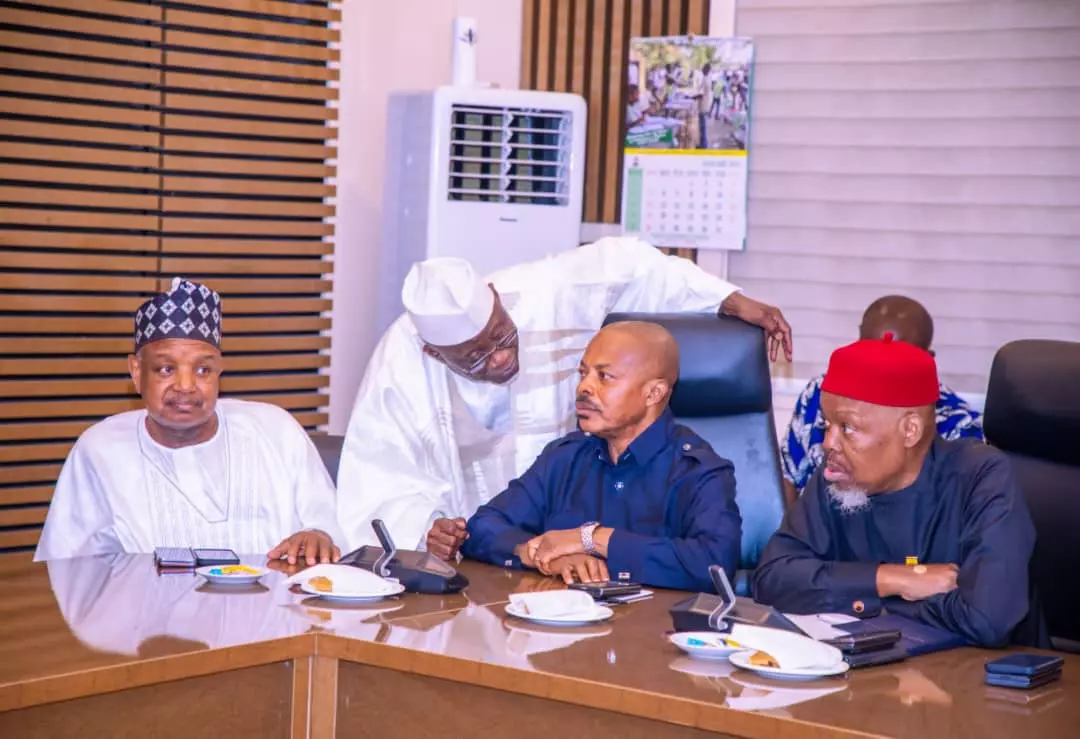
The agreement was formalized during a crucial meeting convened by the federal government on Monday, following widespread opposition from organized labor and civil society groups.
The meeting was attended by key government officials, including the Secretary to the Government of the Federation, George Akume, and the Minister of Labour and Employment, Muhammadu Dingyadi, who signed the MoU on behalf of the federal government.
Representing the NLC were its President, Mr. Joe Ajaero, and General Secretary, Mr. Emmanuel Ugboaja.
The NLC had previously voiced strong resistance to the proposed tariff hike, warning that it would place an additional financial burden on millions of Nigerians.
In response, the labor union had declared a nationwide mass protest scheduled for February 4 to express its discontent.
READ ALSO: Withdraw tax bills from National Assembly – NLC tells FG
According to the details of the MoU, both parties have agreed to set up a technical working group to address the concerns raised during the negotiations.
A joint committee comprising five representatives from the federal government and five from the NLC has been established to evaluate the implications of the tariff increase and explore possible alternatives.
The committee has been tasked with conducting a thorough review and submitting its report within two weeks. This move is seen as a step towards fostering constructive dialogue and finding a mutually beneficial resolution to the dispute.
Stakeholders and industry experts are closely monitoring the situation, as the outcome of the discussions could have far-reaching implications for the telecom sector and consumers across the country.
The government has assured the public that any decision reached will take into account the economic realities and the welfare of Nigerian citizens.



 Trending Stories1 week ago
 Latest7 days ago
 Latest1 week ago
 Latest1 week ago
 Football6 days ago
 Football6 days ago
 Latest1 week ago
 Football6 days ago