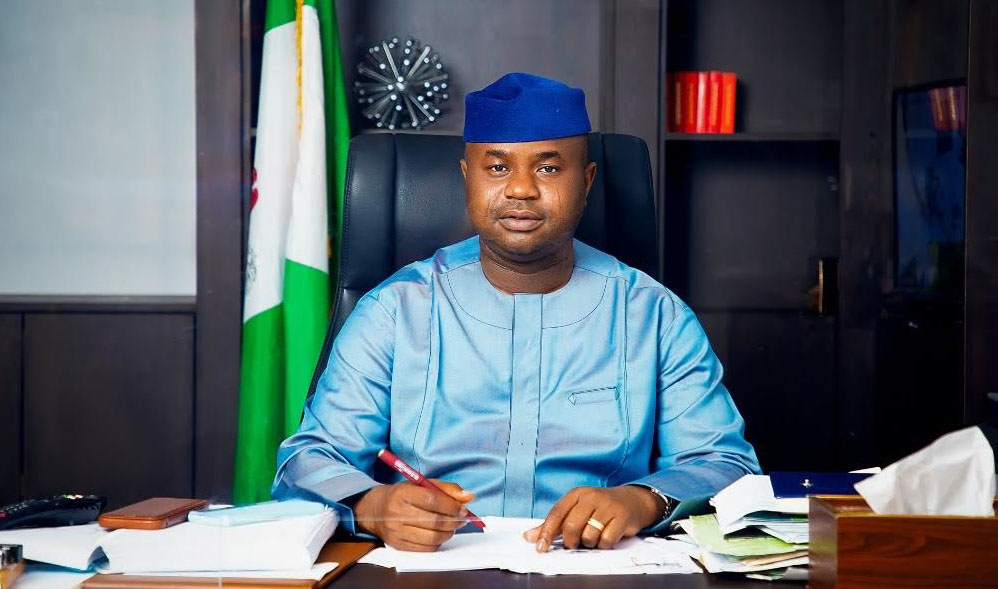
The Executive Chairman of the Federal Inland Revenue Service (FIRS), Zacch Adedeji, has defended the Federal Government’s continued reliance on borrowing, insisting it is a strategic part of Nigeria’s fiscal framework rather than a sign of economic weakness.
Adedeji made the remarks on Tuesday at the State House during the Meet-the-Press session organised by the Presidential Communications Team, where he also revealed that federal revenue collection rose sharply to N3.64 trillion in September 2025—a 411 per cent increase compared to N711 billion in May 2023.
“Borrowing is not a problem,” Adedeji said. “Every budget consists of expenditure, revenue, and loans. If the National Assembly has approved borrowing within the budget, then it remains part of our fiscal strategy. No country or individual survives entirely on revenue alone.”
Debt Concerns Amid Tinubu’s Loan Request
His comments come as Nigeria faces renewed criticism over its debt profile. In July, President Bola Tinubu sought approval for a $21.5 billion external loan, including a $2 billion foreign currency bond and a N757.98 billion domestic bond to offset pension liabilities.
The request drew scrutiny, particularly after Tinubu announced weeks later that Nigeria had already surpassed its 2025 revenue targets and would reduce dependence on borrowing.
READ ALSO: Businessman drags First Bank, Jaiz Bank to Court over late father’s savings
Adedeji, however, argued that loans remain critical for funding long-term infrastructure projects that deliver benefits beyond the present. He referenced what he described as the “Matchy Concept” of financing, which spreads the burden of funding major projects like roads across generations, ensuring that future users also contribute through taxes.
“Government borrowing also sustains banks, which are part of the economic ecosystem. When banks thrive, they pay taxes, employ workers, and feed revenues back into the system,” he explained.
Dismisses Critics as “Container Economists”
The FIRS boss dismissed ongoing criticisms of Nigeria’s debt policy, accusing commentators of superficial analysis. “Most of these critics are container economists who rely on social media narratives rather than the deeper economic logic of borrowing,” he said.
Revenue Surge Driven by Reforms
Adedeji pointed to sweeping tax reforms as the driver of the sharp increase in government revenues. Non-oil receipts climbed to N1.06 trillion, up from N151 billion in May 2023, while oil revenue rose to N644 billion. Value Added Tax (VAT) collections also surged, tripling to N723 billion.
He credited the gains to initiatives that simplified tax processes, reduced burdens on small businesses, and rationalised tax incentives.
Adedeji concluded that Nigeria’s borrowing strategy should be viewed not as a liability but as a carefully designed fiscal tool to balance immediate economic needs with long-term national growth.
“Borrowing allows us to invest in tomorrow without crippling today. What matters is not whether we borrow, but how we borrow and what we use it for,” he said.



 Football1 week ago
 Business1 week ago
 Latest6 days ago
 Business7 days ago
 Football1 week ago
 Business1 week ago
 Business1 week ago
 Football1 week ago