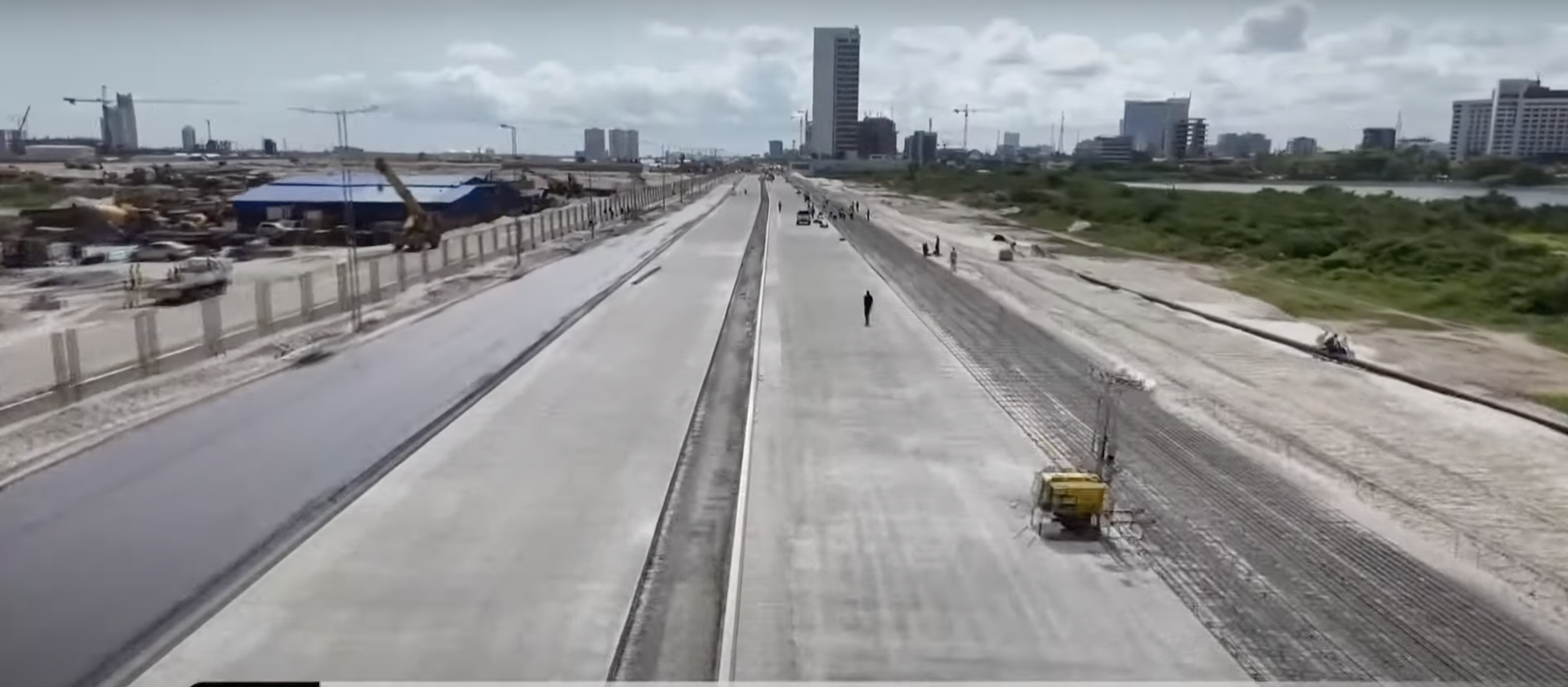
Fresh concerns have emerged over the structural integrity of parts of the newly constructed Lagos-Calabar Coastal Road as residents raise alarm over severe flooding threatening sections of the highway, allegedly due to poor drainage infrastructure.
In a viral video shared on Tuesday, a concerned citizen could be seen standing ankle-deep in water on a submerged stretch of the road. The man, whose identity has not been confirmed, passionately appealed to the Federal Government to urgently investigate what he described as a “collapsing section” of the multi-billion naira project.
“This is not acceptable. Just a few months after commissioning, the road is already washing away,” he said, gesturing toward pools of water that had collected along the highway. “If nothing is done, this road will not survive the next rainy season.”
READ ALSO: Lagos-Calabar Coastal Highway: What does phase one truly mean for Nigerians?
The Lagos-Calabar Coastal Highway is one of the Federal Government’s flagship infrastructure projects—a 700km superhighway designed to run along Nigeria’s southern coastline, linking Lagos to Cross River. While the project has been hailed for its potential to boost tourism, commerce, and regional connectivity, critics have persistently raised questions about its planning, environmental impact, and construction quality.
The latest flood-related damage appears to validate some of those concerns, particularly in low-lying areas where water has failed to drain properly due to what experts describe as inadequate or non-existent drainage channels.
Civil engineers and urban planners have warned that coastal infrastructure projects of this scale must incorporate robust water management systems to withstand seasonal flooding and erosion, both of which are common in Nigeria’s coastal belt.
Reacting to the footage, several Nigerians on social media echoed calls for immediate government intervention, demanding an independent technical assessment of the project’s current state.
“The Lagos-Calabar Coastal Road is too strategic to be compromised by shortcuts or substandard work,” one user wrote. “We cannot afford to watch it fail this early.”
At the time of this report, neither the Federal Ministry of Works nor the contractors handling the project had issued an official response to the flooding concerns.
Analysts say how the government responds in the coming days will be critical, especially as the project continues to attract national attention and substantial funding.




 Comments and Issues1 week ago
 Entertainment4 days ago
 Comments and Issues1 week ago
 Comments and Issues1 week ago
 Health1 week ago
 Latest6 days ago
 Business7 days ago
 Health1 week ago