
Features
From Hope to Hardship: The Cost of Nigeria’s Neglected Infrastructure on Rural Hustle
From hope to hardship, rural Nigeria has carried this burden for too long.It is time for the leaders — at local, state, and federal levels — to move from pity to policy, from campaign promises to concrete progress

Published
8 months agoon
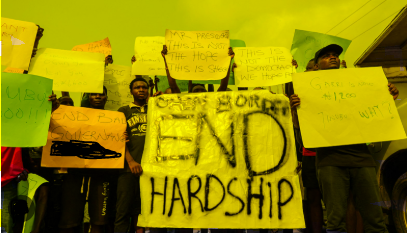
BY – ABIODUN IFEOLUWA
In the rustic towns and far-flung villages that stretch from the savannahs of the North to the lush rainforests of the South, Nigeria’s rural communities tell a story of struggle and survival. These areas once filled with the hopeful buzz of hardworking farmers, petty traders, and local artisans are today facing a silent but deadly war: the collapse of essential infrastructure.
From impassable roads to erratic electricity, from unsafe drinking water to crumbling schools and hospitals, rural Nigeria is groaning under the weight of governmental neglect. This failure is not just an inconvenience it is a calculated stripping away of dignity, productivity, and opportunity.
The Road That Leads Nowhere: One of the most visible and painful signs of Nigeria’s infrastructural decay is its rural road network. What should serve as vital arteries connecting farmers to markets and families to health care have instead become death traps and profit killers.
A Real Example Benue State: In Guma LGA, Benue State, where cassava and yam farming dominate, locals must traverse a 14km stretch of muddy, broken road to reach the closest market in Daudu.
During the rainy season, the road becomes completely impassable. I loaded 25 baskets of tomatoes and by the time I got to the market, more than 10 were already spoiled, said Justina Ochigbo, a widow and farmer. I ended up selling the rest at giveaway prices. That’s how we live working with losses.
A World Bank report states that over 70% of rural roads in Nigeria are in either poor or very poor condition, directly contributing to post-harvest losses that cost the country over ₦3.5 trillion annually.
Electricity : A Flickering Dream: Across the country, the issue of erratic power is nothing new but in rural Nigeria, power outages are not occasional; they are the norm.
Entire communities have never seen electricity, while others endure weeks or months of blackouts. For local businesses and cottage industries, this is economic sabotage.
Voices From the Ground – Osun State: Aderemi, a welder in Erin-Osun, explains the daily frustration: “I bought a welding machine to train boys in the community, but there’s no light. I run on fuel, and the price is killing me. Many of us have closed shop”.
Since the removal of fuel subsidy in 2023, petrol prices have tripled in many rural areas, forcing local businesses to either shut down or scale back significantly.
The Rural Electrification Agency (REA) has several stalled projects nationwide, often due to poor funding, corruption, or lack of continuity.
Water Crisis: Life Without the Basics: In many communities, clean water remains a distant dream.
Functional boreholes are rare, and public water supply is non-existent. Children and women often wake at dawn to fetch water from dirty streams, sharing sources with livestock. This puts millions at risk of waterborne diseases.
Ekiti State – A Village on the Brink: In the village of Omuo-Ekiti, several cases of typhoid and dysentery have been recorded in the local health center, with over 45% of them traced to unsafe water sources.
We wrote to the local government three times, asking them to repair our broken borehole no response. So we drink from the stream. We don’t have a choice, said Mrs. Aina, a mother of five.
The Nigeria Centre for Disease Control (NCDC) recorded over 60,000 cases of cholera in 2022, most of them in rural communities.
Yet the response has been largely reactive, with emergency interventions replacing long-term solutions.
ALSO READ : Democracy on Trial: 25 Years Later, What Has Nigeria Gained?
Education and Health: Services in Ruins: The state of rural schools and hospitals mirrors the overall neglect. Classrooms without roofs, no desks, unpaid teachers, and absent health workers are the norm.
Kano’s Forgotten Clinic: In Doguwa LGA, Kano State, the primary health centre has only one nurse for a population of over 5,000.
The structure is dilapidated, and the delivery room has no electricity or running water.
Pregnant women have to travel more than 20km on bad roads to reach functioning hospitals. If there’s an emergency at night, we just pray. Sometimes we lose both baby and mother, confesses Ibrahim, a local traditional birth attendant.
The Bigger Picture: Why This Matters: Nigeria’s rural population constitutes nearly 48% of the total population, according to the National Bureau of Statistics. This means over 100 million Nigerians live with the direct consequences of neglected infrastructure a number too significant to ignore.
Yet, despite the annual allocation of trillions of naira to infrastructure in national budgets, “much of it fails to translate to actual development in rural areas.
Experts blame:
- “Corruption and contract inflation”
- “Poor monitoring and lack of project completion”
- “Top-down policy frameworks that exclude community voices”
- “Short-term political interests over long-term planning”
The Rural Hustle is the Nigerian Hustle: Rural Nigeria feeds the cities. It supplies labor, food, and raw materials. It houses cultural legacies and birthplaces of dreams. But “for how long can this engine continue to function under stress?”. “You can’t expect growth when the people who work the hardest are given the least,” says Dr. Funmilayo Adetiba, a development expert. “Fix rural infrastructure, and you fix half of Nigeria’s problems”.
A Call to Action: If the government is serious about economic diversification, food security, and sustainable development, it must do more than pay lip service to rural infrastructure.
We need:
- Transparent budgeting and citizen tracking of rural projects
- Incentives for public-private partnerships in rural development
- Community-driven development models that reflect actual needs
- Stronger accountability for abandoned or poorly executed contracts
Conclusion.
The Real Cost: The cost of neglect isn’t just bad roads, power cuts, and water shortages it’s the cost of lives lost, youth migration, lost revenue, and broken trust. It’s the cost of dreams unfulfilled and communities left behind.
From hope to hardship, rural Nigeria has carried this burden for too long.
It is time for the leaders — at local, state, and federal levels — to move from pity to policy, from campaign promises to concrete progress.
Until then, the rural hustle — that undying fire of resilience — will keep burning, but it shouldn’t have to burn alone.
END.
Abiodun Ifeoluwa is a journalist and communication specialist committed to spotlighting the stories and struggles that shape Nigeria’s grassroots realities.

You may like


INEC Extends The Deadline for Party Register Submission Ahead of 2027 Elections


Nigeria Declares Readiness to Host 2030 Commonwealth Games


Edo Civil Society Blasts Ministry of Education: Stop Forcing Teachers Into Menial Labour


BREAKING: The Head of Service of the Federal Capital Territory (FCT), Grace Adayilo is dead


Nigeria, Switzerland begin talks on artefact repatriation and cultural cooperation

‘This Govt is obsessed with putting burden on Nigerians’ – Peter Obi reacts as FG increases passport price
Trending

 Football6 days ago
Iraq ends 40-year World Cup exile as Baghdad erupts in joy
 Business5 days ago
Nigeria braces for cost surge amid 2026 inflation projections

 Crime7 days ago
Kano-based lawyer reportedly dies after being trapped in Abuja hotel lift
 Latest4 days ago
ADC accuses INEC of misinterpreting court order, demands chairman’s removal amidst growing leadership crisis

 Business7 days ago
CBN unveils mandatory cybersecurity self-assessment tool for Banks
 Business1 week ago
Petrol price hikes trigger surge in transport fares nationwide

 Business6 days ago
CBN confirms 33 Banks meet minimum capital requirements as recapitalization deadline ends

 Business5 days ago
Naira slips to N1,387/$ in March amid persistent FX market turmoil