The House of Representatives has officially withdrawn a controversial bill that sought to make voting mandatory for all eligible Nigerians, following intense criticism from civil society groups, legal experts, and the general public.
The proposed legislation, jointly sponsored by Speaker Abbas Tajudeen and Rep. Daniel Asama Ago, aimed to amend the Electoral Act 2022 to make voting a civic obligation rather than a voluntary choice. The bill had passed second reading in March 2024, sparking heated debates within the National Assembly and across the country.
Supporters of the bill argued that compulsory voting would significantly improve voter turnout and strengthen Nigeria’s democratic culture, pointing to global examples such as Australia, Belgium, and Brazil, where similar policies have been in place for years.
Legal experts and human rights advocates condemned the bill as a potential violation of constitutional freedoms, particularly the right to abstain from political participation. Concerns were also raised about the feasibility of enforcement, given Nigeria’s logistical challenges, voter apathy, and widespread insecurity in certain regions.
Civil society organizations like the Centre for Democracy and Development (CDD) and YIAGA Africa criticized the proposal as “undemocratic,” warning that coercive voting measures could erode public trust in the electoral process rather than strengthen it.
READ ALSO: SERAP Condemns Bill to Jail Nigerians for Not Voting, Urges Electoral Reforms
“Democracy thrives on free will,” said legal analyst and constitutional lawyer Barr. Nneka Okoro. “Forcing citizens to vote under penalty undermines the spirit of informed choice and violates fundamental human rights.”
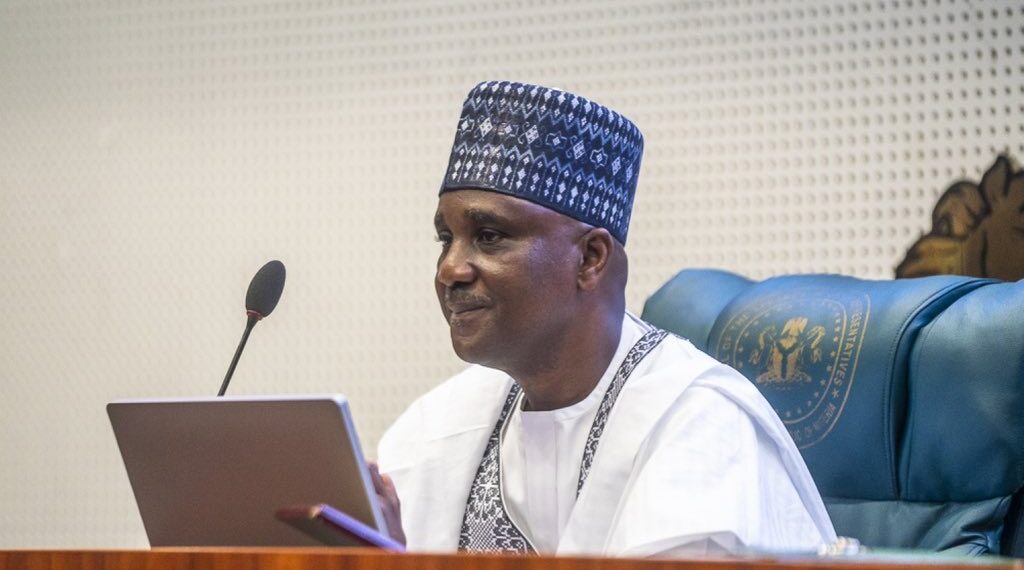
In a press briefing on Monday, Speaker Abbas Tajudeen confirmed that the bill had been formally withdrawn in light of the overwhelming opposition.
“We introduced this bill to spark national conversation around civic duty and voter participation. However, we have listened carefully to feedback from legal experts, civic groups, and Nigerians from all walks of life,” Abbas said. “It is clear that compulsory voting, while well-intentioned, may not be suitable for our current realities.”
He added that the House would now focus on non-coercive measures to boost participation, especially among youth and first-time voters, including enhanced voter education, electoral reforms, and technological innovations.
Rep. Daniel Asama Ago, co-sponsor of the bill, emphasized that the withdrawal does not mean an end to the conversation on low voter turnout.
“We must confront the fact that less than 30% of eligible voters participated in the last general elections. The challenge remains, but the solution must be inclusive, respectful of rights, and context-sensitive.”
Observers have long noted that Nigeria’s electoral process is plagued by voter apathy, logistical failures, insecurity, and lack of trust in political institutions—all of which discourage participation.
“Before we talk about compulsory voting, we need to fix why people are not voting in the first place,” said political analyst Dr. Tunde Babalola. “Citizens don’t feel empowered. They don’t believe their votes count.”
The Independent National Electoral Commission (INEC) welcomed the House’s decision, saying it allows room for more sustainable engagement with voters and stakeholders.
As Nigeria prepares for upcoming off-cycle elections and broader political reforms, the conversation around voter turnout, electoral integrity, and citizen engagement is expected to remain a central part of democratic discourse.
For now, the National Assembly appears to have chosen a path of dialogue and encouragement over compulsion—one that prioritizes freedom of choice while seeking to deepen democratic participation through trust-building, education, and reform.


 Latest7 days ago
 Football6 days ago
 Business5 days ago
 Football1 week ago
 Football1 week ago
 Football1 week ago
 Latest6 days ago
 Health6 days ago