
Comments and Issues
How many children must be taken before Nigeria’s school abduction crisis is treated as an emergency?

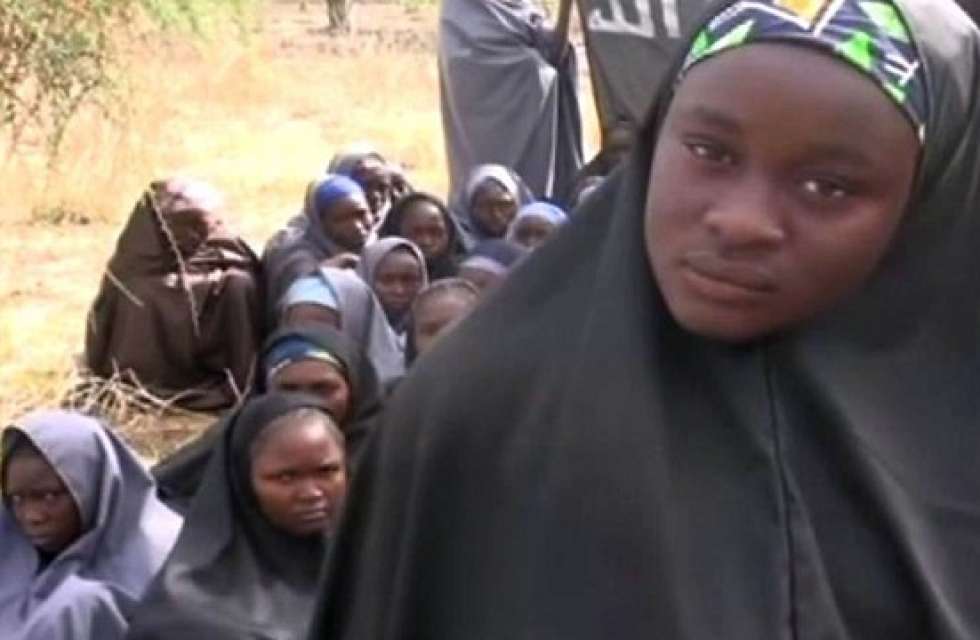
It is always tragic news when you hear about violence aimed at schools and children.
From sporadic shootings to planned terror attacks, educational establishments around the world have been targeted. Then, as we have seen in Nigeria, there are cases of mass abductions of schoolchildren.
One of the most recent was the awful incident that took place in Nigeria’s Niger State in November of this year. Gunmen attacked St Mary’s Catholic School and abducted about 303 children, as well as 12 teachers.
This is not the first time this type of mass abduction has taken place in the region. In 2014, an incident that caught the attention of global media outlets was the abduction of 276 schoolgirls by Boko Haram from a secondary school in Chibok.
There have also been other attacks and abductions of schoolchildren within the region. In some cases, these attacks are carried out by criminal gangs.
These gangs are often heavily armed and ready to unleash brutal aggression. They hold children for ransom, aiming to extract significant sums, particularly when mass abductions have taken place.
Some abductees are exposed to sexual assault and brutal physical violence.

In the Chibok abduction, some children managed to escape and more than 100 are believed to have been released, although in many cases the release of abductees took place some time after the incident.
Sadly, many others are still unaccounted for. Quite possibly, more than a thousand other children in separate cases have been taken since then.
Clearly, the government is facing a serious crisis and, as long as it remains unresolved, it will continue to cause immense suffering for far too many families.
Even when these children are released or manage to escape, the ordeal they have been through is likely to leave deep psychological scars that may remain with them for many years.
They will require significant levels of support and care to help them through the challenging recovery process.
One organisation monitoring these incidents targeting schoolchildren is the Christian Association of Nigeria. This is an umbrella organisation representing the various Christian denominations in the country, with Catholics and Anglicans among the largest groups.
In addition, senior figures in the Catholic Church have raised further awareness through a statement from the Catholic Bishops’ Conference of Nigeria, highlighting serious concerns among Christian communities in some of the northern states, where attacks have been taking place.
When considering these horrendous crimes against children and their families, schools themselves must also consider what measures they can take to keep students and staff safe.
They will need to respond rapidly to advanced intelligence warnings about planned attacks. The issue, as is so often the case, is that schools are very unlikely to have the resources required to implement the level of security needed to protect those in their care.
School staff are already putting themselves at great risk while these attacks continue. The responsibility therefore falls on the government.
Nigerian President Bola Tinubu and the state authorities are already under pressure from wide-ranging criminal activity, healthcare challenges, and a well-equipped jihadist opposition.
This crisis has attracted the attention of mainstream media, the UN, and international security organisations, so there is hope the country will now work more closely with other governments.

In recent weeks, the US administration has also shown a readiness to see this problem addressed assertively and decisively, with President Trump conveying particular concern regarding Christian victims of targeted violence in Nigeria. Given that Nigeria receives significant foreign aid, humanitarian assistance, and support from both the US and the UK, it is feasible that the country may welcome further security input from these nations, with a specific focus on counter-kidnapping and regional preventative security measures.
It is understood that the US already provides significant military equipment and training to Nigerian state forces. Moreover, as part of its efforts to enhance regional stability, the UK is involved in maritime security initiatives and other internal anti-crime measures, including law enforcement training and cyber-resilience support.
The question now is whether, in light of ongoing mass abductions and attacks, US and Nigerian government channels will discuss more dynamic deployments involving external, on-the-ground military support.
As part of my work in personal safety, I sometimes train clients who are travelling to high-risk locations. Kidnappings in the region, particularly in border areas, can also target UK and Western visitors more broadly, including aid workers, journalists, and businesspeople.
Those working for established companies and corporations may be seen as high-value targets. This is why it is crucial for organisations to implement thorough security and personal safety measures for their employees.

The Foreign, Commonwealth and Development Office provides further safety and security advice on travel to Nigeria via its official website.
Kidnappings can occur in a wide range of settings, including while travelling on highways. There have been cases of illegal checkpoints being established by criminal groups. In some instances, criminals may focus on violent armed robbery rather than kidnapping.
The statement from the Catholic Bishops’ Conference of Nigeria also referenced the abduction of female farmers, worshippers, and young girls, along with attacks on security personnel.
Looking at the plight of the victims of these abduction crimes, it is likely that even within government circles there is recognition that foreign tactical assistance may be a necessary component of a practical solution.
Moreover, if the country hopes to significantly address this crisis, it may also need to examine the underlying social and religious dynamics more closely.
The Nigerian public, whose children are exposed to the threat of abduction, are understandably fearful of further incidents and are looking to the government to implement proactive measures to secure the return of missing children and ensure the safety of others.
Whatever happens next, these unforgotten ones must be returned to safety and have their freedom restored.
Aran Dharmeratnam is a private security consultant and an internationally known specialist in self-protection training. Aran is the founder of the Tri-Tier and runs the online security resource From the Hip. He also works with security companies involved in private investigations and risk intelligence.

 Business1 week ago
Nigeria braces for cost surge amid 2026 inflation projections
 Latest6 days ago
ADC accuses INEC of misinterpreting court order, demands chairman’s removal amidst growing leadership crisis

 Business1 week ago
Naira slips to N1,387/$ in March amid persistent FX market turmoil

 Football5 days ago
Manchester City storm into FA cup semi-finals with 4-0 rout of Liverpool
 Health1 week ago
Emails expose concerns within CDC, FDA over COVID-19 vaccine data mining system
 Business5 days ago
Soaring fuel prices worsen economic hardship for Nigerians

 Football1 week ago
Gravina Resigns as Italy FA President After World Cup Failure

 Football1 week ago
Super Eagles to Face Poland, Portugal in June Friendlies