
Latest
IGP Disu inaugurates committee on State Police, says reform will strengthen Nigeria’s security framework

Published
3 weeks agoon
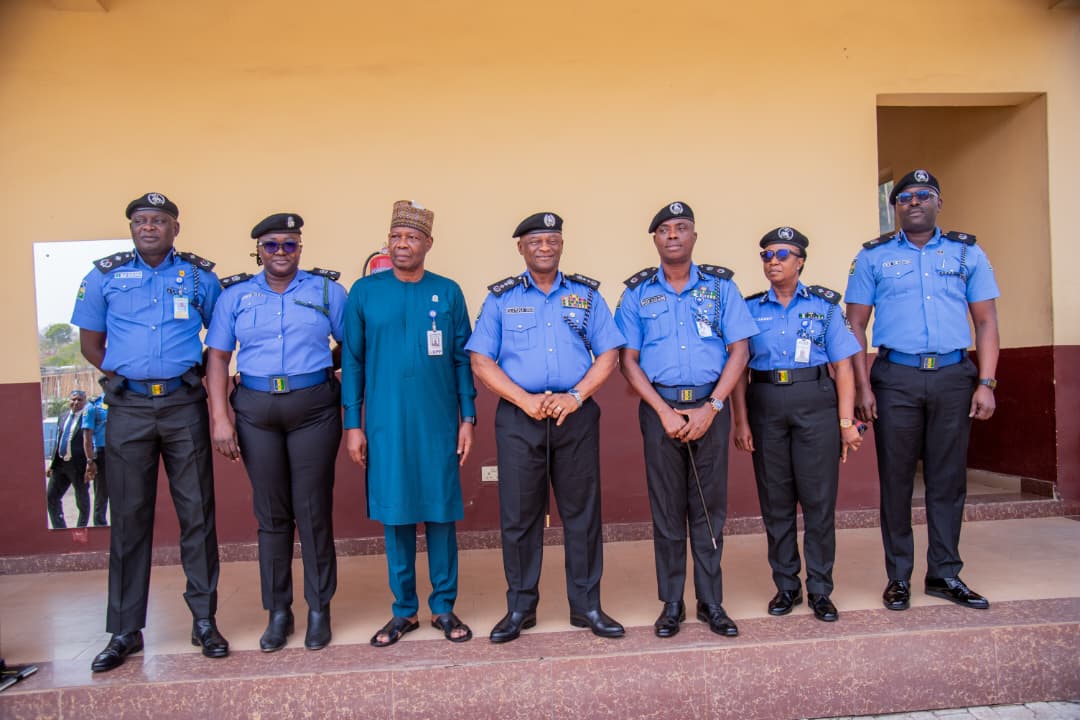
The Inspector-General of Police, Olatunji Rilwan Disu, has formally inaugurated a committee to examine the framework for the establishment of state police in Nigeria, describing the initiative as a critical step toward strengthening the country’s internal security architecture.
Speaking at the inauguration ceremony, the police chief welcomed committee members, senior officers, stakeholders, and invited guests, noting that the assignment before the panel is both significant and timely in view of Nigeria’s evolving security challenges.
Disu said the committee’s work would contribute to ongoing national discussions on security reforms aimed at ensuring that policing across the country remains responsive to the realities and needs of local communities.
According to him, Nigeria continues to face complex and evolving security threats that require innovative solutions, strategic collaboration, and reforms that can enhance the capacity of law enforcement agencies to protect lives and property.
“The concept of state police is therefore being carefully examined as part of broader national efforts to improve security governance, bring policing closer to the people, and deepen community participation in crime prevention,” the IGP stated.
He explained that the committee has a crucial responsibility in shaping a workable framework through which state policing could operate effectively without weakening the national security system.
The police chief urged members of the committee to approach their task with professionalism, objectivity, and a deep understanding of the complexities involved in policing a diverse country such as Nigeria.
Disu outlined the key responsibilities of the committee, which include reviewing policing models both within and outside Nigeria, assessing community security needs and emerging risks, and proposing an operational framework for the establishment and coordination of state police structures.
He added that the committee would also examine issues relating to recruitment, training, standards, resource allocation, and the creation of accountability and oversight mechanisms to ensure professionalism and public trust.
Highlighting the potential advantages of state policing, the IGP noted that bringing law enforcement closer to communities could significantly improve response times to security threats and enhance local intelligence gathering.
He said officers operating within their communities would be better positioned to understand local cultures, languages, and social dynamics, thereby strengthening cooperation between citizens and law enforcement agencies.
READ ALSO: Disu describes appointment as IGP as unexpected, deeply humbling
Disu further stated that decentralizing certain policing responsibilities could allow for more efficient use of security resources, enabling state governments and local authorities to respond more effectively to specific security challenges while the federal government focuses on broader national security priorities.
He also emphasized that the proposed state police system could contribute to economic and social development by creating employment opportunities for thousands of young Nigerians.
However, the police chief clarified that the introduction of state police should not be interpreted as replacing or weakening the Nigeria Police Force.
Instead, he said, it would function as a complementary structure within a coordinated national security framework, with the federal police continuing to perform its constitutional role as the primary national law enforcement institution.
According to him, the federal police would retain responsibility for tackling complex and transnational crimes such as terrorism, organized crime, cybercrime, trafficking networks, and other serious threats requiring national coordination and specialized expertise.
At the same time, state police formations would focus on localized policing duties, including community safety, neighborhood patrols, conflict prevention, and early response to emerging threats.
“This collaborative arrangement will encourage specialization, strengthen professionalism, and ultimately deliver more effective security outcomes for our citizens,” Disu said.
He also reassured officers and personnel of the Nigeria Police Force that their roles and relevance within the country’s security system remain indispensable, stressing that the vision behind the reform is one of synergy and partnership rather than competition.
The Inspector-General urged members of the committee to approach their assignment with diligence, intellectual rigor, and patriotism, noting that their recommendations would help guide policymakers in designing a policing framework that protects democratic values, upholds the rule of law, and ensures accountability to the Nigerian people.
Disu concluded the event by formally inaugurating the Committee on State Police and wishing members productive deliberations as they begin their assignment.

You may like
Trending

 Football1 week ago
Senegal forfeits AFCON final, CAF names Morocco 2025 Champions

 Football1 week ago
Arsenal to face Sporting as first Champions League quarter-final tie confirmed

 Football1 week ago
Mbeumo overtakes Osimhen as Africa’s most valuable player

 Football1 week ago
Full list: Chelle drops Osimhen, Nwabali for Eagles’ friendlies
 Comments and Issues6 days ago
Tunji Disu: A different kind of Cop
 Business1 week ago
Nigeria’s power sector collapses under N6.8trn debt burden

 Business1 week ago
Naira strengthens to N1,345/$ amid improving FX market stability

 Health6 days ago
NAFDAC raises alarm over circulation of fake cancer drugs in Nigeria