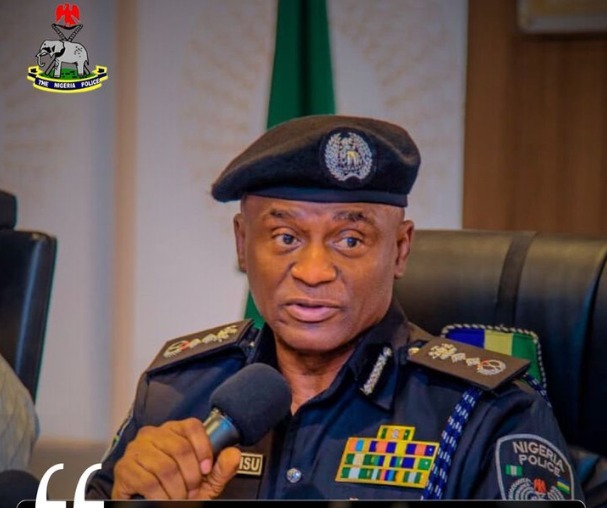
Nigeria has taken its most concrete step toward decentralised policing, with Inspector-General of Police, (IGP) Olatunji Rilwan Disu formally submitting a comprehensive 75-page framework for the establishment of state police to the Senate, a document the police chief says represents the force’s unequivocal endorsement of a reform he has declared “irreversible.”
The framework was presented at the National Assembly in Abuja on Thursday, March 26, to Deputy Senate President Barau Jibrin, who also chairs the Senate Committee on the Review of the 1999 Constitution. The 75-page document was submitted on behalf of the IGP by Professor Olu Ogunsakin, Chairman of the committee set up by the Nigeria Police Force to examine the modalities for establishing state police in Nigeria.
Titled “A Comprehensive Framework for the Establishment, Governance and Coordination of Federal and State Police,” the document outlines the proposed modus operandi of the state police — covering operational structures, governance mechanisms, and coordination strategies between federal and state policing authorities.
In language that signals the police hierarchy’s full buy-in, the IGP was unambiguous about the document’s significance. “The report covers the considered views, professional insights, and strategic recommendations of the Force, derived from extensive consultations and a careful assessment of the operational, legal, and administrative implications of instituting state police in Nigeria. We expect that the contents of this report will meaningfully contribute to ongoing deliberations and assist in shaping informed, balanced, and pragmatic decisions on this critical aspect of national security architecture,” Disu said.
Disu had earlier declared that state police “has come to stay,” dismissing concerns that the reform could threaten existing police personnel’s jobs. “State Police has come to stay, and the police should be able to contribute their part in making it succeed. The police are not afraid, our jobs are not being taken,” he said at the inauguration of the committee in March.
Among the committee’s core responsibilities were reviewing policing models from within and outside Nigeria, assessing community security needs and emerging risks, proposing an operational framework for the establishment and coordination of state police structures, addressing recruitment, training, standards, and resource allocation, and developing robust accountability and oversight mechanisms to ensure professionalism and public trust.
ALSO READ: CP Tijani Fatai assumes office Lagos Police Commissioner, pledges enhanced security
The submission has also received backing from the federal executive. Minister of Police Affairs Senator Ibrahim Gaidam, who received the steering committee at a high-level meeting in Abuja the day before the submission, reaffirmed the Federal Government’s resolve to decentralise policing in alignment with its Renewed Hope Agenda. “The dynamic nature of today’s security landscape demands innovative and localised solutions. State policing is no longer optional, it is imperative,” he said.
The Senate responded positively. Senator Jibrin commended the IGP for his proactive approach, noting that the initiative aligns with the security agenda of President Bola Ahmed Tinubu. He assured that the Senate Committee would thoroughly review the framework alongside other memoranda submitted as part of efforts to amend the 1999 Constitution.
But the path from blueprint to law remains steep. Full implementation will depend on a constitutional amendment approved by the National Assembly and at least two-thirds of state Houses of Assembly, a process that requires broad political consensus in a country where the debate over state police has long been entangled with fears about political misuse and abuse by state governors.
The submission also comes as South-South governors under the Development Agenda for Western Nigeria platform have begun developing their own regional security strategy alongside the federal proposal, a sign that Nigeria’s federating units are increasingly unwilling to wait for Abuja to act alone on the security crisis tearing at the country’s social fabric.



 Entertainment4 days ago
 Comments and Issues1 week ago
 Comments and Issues1 week ago
 Comments and Issues1 week ago
 Health1 week ago
 Latest6 days ago
 Business7 days ago
 Health1 week ago