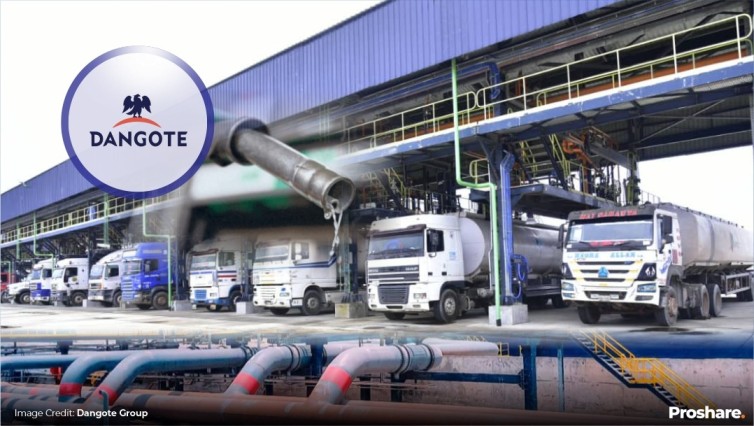
The landing cost of imported Premium Motor Spirit (PMS), popularly known as petrol, has again dropped below the ex-depot price offered by the Dangote Refinery, despite the refinery’s access to crude supply through the Federal Government’s Naira-for-crude arrangement.
Latest data released by the Major Energies Marketers Association of Nigeria (MEMAN) on March 2 showed that the landing cost of imported petrol stood at N809.83 per litre, reflecting global market dynamics and the impact of the ongoing geopolitical tensions in the Middle East.
In contrast, the gantry price at the Lagos-based Dangote Refinery, a 650,000-barrel-per-day facility valued at about $20 billion, rose to N874 per litre after the company increased its ex-depot price by N100 per litre earlier in the week.
The refinery attributed the increase to a surge in global crude oil prices triggered by the Middle East conflict.
The development means that imported petrol is currently about N64.2 per litre cheaper than the refinery’s price, intensifying competition in Nigeria’s downstream petroleum market.
READ ALSO: Fuel price set to surge as Dangote Refinery raises ex-Depot rate amid middle east crisis
The price adjustment by the Dangote Refinery has already triggered an upward review of pump prices across several parts of the country.
In Abuja and neighbouring states such as Nasarawa State, Kogi State, and Niger State, petrol now sells between N960 and N980 per litre, compared to previous prices ranging from N855 to N899.
Retail competition has also intensified among major marketers. Filling stations operated by MRS Oil Nigeria Plc, which maintains a supply relationship with Dangote Refinery, currently sell petrol at about N975 per litre.
This is N15 higher than the average pump price of N960 per litre recorded at outlets belonging to the Nigerian National Petroleum Company Limited (NNPC Ltd) and other independent marketers such as AA Rano Nigeria Limited and Ranoil Nigeria Limited.
Industry analysts say the price disparity highlights the emerging price war in Nigeria’s downstream oil sector, with marketers and refiners adjusting prices amid volatile global crude markets.
Reacting to the situation, MEMAN noted that the domestic fuel market is currently operating under high uncertainty due to fluctuating crude oil prices and geopolitical tensions.
“The market is currently on high uncertainty,” the association said in a brief comment accompanying its latest pricing data.
Explaining the recent increase, Dangote Refinery stated that it had implemented a “measured adjustment” of N100 per litre, representing about 12 percent, due to rising crude costs.
According to the company, it absorbed part of the cost pressure to reduce the impact on consumers.
“The refinery implemented a measured adjustment of N100 per litre in its ex-depot price of Premium Motor Spirit. The refinery has absorbed about 20 percent of the cost escalation, for now, to cushion the domestic market,” the statement read.
The development has also revived debate over the effectiveness of the Federal Government’s Naira-for-crude policy, introduced in 2024 to reduce foreign exchange pressure and lower domestic fuel costs.
Dangote Refinery confirmed that it receives crude supplies in Naira from the NNPC Ltd, but said the volumes remain insufficient for its full operational needs.
According to the company, the national oil firm supplies about five cargoes of crude monthly, which are paid for in Naira but still priced at international market rates with additional premiums.
However, the refinery requires about 13 cargoes monthly to sustain production and domestic sales, forcing it to source additional crude through export markets.
“While we receive about five cargoes a month from NNPC, these cargoes are priced at international market prices plus a premium and fall short of the 13 cargoes that we require to support sales into Nigeria,” the refinery explained.
Industry stakeholders have expressed concern that global crude price shocks continue to influence local fuel prices despite the Naira-for-crude initiative.
Legal practitioner and public affairs analyst Deji Adeyanju recently raised alarm over the continued volatility in the domestic market, arguing that the policy has yet to deliver the expected price stability for Nigerian consumers.
As of the time of filing this report, Brent Crude traded at $85.12 per barrel, while West Texas Intermediate stood at $80.54 per barrel.
Industry data also show that imported petrol was N77 cheaper than Dangote’s price in February, when crude oil prices were relatively stable, underscoring the growing influence of international market fluctuations on Nigeria’s fuel pricing dynamics.
Energy analysts warn that unless crude prices stabilise or domestic supply improves significantly, Nigerian motorists may continue to bear the burden of fluctuating pump prices in the months ahead.



 Entertainment4 days ago
 Health1 week ago
 Latest6 days ago
 Business7 days ago
 Health1 week ago
 Latest1 week ago
 Aviation6 days ago