
Comments and Issues
In Africa, elections are mostly crooked

Published
3 months agoon
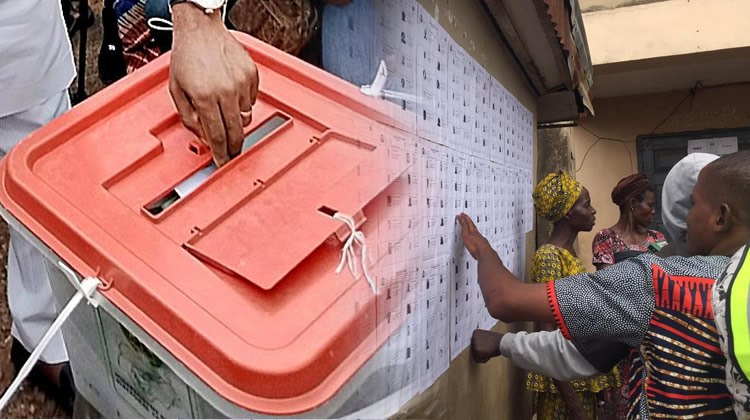
The black continent of Africa is made up of roughly 50 Countries most of which have opted for multiparty democracy as a way to set up the political organs that govern their respective nations.
The African continent is not known for transparent, free, fair and peaceful elections and the reason is because enlistment into the political ruling class is seen as the fastest avenue whereby the members can manipulate the weak economic, legal and legislative systems to become so much wealthy that they could use the illicitly acquired wealth to retain themselves in the political circles for life. In such places as Ivory Coast, Nigeria, Tanzania and Uganda, elections usually are manipulated by incumbent presidents to retain powers either for themselves or for their handpicked candidates.
This is why Africa is the continent with the largest poorest people in the world. Bad governance breed mass and absolute poverty amongst the population. The problems associated with badly managed elections are all over Africa.
In Nigeria, the year 2023 General election has entered the political history of the country as the one in which the political party in power- All Progressives Congress, manifestly stole electoral victory using the easily manipulated and heavily compromised electoral management body; INEC, perjoratively defined as Independent National Electoral Commission but it’s everything but independent. The then incumbent president, the late erstwhile military dictator General Muhammadu Buhari, did everything under the sun to compromise the election managers to return the All Progressives Congress (APC).
Also, the Nigerian judiciary is so weak that it couldn’t adjudicate electoral contestation between rivals to a satisfactory outcome.
The election petition tribunal that heard the cases between the Peoples Democratic Party candidate Atiku Abubakar, the presidential candidate of the Labour party, Mr. Peter Obi, versus the candidate of the ruling party, Bola Ahmed Tinubu, the Court of Appeal, was so messed up that most of the lawyers who attended the reading of the judgments, slept off right inside the courtroom because of the sheer ludicrous nature of what they were subjected to.
These lawyers Sat through the ordeals of listening for over 2 hours of reading of the prearranged judgment by the Court of Appeal which ended up justifying the manipulated election which favoured the party that conducted the contentious election.
The court of Appeal in Nigeria which is the second highest judicial institution in Nigeria is heavily compromised just as accusations of bribery and corruption have trailed most of the political cases between the party in power and their opponents. For a proper understanding of the issue, bribes are offered to judges by all the political parties.
The Supreme Court of Nigeria as the apex court in Nigeria, went a step lower into infamy by also returning the party Governing the government of Nigeria which organised and supervised the conduct of the compromised poll, as the winner.
The 2023 poll lowered the respectability of Nigeria in the assessment of global election watchers.
Another example of manipulated presidential poll happened in Ivory Coast last year and was aptly captured by the BBC in one of their reportage.
The BBC reported that the presidential election on October 25 in the West African nation comes after a decade of relative stability following the post-electoral crisis of 2010–2011, which left thousands dead and a nation divided. While Ivory Coast, officially known as Cote d’ Ivoire, has since enjoyed strong economic growth, deep political fault lines remain.
The vote will follow a two-round system: If no candidate secures more than 50% of the vote, the election will head to a runoff. The elected president will serve a five-year term, which would allow him or her to shape the country’s political direction for the remainder of the decade.
Ouattara makes unprecedented bid for fourth term, reports the BBC which then recalled that the incumbent president Alassane Ouattara, 83, is seeking a fourth term after constitutional changes in 2016 reset term limits. A former International Monetary Fund economist, Ouattara is expected to win and he did, as it later happened.
This writer observes that as someone hitherto employed by the Western nations under the World Bank, the Brettonwood institution endorsed his so-called economic stabilisation governance standards he reportedly provides for Ivorians.
The West therefore overlooked the accusations of self-perpetuation agenda of the Ivorian dictator all because he is implementing their Western styled economic reforms in accordance with the agenda of the World Bank.
Uganda, is another place whereby open robbery of votes has replaced what is known as election. Ugandans in the last 40 years under the dictator Yoweiri Museveni, have known only but compromised electoral processes that have retained the incumbent president in office and at such a very old age, just like in Cameroon under Paul Biya,Museveni is hell-bent to install himself as a president for life.
As I write, another charade of what Museveni calls election is happening and just before the final count is taken this Saturday, it is widely believed that Museveni has already rigged himself to maintain a 40-year strangled hold on Ugandans. Aljazeera television did a comprehensive report of the before and during the election events which painted a picture of anything but a clean election.
Many opposition politicians running for Elective offices in Uganda are either dead or jailed by Museveni who has operated a brutally obsessed police state.
The below is the coverage of the election in Uganda by Aljazeera television.
It reported that journalists in Kampala reported being prevented from accessing Wine’s residence in the Magere area. Late on Thursday, the NUP alleged that “Security officers have unlawfully jumped over the perimeter fence and are now erecting tents within his compound.”
Police spokesman Kituuma Rusoke told local broadcaster NBS that Wine, as a presidential candidate, was “a person of interest” and that the security deployment was intended to protect him.
Following the 2021 election, in which Wine won 35% of the vote, he was confined to his home for several days by security forces.
Ugandans cast their ballots on Thursday in a tense election following a frequently violent campaign. Museveni, 81, is seeking a seventh term in office, while Wine, a 43-year-old pop star-turned-politician, has alleged “massive” electoral fraud. He has not provided documentary evidence and authorities have not responded to the claims.
Ahead of the vote, the United Nations Human Rights Office warned the election would be marked by “widespread repression and intimidation”.
Voting was delayed by up to four hours at many polling stations due to late delivery of ballot boxes and malfunctioning biometric voter verification machines, problems some observers have linked to the internet outage.
Although six other candidates are on the ballot, analysts view the race as effectively between Museveni and Wine. Given Museveni’s victories in the previous six elections, observers say he is likely to extend his decades-long rule.
Wine has positioned himself as a voice for Uganda’s youth, in a country where most citizens are under 30, pledging to fight corruption and push through sweeping reforms. Museveni, meanwhile, argues that his leadership is essential for stability and development.
The campaign period was overshadowed by allegations of harassment and detention of opposition supporters, which police spokesman Kituuma Rusoke dismissed, accusing opposition backers of disruptive behaviour.
Internet services were cut on Tuesday, with the Uganda Communications Commission saying the move was aimed at preventing misinformation, fraud and the incitement of violence. The UN human rights office described the shutdown as “deeply worrying”.
Wine, whose real name is Robert Kyagulanyi, had urged supporters to protest if the results were manipulated, but no demonstrations had been reported as of Friday morning.
A Museveni victory would further extend the former rebel leader’s four-decade grip on power. He is widely believed to favour his son, army chief Muhoozi Kainerugaba, as a successor, a claim he has denied.
The final presidential results are expected to be announced by 16:00 local time (13:00 GMT) on Saturday, according to the electoral commission.
How then does any rational person draw a conclusion that these charades in Nigeria, Cameroon, Ivory Coast, Tanzania and Uganda are called elections? These are not free, fair and transparent polls by any conceivable standards. Besides, the sub regional bodies and the continental body known in West Africa as Economic Community of West African States (ECOWAS) and the African Union are obviously misled by the same Presidents of these nations with poor elections,
Unfortunately, it is not getting better because in Zimbabwe, elections are criminally rigged by the dictator in power: Emerson Mnangagwa.
South African Democratic process is adjudged a bit transparent but what we call elections in most parts of Africa are seriously not compatible with the rudimentary free, fair, peaceful and transparent elections.
First, the election managers are handpicked and dictated to by the tyrant in power to do the bidding of the political party in power.
Secondly, the judiciary is so deeply corrupt because most of the judges are candidates of politicians who are in power. Any wonder then that in some of the places in West Africa whereby elections were rigged, their Army took over power by the barrels of the guns. Over 5 countries are now governed by military dictators because the civilian dictators wanted to perpetuate themselves or their rookies in power.
Nigeria is one place the eyes of the world are watching because a key presidential poll would take place in the first quarter of next year. Already, the incumbent president has jumped the gun, violated the electoral Act and had looked the other way whilst his appointees are all over the country, campaigning for Bola Ahmed Tinubu to return by hook or crooked means next year for a second term. INEC which styles itself as an independent umpire, has pretended like it is deaf and dumb whilst politicians abuse electoral Act and have started campaigning for the 2027 election. Those of these politicians controlling public funds at the centre and in the federating units, have diverted public funds to orchestrate campaigns.
Before I forget, the president has already handpicked his favourite to head the Independent National Electoral Commission to conduct the election in which he is desperately determined to win not by the popular votes of the citizens, but by the forced endorsements of governors even from the opposition parties who are forced by fear of prosecution for graft by the Economic and Financial Crimes Commission to jump ship into the President’s political party the All Progressives Congress and by doing so, openly canvassing the return of the incumbent president in few months time as a second term president.
The truth is that elections are compromised if the population decides to remain either apolitical, compromised or blackmailed with economic stagnation, desperate hunger, poverty to sell their voters cards to the All Progressives Congress who in the context of the 2027 poll, would control the police, the Army, the election managers and the CBN in which case the incumbent president can buy off the starving and desperately blackmailed poor voters, if he so wants to behave like any of those other civilian despots aforementioned.
The most pressing question demanding our collective answer as citizens is whether we will allow the election of 2027 to be manipulated like it was done in 2023?
Another question we should ask is to ascertain if the new election top manager as chairman of INEC who was recruited from his poorly renumerated university system as a poor teacher to head the richest and juiciest electoral commission in Africa whose budget rivals that of the defence sector, is ready to become a change agent and conduct a transparent election. Is the new chairman of INEC willing to make a mark or he is just one of them? Nigerians, the ball is in our court.
The Carter Centre in the USA asked that: How Do We Know a Good Election When We See One? It gave a general response which I accept as meeting international benchmark.
It said: Over the last decade, practitioners working on election assistance and observation have made important strides in defining common principles to guide their work, developing more systematic methodologies, and expanding their work to focus increasingly on broader democratization processes. Consensus has emerged that standards for elections should be based on state obligations rooted in international human rights law and that there are clear, important distinctions between fraud, malpractice, and systemic manipulation of the legal framework for elections.
My readers would agree with me that these standards are mostly lacking in many of these African so-called democracies including the so-called largest black democracy in the world which is my nation of Nigeria.
EMMANUEL NNADOZIE ONWUBIKO, is the founder of the HUMAN RIGHTS WRITERS ASSOCIATION OF NIGERIA (HURIWA) and was NATIONAL COMMISSIONER OF THE NATIONAL HUMAN RIGHTS COMMISSION OF NIGERIA.

You may like
Trending
 Latest1 week ago
ADC accuses INEC of misinterpreting court order, demands chairman’s removal amidst growing leadership crisis
 Football1 week ago
Manchester City storm into FA cup semi-finals with 4-0 rout of Liverpool
 Business7 days ago
Soaring fuel prices worsen economic hardship for Nigerians
 Latest1 week ago
2027: Fresh details emerge on Peter Obi’s political strategy amid ADC crisis

 Health1 week ago
Study finds higher risk of heart inflammation in teens after mRNA COVID-19 vaccination
 Latest6 days ago
Inside the daring U.S. mission to rescue stranded airman in Iran
 Latest6 days ago
Breaking: Internal pressure mounts as ADC considers leadership shift to Ralph Nwosu
 Latest1 week ago
Fani-Kayode knocks Peter Obi after explosive NADECO-Abacha post