As inflation continues its relentless climb, Nigerians are being forced to make difficult choices to cope with skyrocketing food prices that have upended household budgets and altered eating habits across the country.
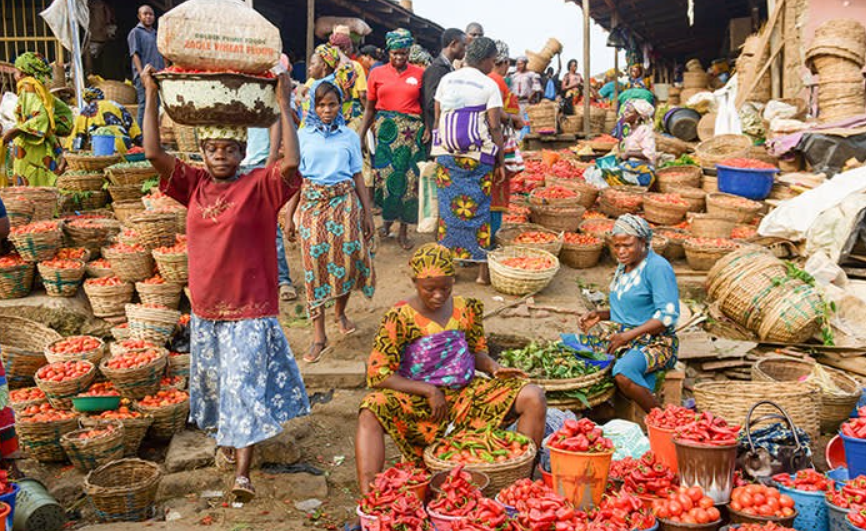
With annual inflation currently hovering around 33%, and food inflation even higher at over 40%, everyday staples like rice, yam, beans, and cooking oil have become nearly unaffordable for many families. A bag of rice that cost ₦35,000 a year ago now sells for more than ₦70,000 in major markets. Tomatoes, once a common kitchen item, are now a luxury for some.
Across urban and rural communities, households are cutting back—some switching to cheaper, less nutritious alternatives, others skipping meals entirely.
“I used to buy a full bag of rice, now I can only afford to buy ‘congo’ [a local measurement] weekly,” said Mrs. Funmilayo Ojo, a petty trader in Ibadan. “Sometimes we just manage with garri and groundnut.”
Small businesses are also feeling the pinch. Street food vendors and restaurant owners say the rising cost of ingredients is threatening their survival.
“I’ve had to reduce my portion sizes or risk running at a loss,” said Ismaila Yakubu, who sells amala and ewedu in Lagos Mainland. “Customers complain, but what can I do?”
While affluent Nigerians have been able to absorb the price shocks, millions are being pushed closer to food insecurity. According to the National Bureau of Statistics, over 63% of Nigerians already live below the poverty line, and the current inflation crisis is exacerbating the gap between rich and poor.
ALSO READ: Nigeria risks losing $4m World Bank loan over poor audit standards
Experts warn that food inflation has cascading effects—affecting school attendance, nutrition levels, and even social stability.
“When families can’t feed themselves, it creates a ripple effect. Malnutrition in children, stress in households, and growing public frustration,” said Dr. Chioma Eze, a development economist.
The Federal Government has introduced a number of short-term interventions, including conditional cash transfers and food relief programmes. However, critics argue that these efforts are not enough to counter the structural problems driving inflation, such as the high cost of transportation, insecurity in food-producing areas, and continued naira depreciation.
“Until we fix the supply chain and stabilize the naira, these palliative measures are just a bandage,” said Ahmed Musa, a policy analyst.
Many Nigerians also believe that the government has not communicated a clear long-term strategy to reduce inflation.
“We hear promises, but we need to see action. People are suffering,” said Ngozi Ibeh, a schoolteacher in Enugu.
For many, the numbers are more than statistics—they represent daily struggles, unanswered prayers, and dreams deferred. Whether in city slums or rural farming communities, inflation is not just an economic term; it is a lived experience marked by sacrifice and resilience.
“We are adjusting not because we want to, but because we have no choice,” said Samuel Bako, a father of four in Kaduna. “We just pray things get better.”


 Business1 week ago
 Latest6 days ago
 Business1 week ago
 Football1 week ago
 Business1 week ago
 Business1 week ago
 Football5 days ago
 Health1 week ago