
Latest
Inside the hidden war on Christians in Northern Nigeria

Published
4 months agoon
….This Is strategic targeting, says security expert
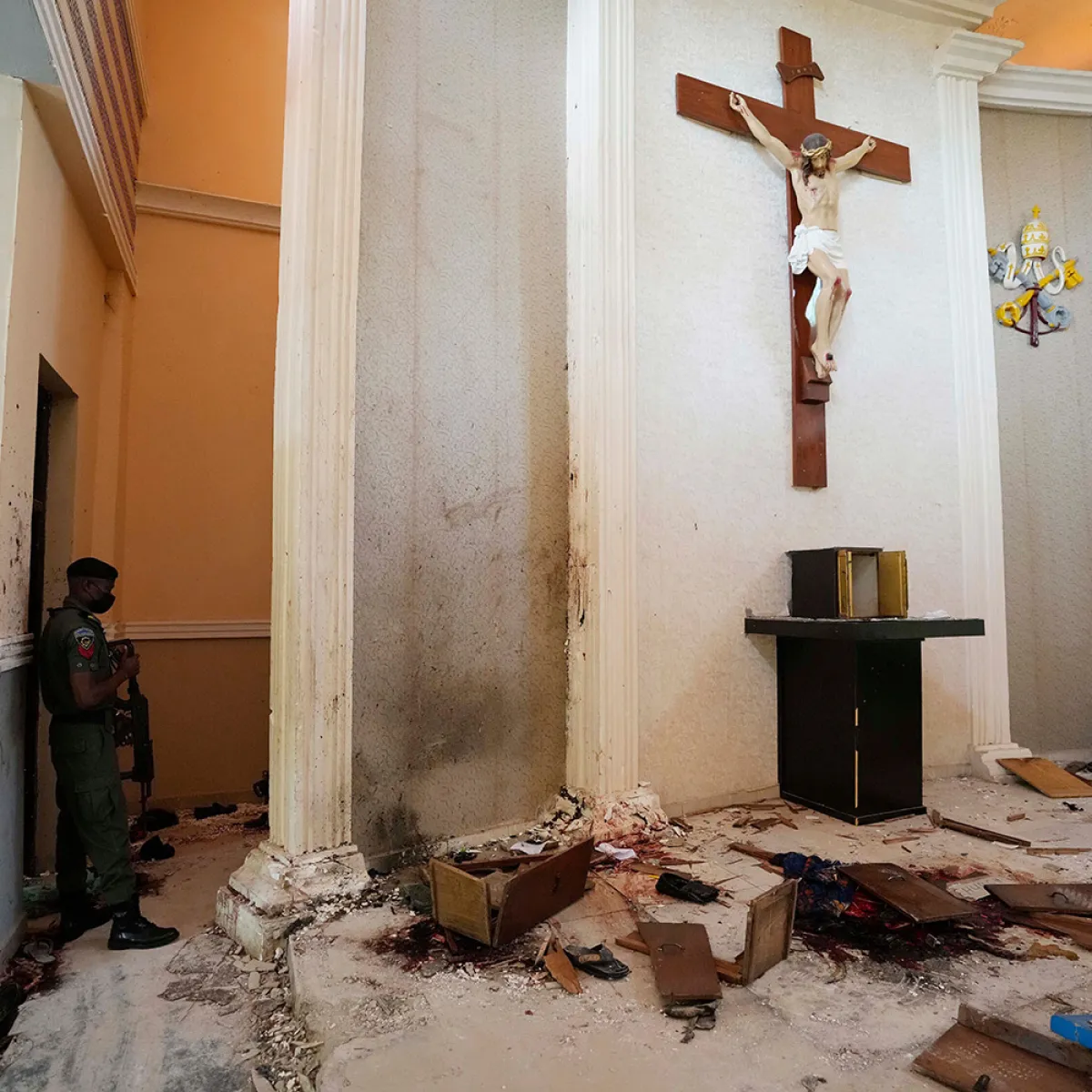
In the quiet dawns of Northern Nigeria, entire Christian communities have been reduced to smoke and silence. Villages that once thrived with harvests and laughter now lie abandoned, victims of repeated raids that leave homes burned, churches destroyed, and families shattered, Odunewu Segun writes
Just after dawn in a Plateau State farming settlement, when the light was still soft and the earth smelled of cold soil, survivors emerged from the bushes where they had hidden through the night.
They began counting the dead—slowly, mechanically—beside a dusty roadside: mothers who had tried to shield their children, a beloved schoolteacher, two teenage boys who had left for the market and never returned.
“They shot anyone who tried to run,” whispered a woman who had survived by lying motionless under a collapsed shed. Speaking to a local priest, her voice carried neither anger nor tears—only exhaustion. “We dragged bodies all day. The smell stayed for three days.”
Her grief is a familiar one across Nigeria’s North-Central belt, where, over the last five years, Christian farming communities have endured wave after wave of violent incursions—night raids, executions, arson attacks, kidnappings, and mass displacements that have transformed whole districts into ghost settlements.
Across Northern Nigeria’s farming belt, Christian communities face a silent, escalating crisis. From Plateau and Kaduna to Benue and beyond, villages are repeatedly raided, homes and churches burned, and families killed or displaced.
Survivors describe attacks carried out with precision—men targeted first, escape routes sealed, and land seized in the aftermath. While the government labels these incidents as “farmer-herder clashes” or “banditry,” experts warn they reflect a coordinated campaign disproportionately affecting Christian populations.
Displaced families now live in makeshift camps, struggling to survive, while abandoned farmlands deepen poverty and alter regional demographics. This hidden conflict exposes the human toll of violence, the complexities of sectarian and territorial disputes, and the urgent need for recognition, protection, and justice.
“Total desolation” — A priest’s account
A Catholic priest who took part in emergency burials after one Plateau attack described the scene with a kind of stunned clarity.
“It was total desolation,” he said. “You see families torn apart, infants lying where their mothers fell, homes still smoking. Dozens of children came to us with shock, burns, bullet injuries. These are not clashes. They are obliterations.”
Villages left in ashes and silence
Across Plateau, Southern Kaduna, Benue, and increasingly the outskirts of Abuja, once-thriving Christian farming communities now lie abandoned. Survivors recount how attackers—often arriving at night—seal off escape routes, target men first, torch homes and churches, and then sweep through farms.
Local clergy and humanitarian workers say entire hamlets have been emptied.
“They burn the church first,” said a survivor of a razed community near Kafanchan. “Then they go house to house. Days later, strangers appear and take the land. This is not a clash. It is a takeover.”
In makeshift IDP camps, displaced families cram into leaking shelters. A young mother in one such camp, her newborn sleeping on her chest, said quietly:
“We loved our land. We only wanted to farm and live in peace. Now we count the dead, and at night, we listen for steps.”
Experts warn: “This Is strategic targeting”
Government spokespeople routinely categorize these incidents as “farmer-herder clashes,” “banditry,” or “communal disputes.”
But security experts say these labels obscure the clear pattern of aggression.
Dr. Samuel Demehin, a conflict researcher at the Centre for Strategic Security Studies, argues that the coordination seen in many attacks goes far beyond random violence.
“The choice of communities, the repeated focus on Christian settlements, the simultaneity of attacks—this is too consistent to ignore. It suggests a structured campaign. Call it land control, call it displacement strategy, call it sectarian violence—but it is not mere banditry.”
Professor Lydia Gyang, an ethno-religious scholar at the University of Jos, says the official language is itself part of the crisis:
“A ‘clash’ implies two sides fighting. But most victims are attacked in their sleep. These are invasions. Villagers are not combatants—they are farmers, children, churchgoers.”
Human rights groups—Amnesty International, Christian Solidarity Worldwide, and others—have repeatedly criticized the Nigerian government’s reluctance to acknowledge the religious dimensions.
“You cannot apply economic-conflict language to sectarian violence,” says Lagos-based human rights lawyer Ifeanyi Okechukwu.
“When the state refuses to name what is happening, it indirectly enables it—and denies survivors justice.”
The violence has gained heightened attention in the United States, particularly among conservative lawmakers who argue that Nigeria is witnessing a “Christian massacre.” This narrative intensified after U.S. President Donald Trump issued a fiery threat, claiming he had instructed the Department of War to “prepare for possible action in Nigeria” over alleged anti-Christian killings.
In a social media post, Trump threatened to cut off assistance and suggested the U.S. might “go in guns-a-blazing” to “wipe out the Islamic terrorists” he accused of targeting Christians.
The comments came shortly after the administration added Nigeria to the U.S. “Country of Particular Concern” list for religious freedom violations.
But experts say such rhetoric, while politically potent, risks distorting an already complex conflict.
Analyst Bulama Bukarti warned that framing the crisis as a “Christian genocide” is inaccurate and dangerous:
“Armed groups in Nigeria attack Muslims and Christians. They bomb churches and mosques alike. They target markets, farms, schools—whoever is vulnerable. Simplifying this as religious genocide will further destabilize the region.”
Ebenezer Obadare, a senior fellow at the Council on Foreign Relations, echoed the concern, urging cooperation—not confrontation:
“The worst thing the U.S. could do is override Nigerian sovereignty. What is needed is coordinated assistance, not threats of invasion.”
President Bola Ahmed Tinubu responded swiftly to Trump’s remarks, insisting Nigeria protects citizens “across faiths and regions” and opposing any narrative that paints the nation as religiously intolerant.
Yet on the ground, the demographic shift is unmistakable.
Entire Christian communities are disappearing from Northern farmlands. Fields lie fallow. Homes collapse under weeds. Children grow up in squalid camps, drawing maps of villages they may never return to.
A displaced farmer in an IDP camp described the silence that now hangs over his ancestral community: “They want the land without the people. And the government pretends not to see it.”
Experts warn that if Nigeria does not confront the sectarian dimensions—and the strategic pattern—of these attacks, the region could slide into entrenched identity conflict comparable to the worst in Africa’s recent history.
On a humid dawn in May, survivors of an attack in a Plateau State farming community counted the dead by the roadside: mothers, a schoolteacher, and two boys who had run to the market and never came home.
“They shot anyone who tried to run,” one shaken witness told a local priest, her voice a flat, exhausted thing.
“We dragged bodies all day. The smell stayed for three days.” This is not an isolated grief. Over the last several years, clusters of communities across Nigeria’s North-Central and northern belt — particularly in Plateau, Benue, Kaduna and neighbouring states — have suffered repeated, sometimes savage assaults that have killed, displaced, and terrorised predominantly Christian farming communities.
Incidents vary in scale and method — from night raids on villages and ambushes of convoys to mass kidnappings and targeted murders — but survivors and investigators report recurring features: attackers arrive in numbers, burn compounds and farms, and use small arms and machetes with brutal efficiency.
Witnesses describe attacks that single out men first, then loot and burn homes, leaving families to either flee or remain among ruins. Local clergy and humanitarian groups say entire hamlets have been emptied as survivors flee to internally displaced persons (IDP) camps or cities.
A Catholic priest who helped retrieve bodies after a Plateau attack described the scene as “total desolation” — families torn apart, homes ablaze, and infants left in the rubble. He said his diocese was treating dozens of children for shock and bullet wounds.

You may like
Trending

 Entertainment6 days ago
Omoni Oboli applauds Nollywood filmmakers for their resilience

 Crime1 week ago
IGP Disu Refutes Reports of Total Squad Dissolution; Orders Strategic Thinning
 Crime7 days ago
Court jails former acting AGF Chukwunyere Anamekwe Nwabuoku over N868m fraud case
 Football6 days ago
Eritrea to end 18-year AFCON hiatus by hosting Eswatini

 Politics6 days ago
Lagos Assembly Hopeful Dr. Shipe Poise To Rebrand Epe Constituency 2

 Business6 days ago
Zenith Bank appoints Kennedy Okwudili Executive Director amid strong financial performance
 News5 days ago
Truck reportedly loses control along Beere–Oja Oba Road, multiple casualties feared (Video)

 Latest6 days ago
Meet our female contenders eyeing Ogun State’s top office in 2027