By Kingsley Chukwuka
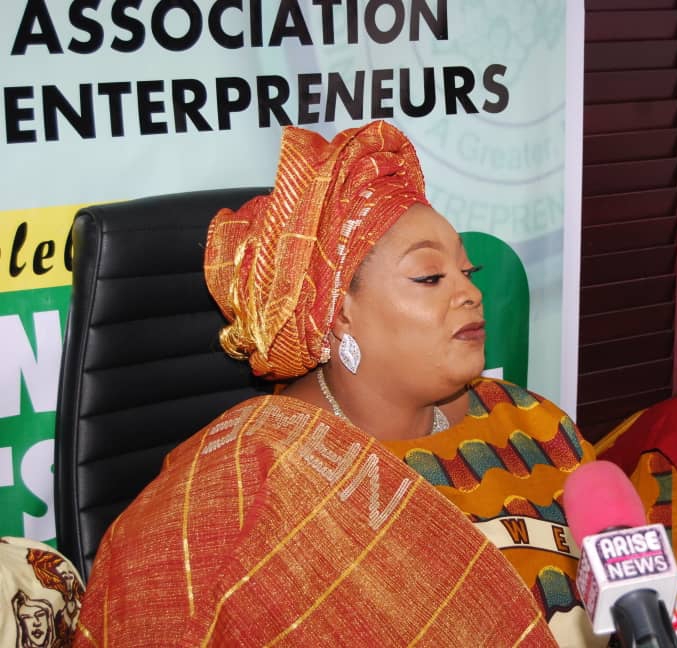
Women have made significant progress with their entry into all ranks of the Nigerian judiciary, President of Nigerian Association of Women Entrepreneurs (NAWE), Barr. Vera Ndanusa has said.
Ndanusa said though they still represent the minority, but argued that Nigerian female judges have recorded achievements, occupying even the highest leadership positions in the field.
Our correspondent reports that March 10 marks the International Day of Women Judges, which seeks to promote the full and equal participation of women at all levels of the judiciary and to celebrate the progress that has been made and raise awareness about the challenges ahead.
Speaking with journalists in Abuja on Thursday, the NAWE boss said since 1995, when Rosaline Omotosho emerged as the first female Chief Judge in Lagos, six others have occupied the position in the state, with only women serving in that capacity between 2009-2019.
She said despite the many achievements by female judges in Nigeria, a major stumbling block in attaining leadership positions in the judiciary is the statelessness confronted by Nigerian women upon marriage.
According to her: “Many women who transfer service to their husbands’ states after marriage often get petitioned upon recommendation, on the basis of states of origin, regardless of years of service.
“One of such cases occurred in 2012, when High Court Judge, Ifeoma Jumbo-Ofo, was recommended for the position of Justice of the Court of Appeal in Abia state.
“A petition was written against her to the CJN at the time, Aloma Mukhtar, pointing out that though she had been married into the state, she was not an indigene and could not assume the position.
‘Mukhtar had initially stepped down her swearing-in, despite 14 years of service by Jumbo-Ofo in Abia state.
“The decision was widely criticised, and after intervention by several bodies”, she was sworn in” Ndanusa said.
Our reporter recalled that the problem of statelessness has negatively affected women across other professions, and in reaction, a bill to bestow indigeneity on females married across state borders was presented to the National Assembly.
The bill had failed to be passed at both chambers of the National Assembly, which led to an uproar and a series of protests by women across the country.
Ndanusa however, called on the National Assembly to as a matter of urgency revisit the bill and do the needful.


 Business1 week ago
 Latest6 days ago
 Business1 week ago
 Football5 days ago
 Health1 week ago
 Business5 days ago
 Football1 week ago
 Football1 week ago