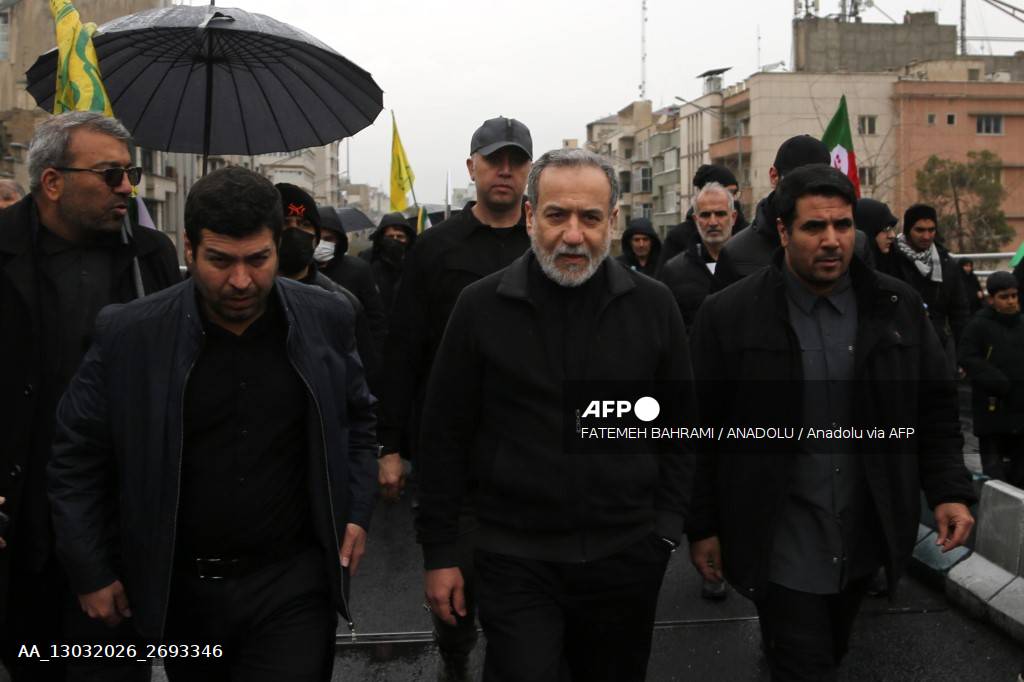
Iran’s Foreign Minister Abbas Araghchi has categorically denied that his country is engaged in any negotiations with the United States, even as he confirmed that messages are being exchanged directly with US special envoy Steve Witkoff, a distinction Tehran is drawing sharply as the two-month-old war between Iran and a US-Israeli coalition continues with no clear end in sight.
Speaking in an interview with Al Jazeera, Araghchi said: “I receive messages from Witkoff directly, as before, and this does not mean that we are in negotiations. There is no truth to the claim of negotiations with any party in Iran. All messages are conveyed through the Foreign Ministry or received by it, and there are communications between security agencies.”
Araghchi also clarified that Tehran has not yet responded to a 15-point proposal sent by the United States, stating that Iran has “nor submitted any proposals or conditions” in reply. He dismissed reports of an Iranian response as speculation from a media outlet, calling them “merely guesses.”
The 15-point plan reportedly contains terms including the dismantling of all existing Iranian nuclear capabilities, a commitment that Iran will discontinue efforts to obtain nuclear weapons, and a requirement that any already enriched uranium be moved out of the country.
Araghchi sharply questioned the sincerity of Washington’s overtures, noting that the US had previously demanded Iran’s “unconditional surrender.” “Didn’t the Americans say ‘unconditional surrender’?” he said in a televised interview on state-run Iranian broadcasting. “So why are they talking about negotiation now? The fact that they are talking about negotiation now is exactly an admission of defeat.”
The foreign minister cited a long pattern of broken trust as the basis for Tehran’s position. “One time, years ago, we negotiated, and we even got a deal, and then the US withdrew without any explanation. And twice last year and now this year, we negotiated with the US, and the result was an attack by them,” Araghchi said, adding that Iran’s trust in the US now stands at “zero.”
ALSO READ: U.S. lawmakers vow to sanction Nigerian officials who enable christian persecution
Araghchi stressed that Tehran is not seeking war and wants a permanent end to the conflict, but is demanding compensation for the destruction caused by weeks of US-Israeli attacks.
The war broke out on February 28, when strikes killed Iran’s supreme leader and triggered a conflict that has since spread across the region. Since then, Iran has allowed only a trickle of ships to pass through the strategic Strait of Hormuz, disrupting roughly 20 percent of global oil flows.
On the Strait of Hormuz, Araghchi said the waterway lies within Oman’s and Iran’s territorial waters and would remain closed to adversaries. “Only for the ships of those who are at war with us, this strait is closed. That is normal during war — we cannot let our enemies use our territorial waters for commerce.”
Amid reports of a possible US ground operation, Araghchi was defiant. “We know very well how to defend ourselves. In a ground war, we can do it even better. We are completely ready to confront any sort of ground attack. We hope they do not make such a mistake,” he said.
Iran’s dismissiveness extended to its military. A spokesperson, Lt. Col. Ebrahim Zolfaghari, addressing the US in a recorded statement aired on state television, mocked Washington’s approach: “Have your internal conflicts reached the point where you are negotiating with yourselves? The one claiming to be a global superpower would have already gotten out of this mess if it could.”
The standoff comes as President Trump claimed this week that his administration was engaged in “productive discussions” with Tehran an account Iranian officials have consistently contested, saying no direct or indirect talks have taken place. The UN Secretary-General António Guterres warned separately that “the prolonged closure of the Strait of Hormuz is choking the movement of oil, gas and fertilizer at a critical moment in the global planting season.


 Football1 week ago
 Energy1 week ago
 Energy6 days ago

 News1 week ago
 Football1 week ago
 Football1 week ago
 Football1 week ago