Iranian security forces used widespread and deadly force to suppress protests that swept across the country earlier this month, according to an investigation based on verified videos, witness testimonies and accounts from officials familiar with the government’s security response.
The demonstrations, which erupted over worsening economic conditions, spread rapidly from urban centers to rural and marginalized communities. As unrest intensified, authorities imposed a near-total communications blackout, severely limiting the flow of information and allowing misinformation to flourish online. Amid manipulated images and conflicting claims about casualty figures, journalists and researchers worked to verify what was actually unfolding on the ground.
Their findings point to a decisive and violent state response. According to officials with knowledge of internal deliberations, Iran’s Supreme Leader, Ayatollah Ali Khamenei, on Jan. 9 instructed the Supreme National Security Council to end the protests by all means necessary. Soon after, security forces opened fire on demonstrators in at least 19 cities, as shown in authenticated video footage.
Medical workers reported a sharp shift in the types of injuries treated at hospitals. What had initially been cases linked to crowd-control measures — such as tear gas exposure and limb injuries — quickly escalated to gunshot wounds and severe head trauma. One doctor described the change starkly, noting that patients were arriving with injuries consistent with live ammunition rather than non-lethal policing methods.
Further evidence emerged from Tehran’s main morgue, where photographs reviewed by investigators showed hundreds of bodies bearing signs of fatal trauma, particularly to the head and eyes. Additional reports indicated that bodies were also being transferred to cemeteries under heavy security. Within days of the crackdown, the protests had largely subsided.
While the full death toll may never be independently confirmed, most monitoring groups estimate that the number of people killed runs into the thousands, making it one of the deadliest protest crackdowns in Iran’s recent history.
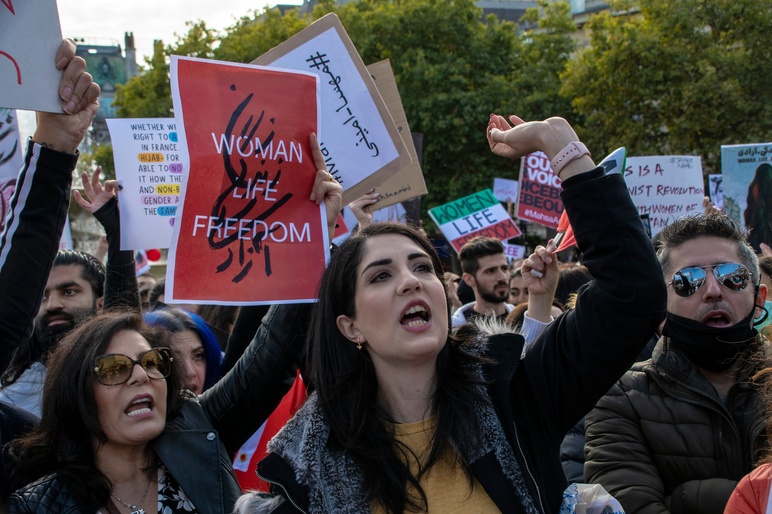
Analysts say the scale of the violence reflects the leadership’s perception of an existential threat. Unlike earlier waves of unrest, the latest protests featured open calls for the end of the Islamic Republic and the removal of Khamenei himself. Chants denouncing the regime became increasingly common as demonstrations grew.
“This level of repression is unprecedented,” said Omid Memarian, an Iran analyst and journalist based in New York. “Almost everyone inside the country knows someone who has been killed, injured or detained.”
Iran has a long history of confronting dissent with force, though previous episodes varied in intensity. The 2009 Green Movement, sparked by disputed election results, was largely contained through arrests and political pressure, resulting in dozens of deaths. Economic protests between 2017 and 2020, as well as nationwide demonstrations in 2022 following the death of a woman in morality police custody, were met with harsher measures, leaving hundreds dead.
The most recent crackdown, however, appears to surpass those episodes. What began as anger among shopkeepers over economic hardship quickly evolved into a nationwide movement, reaching far beyond Tehran. Initial government attempts to placate citizens with modest financial promises failed to stem the momentum.
Experts draw parallels only with the darkest moments of Iran’s post-revolutionary past. Some compare the ferocity of the response to the late 1980s, when the Islamic Republic, still consolidating power, carried out mass executions of political prisoners amid internal dissent and the backdrop of the Iran-Iraq war.
“The severity of the response shows how fragile the leadership believes the situation has become,” said Sanam Vakil of Chatham House. “The protests revealed that a growing number of Iranians feel they have reached a breaking point.”
As Iran returns to a tense calm, questions remain about accountability, the true scale of the casualties, and what the crackdown signals for the country’s political future.


 Energy7 days ago
 Crime6 days ago
 Football7 days ago
 Business7 days ago
 Crime6 days ago
 Business7 days ago

 Business7 days ago