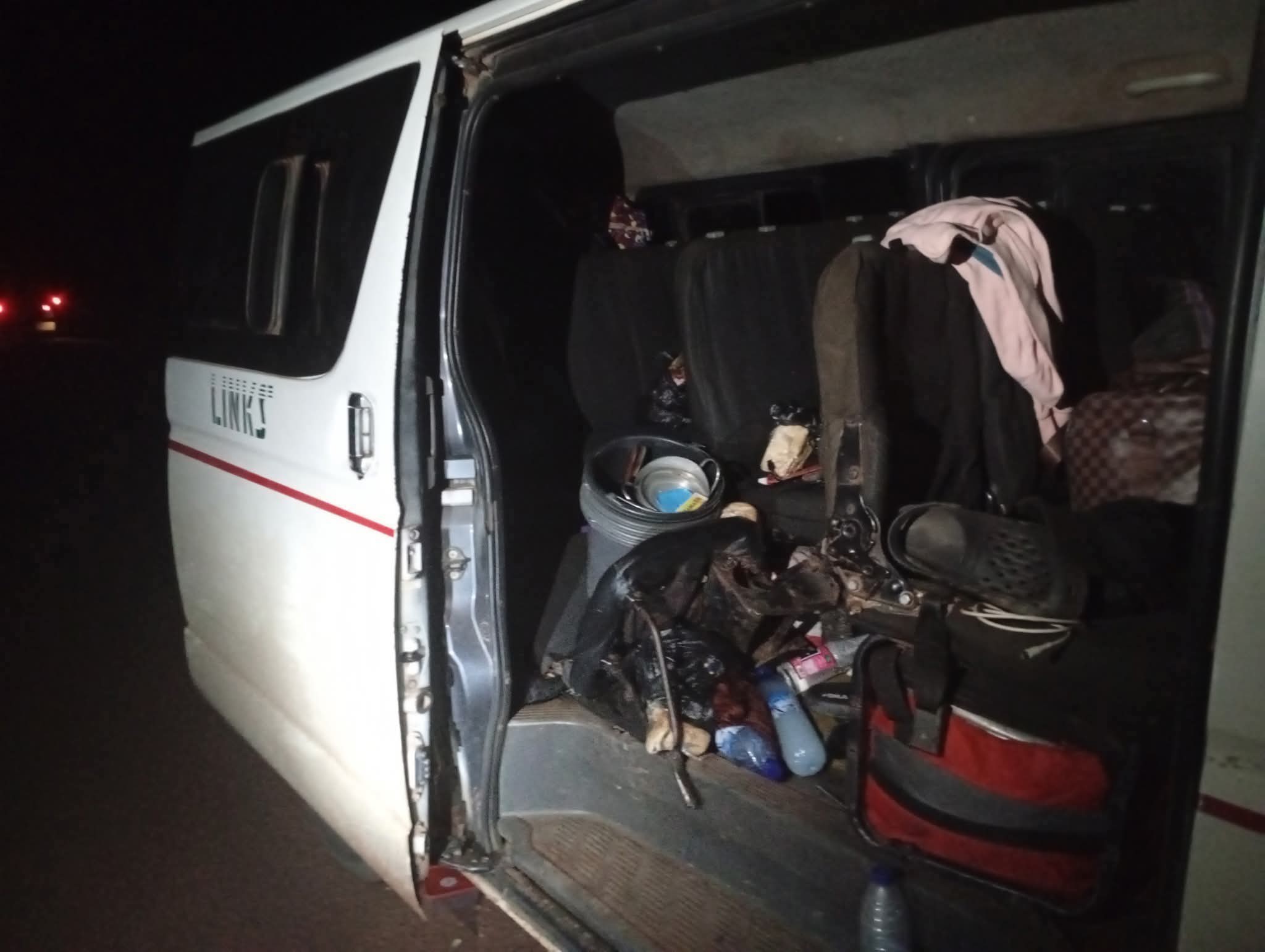
The abductors of several passengers traveling aboard a Benue Links commercial bus have demanded a staggering N350 million ransom for the release of their captives, days after the victims were seized in a brazen daylight ambush.
The incident occurred on June 22 in Okpokwu Local Government Area of Benue State, when armed men suspected to be bandits intercepted the state-owned vehicle and forcefully marched its occupants into the surrounding forest at gunpoint.
Confirming the development, Terna Agbecha, a relative of one of the kidnapped victims, identified his cousin as Hembadoon Akume, who was among the passengers aboard the ill-fated bus.
“They [the kidnappers] contacted our family and demanded N350 million. Our elder sister managed to pay N500,000, but they refused to release her,” Agbecha lamented.
Distraught families of the abducted passengers have since called on the Benue State Government and national security agencies to intervene urgently, citing fears for the safety and well-being of their loved ones still in captivity.
“We’re helpless and afraid. The government must not abandon us. These are innocent commuters whose only crime was boarding a public bus,” another relative said, requesting anonymity due to security concerns.
This latest kidnapping incident underscores growing concerns about the deteriorating security situation along Benue’s highways, particularly routes connecting rural communities and urban centers. The Benue Links Transport Company, owned by the state government, is widely used by locals for affordable intercity travel.
Security analysts say the attack reflects the increasing audacity of bandit groups who now target public transportation as a means to extract high-value ransoms from vulnerable citizens.
READ ALSO: Kidnappers demand N5m ransom for abducted Deeper Life Church members in Ondo
“Targeting state-run transport buses is both symbolic and strategic for criminal elements. It sends a message of impunity and weakens public confidence in security,” said Dr. Okey Ajunwa, a security analyst and lecturer at the University of Abuja.
As of press time, the Benue State Government has yet to issue an official statement on the abduction or confirm whether security forces have launched a rescue operation. However, sources within the Benue State Police Command indicated that efforts are ongoing to gather intelligence and coordinate a response.
Meanwhile, families of the victims have continued to mobilize funds while enduring emotional and financial strain.
“They [the kidnappers] warned us not to involve the police. But we’re losing time, and we don’t even know if they’re alive or being mistreated,” Agbecha said tearfully.
The incident adds to a disturbing trend of mass abductions for ransom across Nigeria, despite renewed federal efforts to reform the security architecture. In recent months, multiple cases involving buses, schools, and travelers have been reported in the North-Central and North-West regions, raising alarm over the government’s ability to curb banditry.
Human rights organizations and civil society groups have called on the federal and state governments to treat such incidents as national emergencies and to strengthen the deployment of security forces in vulnerable corridors.
As the families of the kidnapped Benue Links passengers await action, many fear that the growing menace of highway abductions could further cripple inter-state travel and worsen public trust in state-run services.



 Health6 days ago
 Energy6 days ago
 Latest6 days ago
 Trending Stories6 days ago
 Latest6 days ago
 Latest5 days ago
 Business1 week ago
 Latest5 days ago