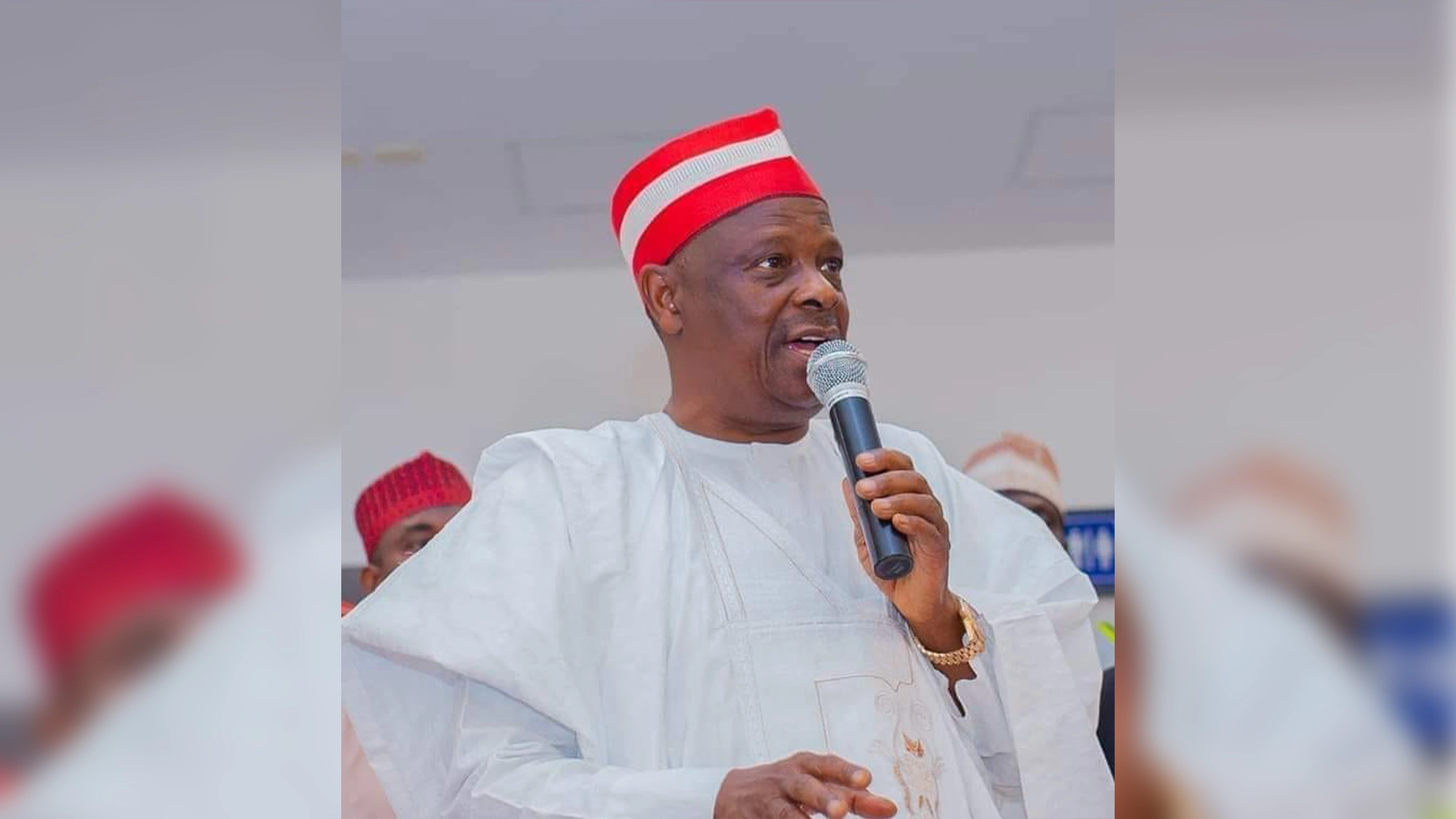
Former Kano State governor and leader of the Kwankwasiyya Movement, Senator Rabiu Musa Kwankwaso, has advised his supporters who are allegedly under pressure to join a political movement within the All Progressives Congress (APC) to act discreetly, including signing documents indicating their agreement, in order to avoid victimisation.
Kwankwaso, who is also the national leader of the New Nigeria People’s Party (NNPP), gave the advice on Tuesday while addressing some of his supporters in Kano in a video message delivered in Hausa.
His remarks came amid reports of plans by the incumbent Kano State governor, Abba Yusuf, to defect from the NNPP to the APC.
Governor Yusuf was elected in 2023 on the NNPP platform after defeating the APC candidate, Nasir Yusuf Gawuna.
Yusuf polled 1,019,602 votes, while Gawuna secured 890,705 votes. Recent political developments suggest that the governor may defect to the ruling APC alongside several state and federal lawmakers from Kano, as well as other NNPP members.
In the video message, Kwankwaso described the movement his supporters were allegedly being pressured to join as the “Gandujiyya movement,” a political tendency associated with the immediate past national chairman of the APC and former Kano State governor, Dr Abdullahi Umar Ganduje.
Although Kwankwaso repeatedly referred to the Gandujiyya movement, political observers believe his comments were directed at the broader push for NNPP members to defect to the APC in line with the governor’s reported plans.
Kwankwaso said he was aware that several NNPP members holding elective and appointive positions in the state were facing intense pressure to defect.
According to him, some of these officeholders were being asked to sign documents indicating their consent to join the Gandujiyya movement.
READ ALSO: Heavy security presence at Kano govt house sparks defection rumours around Gov. Yusuf
He explained that his advice to sign the documents was aimed at protecting his supporters from harassment and undue pressure by the state government.
“Several of our supporters who currently hold political appointments, as well as members of the State Assembly, have reached out to me in distress,” Kwankwaso said in Hausa. “Many of them have been unable to sleep at night; some have reportedly been hospitalised, receiving medical treatment, while others are showing signs of severe emotional strain.”
He added that after consultations with his associates, it was agreed that, in the interest of easing tension and safeguarding the well-being of party members, those asked to sign defection documents should comply. “Anyone who is asked to sign such documents should do so,” he said.
Kwankwaso expressed concern that such intense political pressure was taking place even though active politicking for the 2027 general elections had not yet begun in Kano State.
Political analysts have described the development as a volte-face for Kwankwaso, who had earlier condemned the proposed defection of Governor Yusuf as a betrayal of the Kano electorate.
Following the emergence of reports about Yusuf’s planned move to the APC, the former defence minister had publicly drawn battle lines with the governor and his political appointees, accusing them of betraying the voters who brought the NNPP to power in the state.
Adding to the controversy, another former Kano State governor, Senator Ibrahim Shekarau, criticised Kwankwaso, arguing that he lacked the moral authority to oppose Yusuf’s defection.
Shekarau recalled that Kwankwaso himself had, while serving as governor, defected from the Peoples Democratic Party (PDP) to the APC.



 Business1 week ago
 Business1 week ago
 Health1 week ago
 Health1 week ago
 Politics1 week ago
 Featured1 week ago