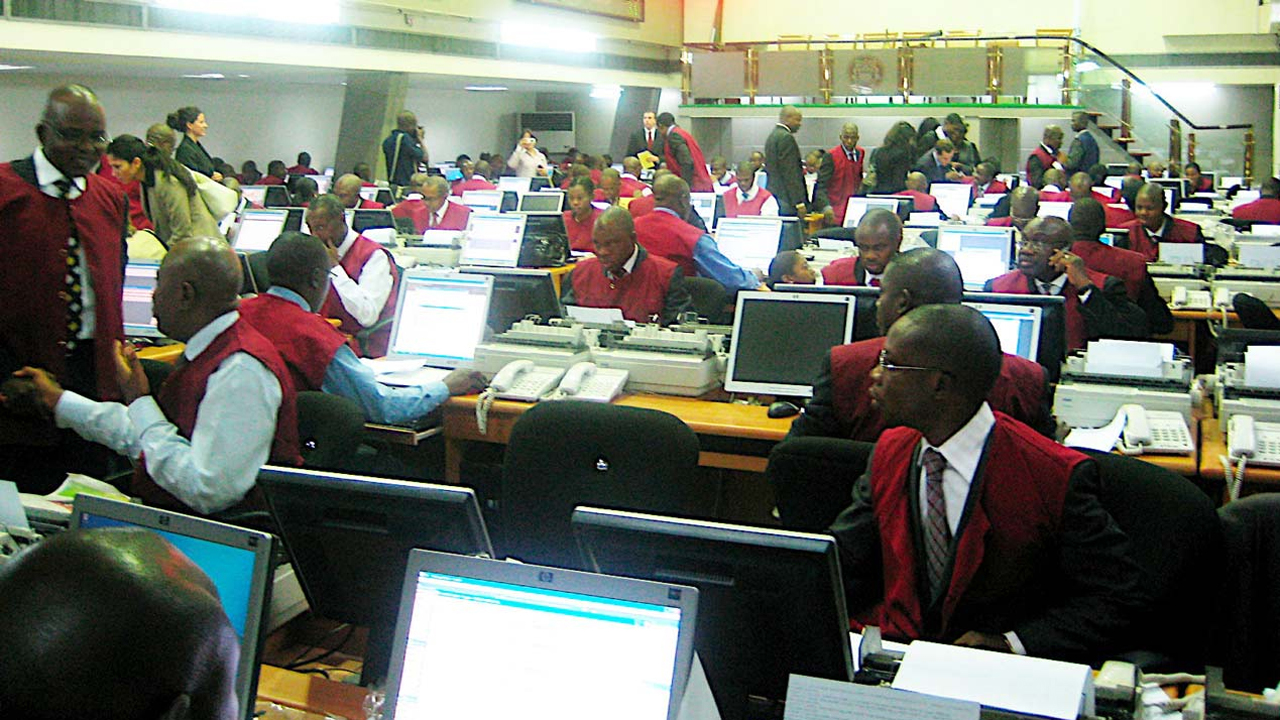
Capital market operators (CMOs) have largely welcomed the Securities and Exchange Commission’s (SEC) decision to significantly raise minimum capital requirements across Nigeria’s capital market, describing the move as timely, consultative and critical to building a stronger, more credible market.
A cross-section of operators said the new capital framework aligns with broader efforts to deepen liquidity, strengthen governance and support President Bola Tinubu’s ambition of building a $1 trillion economy.
The SEC unveiled the revised requirements in a circular issued on January 16, 2026, replacing the 2015 capital regime and giving operators until June 30, 2027, to comply.
The new rules affect a wide range of market participants, including brokers, dealers, fund managers, issuing houses, market infrastructure institutions and digital asset operators.
Speaking on the development, many stockbrokers said the announcement did not come as a surprise. Mr. Aruna Kebira, Chief Executive Officer of Globalview Capital Limited, said the timeline for the recapitalisation exercise had long been communicated to the market.
“They brought us a calendar. If you look at that calendar, they were supposed to advise the market today, and that is exactly what they did,” Kebira said. “We woke up to it in the early hours of the morning. That tells you they were right on point. They promised January 16, and they delivered.”
Kebira noted that recapitalisation had been a recurring topic at meetings of the Capital Market Committee (CMC), with industry groups such as the Association of Securities Dealing Houses of Nigeria (ASHON) and the Nigerian Exchange Group (NGX) actively engaged in discussions.
While expressing broad support for the new framework, Kebira pointed to what he described as a technical inconsistency in the treatment of broker-dealer licences.
READ ALSO: SEC unveils sweeping capital overhaul, raises minimum requirements across capital market
Addressing concerns that the new requirements could force smaller firms out of the market, Kebira downplayed the likelihood of mass exits, noting that operators have an 18-month window to comply.
“June 2027 is enough time for any serious business to recapitalise. I am not advocating panic or mass exits,” he said. “There may be downgrading—broker-dealers becoming brokers, dealers becoming sub-brokers—but that is orderly restructuring, not collapse.”
He also noted that proceeds from the demutualisation of the Nigerian Exchange have already strengthened the balance sheets of many stockbroking firms.
On fears that higher capital thresholds could lead to increased transaction fees, Kebira dismissed such concerns, stressing that fees are regulated.
“The last recapitalisation did not affect commissions, and this one will not either,” he said. “What this really does is give firms more capacity to do business and inject more liquidity into the market.”
Another senior market operator, who spoke on condition of anonymity, said the policy was widely anticipated within the industry.
“At the CMC meeting last year in Lagos, it was exhaustively deliberated that SEC was trying to strengthen the capital base of the market,” he said. “This will weed out the very small players. There will be mergers and acquisitions, no doubt.”
He added that while industry consolidation could eventually lead to adjustments, any changes to fees would still fall within regulatory limits.
“Clients won’t lose their money. Some firms will merge; others will move clients to bigger houses, and some will downgrade their licences,” he explained.
Also reacting, Dr. David Ogogo, pioneer Registrar and former President of the Institute of Capital Market Registrars (ICMR), said operators had ample notice of the changes.
“The conversation has been on for years. Those who were uncomfortable should have made representations, and I am aware some did,” Ogogo said, adding that the SEC would have considered such inputs before finalising the framework.
While Ogogo noted that the implementation timeline could have been shifted slightly to later in the year, he acknowledged that the June 2027 deadline provides sufficient room for adjustment. He also placed the capital figures in a global context.
“When you convert these numbers to dollar terms, they are not extraordinary compared to similar organisations globally,” he said, urging operators to think beyond the Nigerian market and position themselves competitively on a global scale.
Operators also called on the SEC to provide clearer guidance on what qualifies as acceptable capital—particularly the balance between fixed and liquid assets—and to intensify investor education.
“There is no need for panic,” one operator said. “SEC needs to reassure investors that assets are held by custodians and that recapitalisation does not mean firms are failing.”



 Football1 week ago
 Business1 week ago
 Latest1 week ago
 Latest1 week ago
 Crime1 week ago
 Latest1 week ago
 Latest6 days ago
 Latest1 week ago