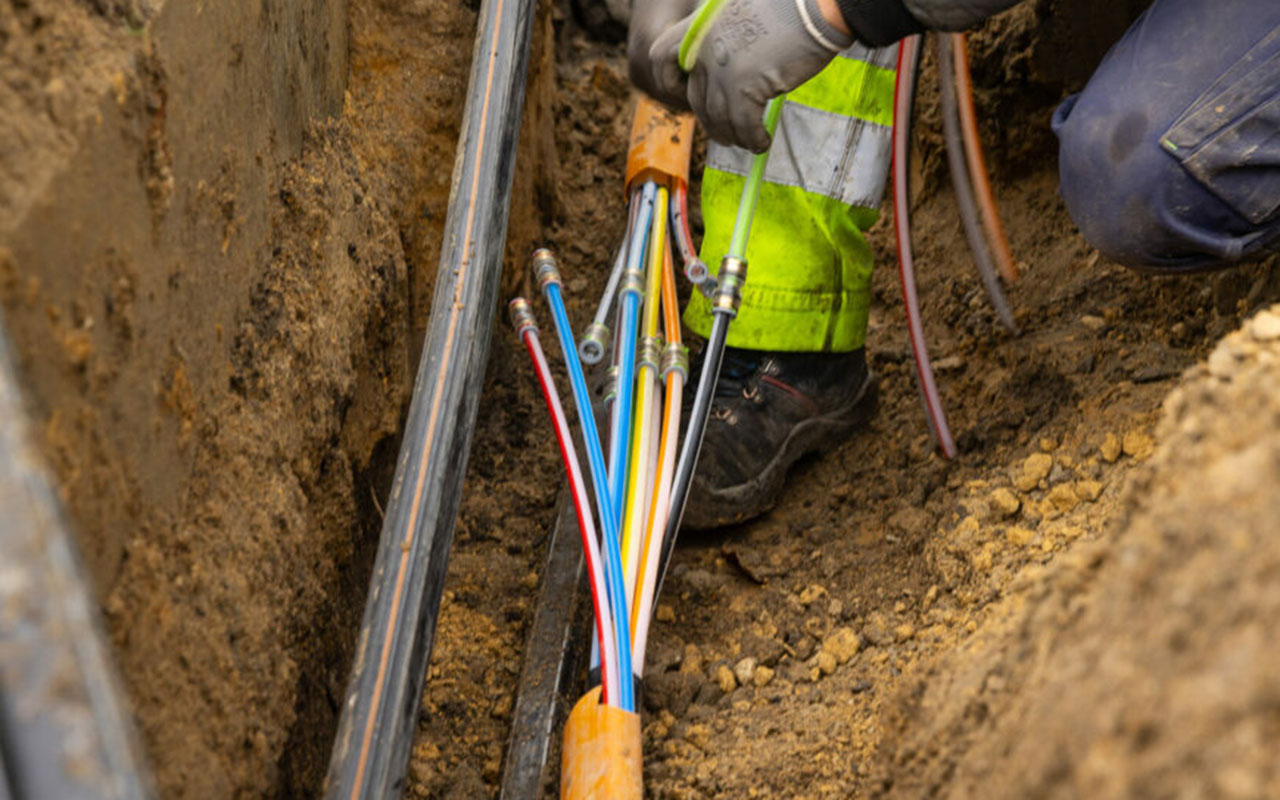
MTN Nigeria has announced plans to deploy Artificial Intelligence (AI) technology to monitor and safeguard its fibre optic cable network across the country, in a bid to curb the growing menace of infrastructure vandalism.
The initiative, which is being developed in collaboration with Huawei Technologies, aims to detect unusual vibrations, identify potential threats, and instantly alert technical teams for swift intervention.
The telco’s Chief Technical Officer (CTO), Yahaya Ibrahim, made the disclosure during a session at the ongoing MTN Media Innovation Programme. He revealed that MTN recorded over 13,700 fibre cuts between January 2024 and June 2025 — a figure highlighting the grave threat to Nigeria’s digital infrastructure.
“In just 2024, we recorded over 9,000 cable cuts, and by June 2025 alone, 4,700 more had occurred,” Ibrahim said. “We are now turning to AI to enhance our surveillance capabilities and reduce reaction time.”
A zonal breakdown of the vandalism incidents shows that: South-East and South-South regions accounted for the highest number of cuts, with 3,500 cases. The South-West recorded 2,800 incidents and Northern Nigeria saw 2,500 cuts
He further identified Akwa Ibom, Abia, and Rivers as the most affected states, with Omoku and Egbema cited as vandalism hotspots.
According to the CTO, the cost implications of these persistent disruptions are staggering. MTN spent N17.6 billion on fibre repairs in 2024, with an estimated N26.3 billion already budgeted for 2025.
READ ALSO: 9mobile, MTN confirm roaming partnership, set for nationwide rollout in July
“The biggest culprits are vandalism and uncoordinated road construction activities, which together account for 69% of all cable cuts,” he stated. “Each disruption causes significant downtime, averaging 15 hours per incident, during which millions of users lose access to telecom services.”
In response to the rising threats, President Bola Ahmed Tinubu in July 2024 signed an executive order designating all telecommunications infrastructure as Critical National Information Infrastructure (CNI). The order criminalises vandalism, prescribing a 10-year jail sentence for offenders and prohibiting any destruction without a valid court order.
While enforcement of the CNI policy has been slow, Ibrahim acknowledged that it has begun yielding some protective gains. “The support we’ve received from federal and state authorities has been instrumental in mitigating deeper impacts,” he said.
In the interim, MTN is also employing a combination of preventive measures including:
Beyond infrastructure investment, Ibrahim stressed the critical role of public awareness and collective responsibility in securing telecom assets.
“We must understand how central connectivity has become — from banking and e-commerce to security and healthcare,” he said. “When we educate people about the real-life consequences of telecom disruptions, we create a stronger foundation for enforcement and protection.”



 Business1 week ago
 Latest1 week ago
 Crime1 week ago
 Latest1 week ago
 Latest7 days ago
 Latest1 week ago
 Crime1 week ago
 Business7 days ago