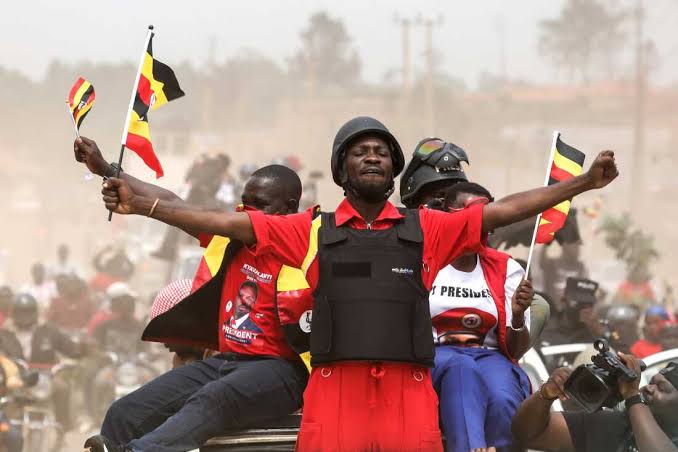
Uganda’s long-serving president, Yoweri Museveni, has been declared the winner of the country’s presidential election, extending his rule to more than four decades, as opposition leader Bobi Wine said he was forced into hiding following an alleged security raid on his home.
Official results released on Saturday by Uganda’s Electoral Commission showed Museveni, 81, securing 71.65 per cent of the votes cast in Thursday’s election.
His closest challenger, Bobi Wine, garnered 24.72 per cent in a contest marred by reports of violence, arrests of opposition figures and a nationwide internet shutdown.
The victory hands Museveni a seventh term in office, further entrenching his position as one of Africa’s longest-ruling leaders. He first came to power in 1986.
READ ALSO: At least seven dead in Uganda as election violence erupts amid vote count
Election observers from across Africa said the poll was conducted in a tense and restrictive environment, warning that arrests, abductions and intimidation of opposition supporters had “instilled fear” among voters and civil society groups.
Bobi Wine, a 43-year-old former pop star turned politician whose real name is Robert Kyagulanyi, rejected the results, describing the election as fraudulent.
In a statement posted on X on Saturday, he said he was on the run after security forces allegedly raided his home late on Friday night.
“I want to confirm that I managed to escape from them,” Wine wrote. “Currently, I am not at home, although my wife and other family members remain under house arrest.”
He added that security agents were actively searching for him and that he was taking steps to remain safe.
Ugandan police denied conducting a raid on Wine’s residence but confirmed that access to the area had been restricted. Police spokesman Kituuma Rusoke described the neighbourhood as a security hotspot, saying authorities could not allow Wine’s home to be used as a gathering point to “incite violence”.
He also insisted that security agencies believed the opposition leader was still at the residence.
Journalists reported a heavy security presence across Kampala on Saturday, with police and military personnel deployed to prevent protests similar to recent unrest in neighbouring Kenya and Tanzania.
The election outcome has also been overshadowed by concerns over voting procedures. On polling day, biometric voter identification machines reportedly failed in several urban centres, including Kampala, where opposition support is strong.
Electoral officials resorted to the use of manual voter registers, a move critics say weakened safeguards against electoral fraud and could form the basis of legal challenges.
Residents living near Wine’s home described a climate of fear and tension. A local stall owner, Prince Jerard, said he noticed increased security activity on Friday night, including the presence of drones, a helicopter and large numbers of security personnel. “Many people have left,” he said. “We have a lot of fear.”
Wine, who grew up in Kampala’s informal settlements and brands himself the “ghetto president”, has emerged as Museveni’s most prominent challenger in recent years.
Since entering politics, he has faced repeated arrests, harassment and restrictions, including during his first presidential run in 2021.
He has accused the government of widespread ballot stuffing and alleged that the internet blackout was used to conceal attacks on his supporters and party officials.
The Ugandan government has not directly responded to those allegations, as domestic and international scrutiny of the election continues.



 Football1 week ago
 Business1 week ago
 Latest1 week ago
 Latest1 week ago
 Latest1 week ago
 Crime1 week ago
 Latest6 days ago
 Latest1 week ago