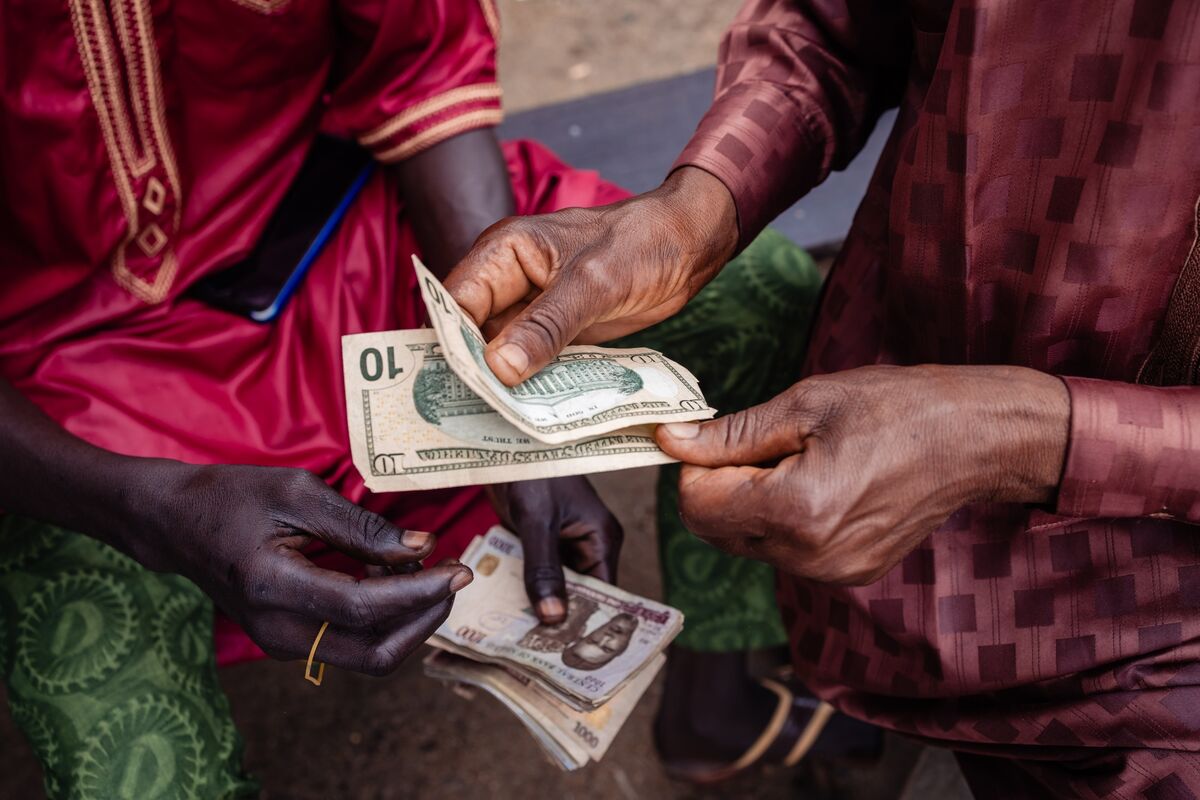
The Nigerian naira on Thursday, April 3, 2025, recorded its steepest single-day depreciation against the U.S. dollar in recent weeks, plunging by ₦21.28 at the official foreign exchange market, a move experts link to global economic jitters triggered by former U.S. President Donald Trump’s new tariff policy.
According to data published by the Central Bank of Nigeria (CBN), the naira fell to ₦1,552.53/$1 from ₦1,531.25/$1 on Wednesday, marking the largest single-day drop since March 22, when the currency slumped by ₦18.96 in one trading session.
In the parallel market, the trend was no different. The naira also weakened by ₦5, trading at ₦1,560/$1 on Thursday, down from ₦1,555/$1 a day earlier.
The sudden depreciation came on the heels of a controversial tariff announcement made on Wednesday by Donald Trump, whose ongoing political influence and policy declarations continue to shape U.S. trade outlook.
The former president unveiled a 10% baseline tariff on a broad range of imports, a move that has drawn global criticism and raised concerns about trade stability, particularly for developing economies with heavy reliance on exports to the U.S.
Economic analysts are warning that Trump’s tariff policy, if implemented or widely anticipated by markets, could affect U.S.-Nigeria bilateral trade valued at over $10 billion, with spillover effects on Nigeria’s fragile forex market.
Dr. Muda Yusuf, Chief Executive Officer of the Centre for the Promotion of Private Enterprise (CPPE), said in a statement on Thursday that the tariff announcement could signal the end of the African Growth and Opportunity Act (AGOA) framework, which has long benefited sub-Saharan African countries, including Nigeria.
READ ALSO: Trump Imposes 14% Tariff on Nigerian Exports, others
“Trump’s proposed tariffs could bring an end to AGOA and undermine Nigeria’s export potential,” Yusuf stated. “This development has potential implications for the naira exchange rate and overall macroeconomic stability.”
Ironically, the naira’s fall comes at a time when Nigeria’s net foreign exchange reserve has climbed to a three-year high.
According to the CBN, the country’s Net Foreign Exchange Reserves stood at $23.11 billion as of December 31, 2024 — the highest level recorded since 2021.
However, the rising reserves appear insufficient to shield the local currency from external shocks and market reactions driven by global policy decisions.
Analysts suggest that investor sentiment and speculation often weigh more heavily than macroeconomic fundamentals in Nigeria’s FX market volatility.
While the Central Bank has taken steps in recent months to stabilize the naira — including FX reforms and clearing backlogs — Thursday’s sharp decline underscores the continued vulnerability of the currency to international developments.
Financial analysts expect the CBN to monitor the situation closely in the coming days, especially as global markets react further to Trump’s tariff move.
Meanwhile, stakeholders in Nigeria’s export sectors are bracing for potential disruptions if trade with the U.S. is significantly impacted.
As of Friday morning, the CBN had yet to issue an official statement in response to the naira’s sharp drop or the broader implications of Trump’s tariff declaration.



 Football3 days ago
 Crime1 week ago
 Crime1 week ago

 Business1 week ago
 Latest1 week ago
 News1 week ago
 Crime4 days ago