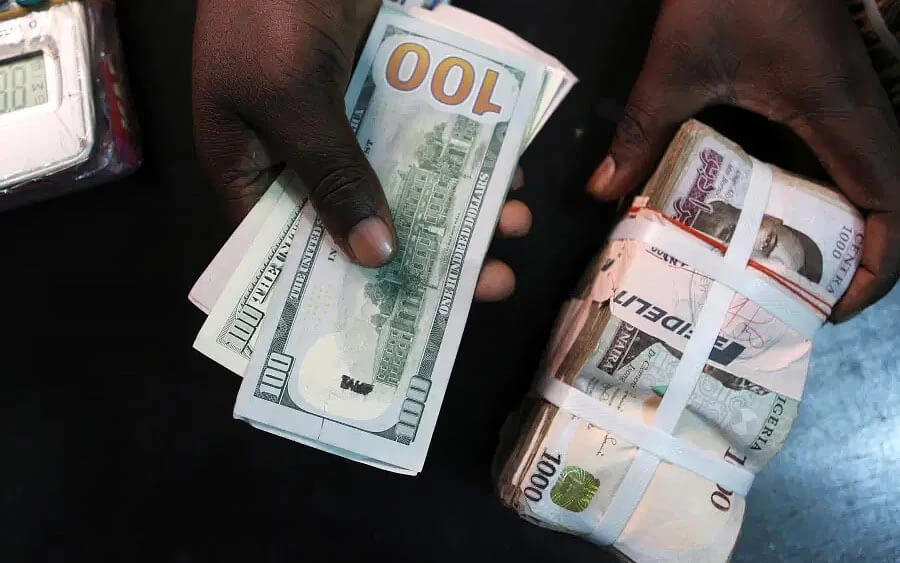
The Nigerian Naira appreciated to N1,337 per U.S. dollar at the official foreign exchange market on Tuesday, up from N1,344 recorded on Monday, according to data from the Central Bank of Nigeria.
This marks the strongest official closing rate for the naira since May 29, 2024, when it settled at N1,329.65 per dollar, reflecting a gradual recovery supported by improved dollar liquidity and calmer investor sentiment.
In parallel markets, the naira also strengthened, trading at N1,382.50 per dollar on Tuesday compared to N1,393.35 per dollar on Monday.
Analysts attributed the gains to better dollar supply, speculative repositioning by traders, and shifting global geopolitical and monetary conditions influencing emerging market currencies.
Global factors also played a role in the naira’s performance. The U.S. dollar remained broadly stable amid easing geopolitical tensions, including diplomatic discussions between Iran and the United States, as well as ongoing Ukraine-Russia negotiations that bolstered global risk appetite.
Investors are also closely monitoring the Federal Reserve’s policy signals, with upcoming U.S. GDP data and the minutes of the Federal Open Market Committee likely to influence capital flows into emerging markets such as Nigeria.
Governor of the CBN, Olayemi Cardoso, recently highlighted Nigeria’s growing role in advancing Africa’s single currency agenda, emphasizing the importance of a stable exchange rate for economic development.
READ ALSO: Naira stabilizes as Nigeria’s exports hit $44bn in 2025
The recent gains come ahead of the CBN’s 304th Monetary Policy Committee (MPC) meeting scheduled for February 23 and 24, 2026. At its last meeting in November 2025, the MPC maintained the Monetary Policy Rate (MPR) at 27 percent to curb inflationary pressures and stabilise the foreign exchange market.
Previously, in September 2025, the committee had reduced the MPR by 50 basis points from 27.5 percent to 27 percent and adjusted the asymmetric corridor around the MPR from +500/-100 basis points to +250/-250 basis points.
Market analysts say the naira’s recent recovery reflects both domestic policy measures and favorable external developments, signaling short-term stability in Nigeria’s foreign exchange market.



 Energy6 days ago
 Crime6 days ago
 Football7 days ago
 Business6 days ago
 Business7 days ago

 Crime6 days ago
 Business6 days ago