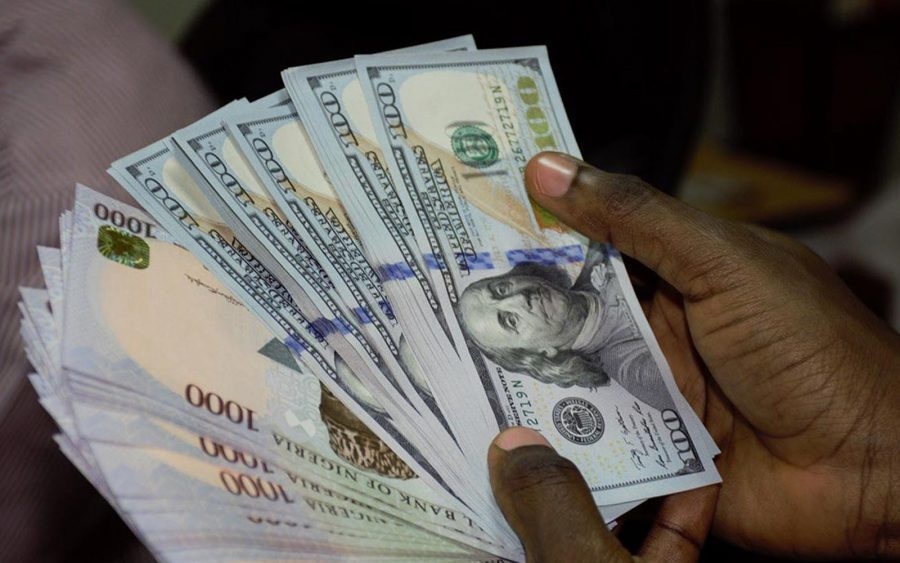
The Nigerian currency posted its strongest appreciation in three weeks at the official foreign exchange market on Wednesday, strengthening against the United States dollar as the country’s external reserves crossed the $50 billion mark.
Data released by the Central Bank of Nigeria (CBN) showed that the naira closed at N1,376.19 per dollar at the official market, improving from N1,401.40 per dollar recorded the previous day.
The movement represents a N25.21 gain for the naira on a day-to-day basis, marking its most significant appreciation in about three weeks and signaling a temporary reversal of the currency’s recent depreciation trend.
Currency traders said the improvement reflects renewed supply of foreign exchange into the market and growing investor confidence following recent policy measures aimed at stabilizing Nigeria’s foreign exchange system.
Despite the gain at the official window, the naira weakened slightly in the parallel market, where it traded at N1,430 per dollar on Wednesday, compared with N1,420 per dollar recorded the previous day.
Analysts say the divergence between the official and parallel markets continues to reflect lingering pressure in the informal segment of the foreign exchange market, where demand for dollars often outpaces supply.
Meanwhile, Nigeria’s external reserves recorded a marginal increase, reaching $50.01 billion as of March 10, 2026, according to data published by the Central Bank.
The figure represents a slight increase from the $49.99 billion recorded on March 9, pushing the country’s reserves above the $50 billion threshold.
Economists say rising reserves could strengthen the central bank’s capacity to intervene in the foreign exchange market when necessary and help maintain stability in the naira.
READ ALSO: Naira slides to N1,398/$, lowest level since January
Financial analyst Bismarck Rewane said the currency’s recent appreciation reflects improved market liquidity but warned that sustained stability would depend on consistent inflows of foreign exchange.
“A stronger reserve position gives the central bank more room to stabilise the market. However, the key to long-term stability is increasing foreign exchange inflows through exports, investment, and remittances,” he noted.
Similarly, economist Muda Yusuf said the naira’s recovery at the official window indicates some progress in exchange-rate management but cautioned that underlying structural challenges remain.
“The improvement is encouraging, but Nigeria still needs stronger export earnings and improved productivity to support the currency sustainably,” Yusuf explained.
Market observers say the performance of the naira in the coming weeks will depend on several factors, including global oil prices, capital inflows, and the Central Bank’s continued efforts to improve liquidity in the foreign exchange market.
For now, the latest appreciation offers a brief respite for the local currency after weeks of volatility in Nigeria’s foreign exchange market.



 Football1 week ago
 Energy1 week ago

 Energy6 days ago
 News1 week ago
 Football1 week ago
 Football1 week ago
 Football1 week ago