The naira extended its downward slide on Tuesday, April 29, closing at ₦1,602.02 per US dollar at the official Nigerian Foreign Exchange Market (NFEM), according to data released by the Central Bank of Nigeria (CBN).
This marks a further depreciation from Monday’s close of ₦1,596/$1, underlining persistent volatility and deepening pressure on Nigeria’s foreign exchange ecosystem.
Tuesday’s intraday trading saw the naira hit a high of ₦1,602.02/$1 and a low of ₦1,596.7/$1, with a daily average rate of ₦1,600.04/$1, reflecting a clear weakening trend from Friday’s trading band around ₦1,600/$1.
The widening gap between intra-day highs and lows signals mounting instability in the official market, exacerbated by supply shortages and speculative activity.
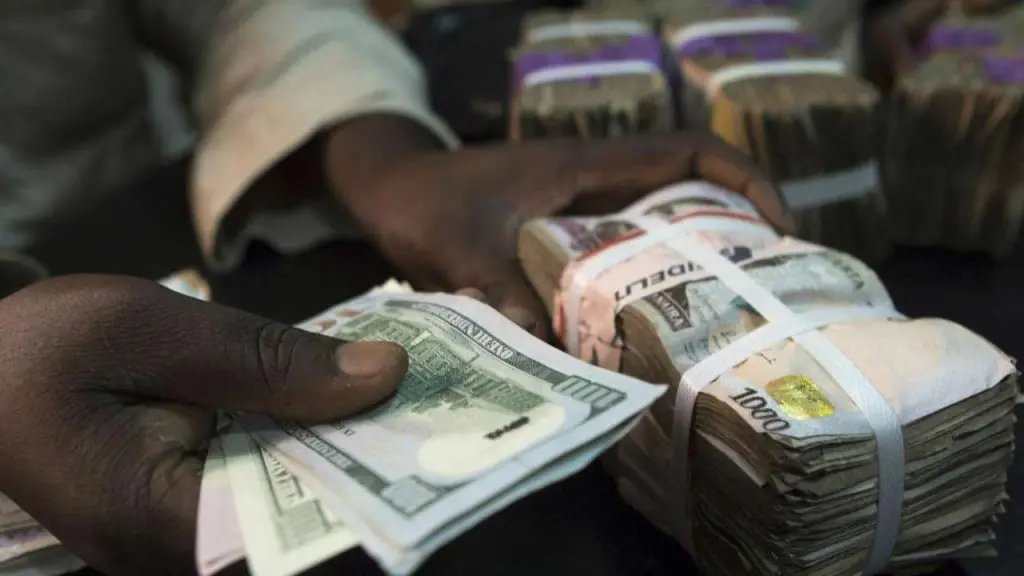
In the parallel (black) market, currency dealers in Abuja’s bustling Zone 4 exchange hub reported the dollar traded as high as ₦1,610/$1 on Tuesday — a further decline from ₦1,605/$1 on Monday.
This expanding gap between official and unofficial rates is heightening fears of market arbitrage, currency speculation, and rising inflationary pressures.
Dealers attributed the continued pressure on the naira to sustained high demand from importers, overseas tuition and travel needs, and individuals hoarding foreign currency amid growing concerns over further depreciation.
Economists and market analysts link the naira’s recent slump to structural forex supply constraints, external monetary tightening, and dwindling foreign reserves.
“Without a significant inflow of forex either from oil exports, remittances, or foreign portfolio investors, the naira will continue to remain under pressure,” said Bulus Anag, an Abuja-based economist said.
READ ALSO: Naira trades around N2,177/£ in parallel market amid global Pound surge
A forex analyst at Ren Money, who declined to be named, explained that while the CBN’s FX reforms — including exchange rate unification and gradual FX backlog clearance — are positive steps, they have not yet translated into market stability.
“We are not seeing enough dollar inflows to match demand. Until confidence is restored and supply is boosted, possibly via Eurobond issuance, oil revenue rebound, or IMF support, the naira will struggle,” the analyst noted.
“The fact that the naira weakened across both official and parallel markets after the holidays indicates lingering concerns over FX liquidity. Market participants are still cautious, and demand continues to outpace supply.”
In a bid to deepen regional trade integration and ease cross-border transactions, the CBN on Monday directed all banks in Nigeria to adopt the Pan-African Payment and Settlement System (PAPSS).
Under the directive, individuals can process transactions up to $2,000, and corporates up to $5,000, using existing Know Your Customer (KYC) and Anti-Money Laundering (AML) documentation submitted to their banks.
Meanwhile, the apex bank reported a ₦1.008 trillion haul from its Open Market Operations (OMO) auction on Friday, April 25, after receiving bids over twice the offered amount — a 102% oversubscription.
The strong demand signals investor appetite for naira-denominated assets amid tightening liquidity conditions.
With no major foreign exchange inflows or significant policy shifts anticipated in the near term, traders expect the naira to hover between ₦1,600/$1 and ₦1,620/$1 at the official window in the coming weeks.
Analysts warn that without fresh injections from sources such as Eurobond sales, increased oil earnings, or multilateral support, the currency will remain under significant pressure.
The naira’s persistent weakness underscores Nigeria’s structural dependence on dollar inflows and the fragility of confidence in its FX market.
While reforms are ongoing, market participants are watching closely for decisive interventions to stabilize the exchange rate and restore investor trust.



 Latest1 week ago
 Football7 days ago
 Business6 days ago
 Latest7 days ago
 Health1 week ago
 Latest6 days ago
 Latest6 days ago
 Latest1 week ago