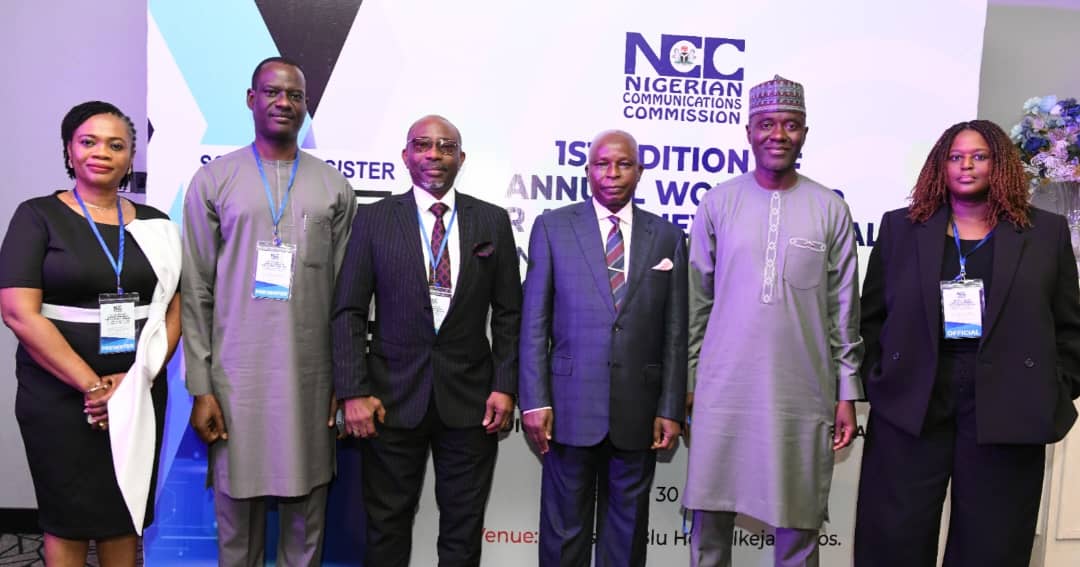
The Nigerian Communications Commission (NCC) has convened the maiden edition of its Annual Workshop for Attorneys-General, marking a strategic move to deepen collaboration between the legal community and the communications regulatory ecosystem amid Nigeria’s accelerating digital transformation.
Speaking at the opening ceremony of the two-day event, the Executive Vice Chairman and Chief Executive Officer of the NCC, Dr. Aminu Maida, described the workshop as a significant milestone in fostering institutional synergy and legal-policy alignment critical for national development in the digital age.
Maida extended his appreciation to the Attorney General of the Federation and Minister of Justice, Chief Lateef Fagbemi, SAN, whose presence he said “sends a strong message about the importance the Federal Government places on institutional synergy and policy cohesion.”
The theme of the workshop, “Building and Driving Synergy in Regulating Communications for the Digital Transformation of Nigeria,” underscores the Commission’s belief that effective regulation cannot happen in isolation.
According to Maida, “No sector, especially one as dynamic and impactful as communications, can be effectively regulated without strong partnerships with legal and policy institutions.”
Highlighting the indispensable role of the legal community, especially the Attorneys-General of Nigeria’s 36 states, Maida described them as more than Chief Law Officers, but also as vital policy influencers who play a pivotal role in shaping legal frameworks that enable innovation, safeguard public interest, and ensure sustainable governance.
Tracing the evolution of communications regulation in Nigeria from market liberalisation in the early 2000s to current debates around AI governance and digital resilience, the NCC boss said the sector has consistently thrived on collaborative and forward-thinking regulation.
However, to fully unlock its potential, he stressed the need to tackle challenges that span legal, regulatory, fiscal, and operational domains.
READ ALSO: NCC raises alarm over telecom sabotage as fibre cuts hit 1,100 weekly
A comprehensive review of the Nigerian Communications Act (2003): Stakeholders will examine its strengths and limitations to determine areas that require legislative reform in light of rapid technological advancements.
Streamlining the communications sector’s tax regime: Maida decried the problem of multiple and inconsistent taxes, which he said deter investment. He called for harmonization to eliminate growth-inhibiting tax burdens.
Resolving regulatory overlaps: The NCC chief noted that fragmented oversight breeds inefficiency. Discussions will focus on legal reforms to enhance coordination among federal and state agencies.
Operationalising the Executive Order on Critical National Information Infrastructure (CNII): With communications infrastructure now designated as CNII under the 2024 presidential directive, Maida said the time has come to develop actionable frameworks in collaboration with the Office of the National Security Adviser and other stakeholders.
Looking ahead, Maida said Nigeria’s digital landscape—defined by artificial intelligence, Internet of Things (IoT), and high-speed connectivity—will continue to present both complex challenges and vast opportunities.
He therefore urged a “Whole-of-Government” approach where all arms and tiers of government work in concert to achieve national digital ambitions.
“At the NCC, we are committed to aligning our regulatory actions with Nigeria’s broader development goals,” Maida stated. “Attorneys-General have a strategic role to play—not just in interpreting the law, but in shaping an enabling environment where technology and governance work hand-in-hand.”
He expressed optimism that the workshop will evolve into an annual platform for continuous engagement, knowledge exchange, and joint problem-solving between the Commission and legal stakeholders nationwide.
“This is just the beginning,” Maida concluded. “I look forward to the insights and solutions that will emerge from our engagements. Together, we can shape a digital future that works for all Nigerians.”
The workshop continues over the next two days, drawing participation from state Attorneys-General, legal experts, and senior policymakers in the communications and digital sectors.


 Business1 week ago
 Latest1 week ago
 Crime1 week ago
 Latest1 week ago
 Latest7 days ago
 Latest1 week ago
 Crime7 days ago
 Business7 days ago