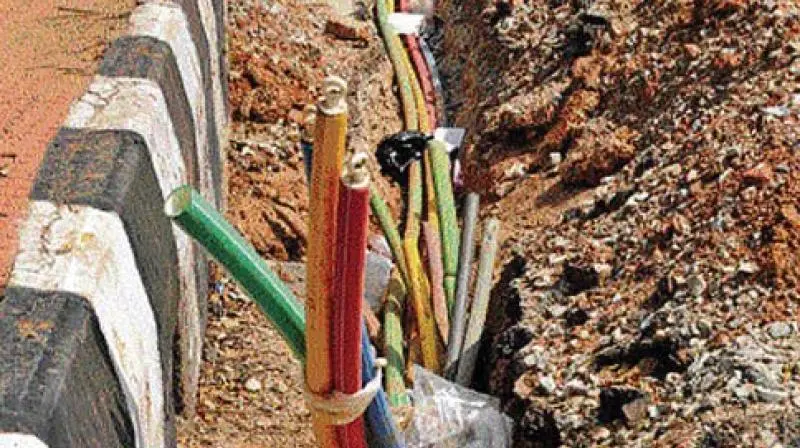
The Nigerian Communications Commission (NCC) and the Nigeria Security and Civil Defence Corps (NSCDC) have issued a strong warning to construction firms, government contractors and other stakeholders over the rising incidents of fibre-optic cable damage during road construction and related civil works across the country, declaring that negligence will no longer be tolerated and offenders will face prosecution.
The two agencies said the frequent and avoidable destruction of fibre infrastructure has become a major concern, stressing that such acts now constitute a criminal offence under existing laws.
They emphasised that fibre-optic cables are critical national assets that underpin Nigeria’s digital economy, enable seamless communication, support emergency and security services, connect businesses, and facilitate the smooth operation of government institutions.
According to the NCC and NSCDC, damage to telecom fibre—whether through negligence, poor coordination, unauthorised excavation or wilful actions—poses a direct threat to national security, economic stability and public safety, often resulting in service disruptions, financial losses and public inconvenience.
READ ALSO: NCC Board visit to Digital Bridge Institute signals fresh drive for Nigeria’s digital skills expansion
Citing the Designation and Protection of Critical National Information Infrastructure (CNII) Order 2024, the agencies noted that telecommunications fibre infrastructure has been officially classified as Critical National Information Infrastructure.
As a result, any damage arising from unauthorised digging, construction activities, or failure to engage relevant authorities before and during construction amounts to a criminal offence.
They further warned that individuals, construction companies and government contractors found culpable will be prosecuted and sanctioned in line with applicable laws, including the Cybercrimes (Prohibition, Prevention, etc.) Act 2015 and other relevant regulations.
In a categorical statement, the NCC and NSCDC said future damage to fibre-optic infrastructure caused by excavation, road construction or any civil engineering activity carried out without proper consultation and collaboration with network operators and regulators would attract “strict legal consequences.”
The agencies also called on federal, state and local government bodies, road construction companies, utility service providers and private property developers to take proactive steps to prevent fibre damage.
These include conducting pre-construction verification of fibre routes, engaging the NCC, telecom operators and the NSCDC before and during construction, adhering strictly to approved excavation and right-of-way guidelines, and promptly reporting any accidental damage to enable swift response and mitigation.
They reiterated that protecting telecom infrastructure is a shared responsibility and urged all stakeholders to prioritise coordination and compliance to safeguard Nigeria’s communications backbone and support sustainable digital growth.



 Business1 week ago
 Latest6 days ago
 Business1 week ago
 Football6 days ago
 Health1 week ago
 Business5 days ago
 Football1 week ago
 Football1 week ago