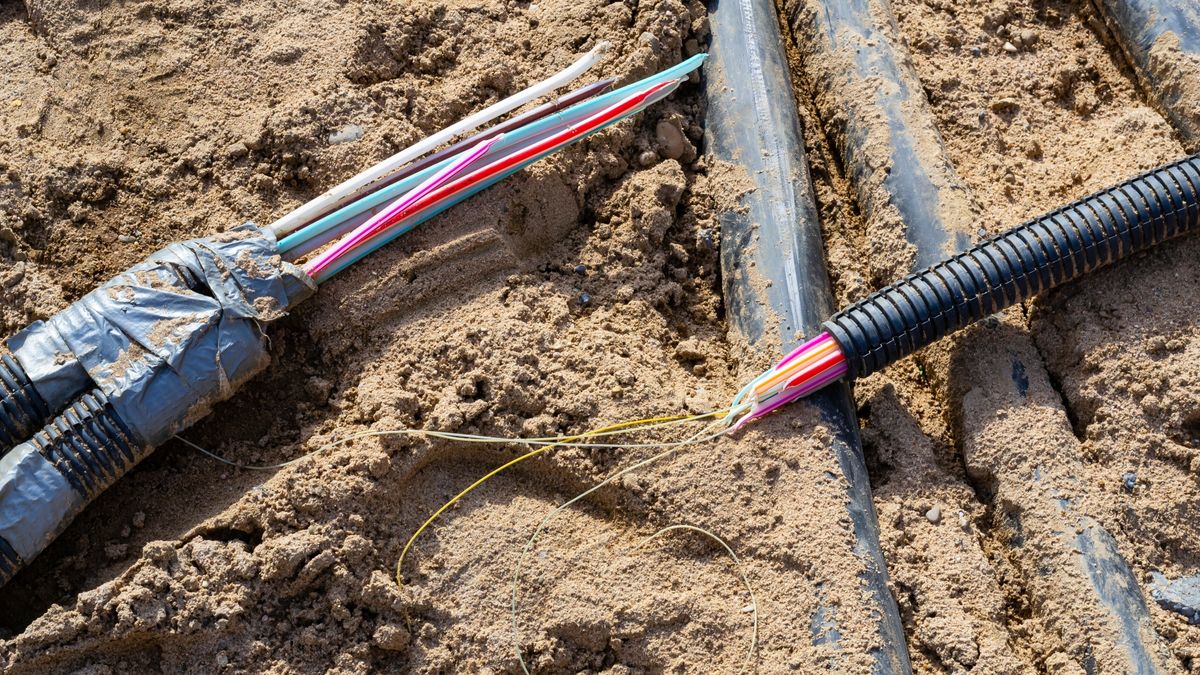
The Nigerian Communications Commission (NCC) has issued a stark warning over the escalating destruction of telecommunications infrastructure across the country, disclosing that telecom operators, including MTN, Airtel, and 9mobile, now record an average of 1,100 fibre optic cable cuts weekly.
This alarming statistic was revealed by the Executive Vice Chairman of NCC, Dr. Aminu Maida, during the Critical National Information Infrastructure (CNII) and Sustainability Conference held in Lagos on Thursday.
The conference, themed “Critical National ICT Infrastructure and Industry Sustainability: Way Forward”, was organised by the Nigeria Information Technology Reporters Association (NITRA) in collaboration with the Association of Licensed Telecommunication Operators of Nigeria (ALTON).
Represented by Mr. Edoyemi Ogoh, Director of Technical Standards and Network Integrity at the NCC, Dr. Maida added that aside from the fibre cuts, operators also face an average of 545 weekly access denial cases and 99 theft incidents, severely affecting telecom service quality, operational efficiency, and national security.
“These are not just numbers—they reflect a national emergency,” Maida warned. “Every fibre cut, every theft, every case of sabotage results in dropped calls, failed financial transactions, disruption to emergency services, and significant economic loss.”
READ ALSO: NCC launches 2025 corporate governance guidelines for telecom industry
Maida stressed that the widespread damage to telecom infrastructure is undermining Nigeria’s digital transformation agenda. With the economy becoming increasingly reliant on digital networks, continued sabotage poses a major setback.
“Our fibre networks, towers, and data centres are the digital lifelines of Nigeria’s economy. Disruptions to these assets have far-reaching consequences,” he said.
The NCC boss highlighted that under Section 3 of the Cybersecurity Act, President Bola Tinubu has designated telecom infrastructure as Critical National Information Infrastructure (CNII)—making their protection a matter of national security that requires action from all stakeholders, including government agencies, service providers, and the general public.
“We are working to ensure Nigerians understand that damage to telecom infrastructure affects everyone—from the average phone user to hospitals and emergency response services,” Maida stated.
ALTON Chairman, Mr. Gbenga Adebayo, also speaking at the event, backed the NCC’s concerns and emphasised the need for operators to enhance security at telecom sites. He criticised some operators for neglecting basic security measures like fencing, surveillance, and locks.
He also drew attention to the thriving black market for stolen telecom equipment such as batteries, cables, and generators—blaming both insider involvement and lax law enforcement for the surge in incidents.
“Some of these thefts are carried out by insiders. And the ease of selling stolen equipment in local markets only fuels more attacks,” Adebayo said, calling for stiffer penalties and swift prosecution for offenders.
In his remarks, NITRA Chairman Mr. Chike Onwuegbuchi proposed the establishment of a Telecom Infrastructure Protection Trust Fund—modeled after state-level security trust funds—to provide resources for safeguarding vital telecom assets.
He underscored the need to involve communities through awareness and education, stressing that vandalism not only hurts telecom firms but disrupts banking services, healthcare systems, emergency alerts, and everyday communications.



 Football6 days ago
 Business5 days ago
 Crime1 week ago
 Business5 days ago
 Latest4 days ago
 Business6 days ago
 Business1 week ago
 Football1 week ago