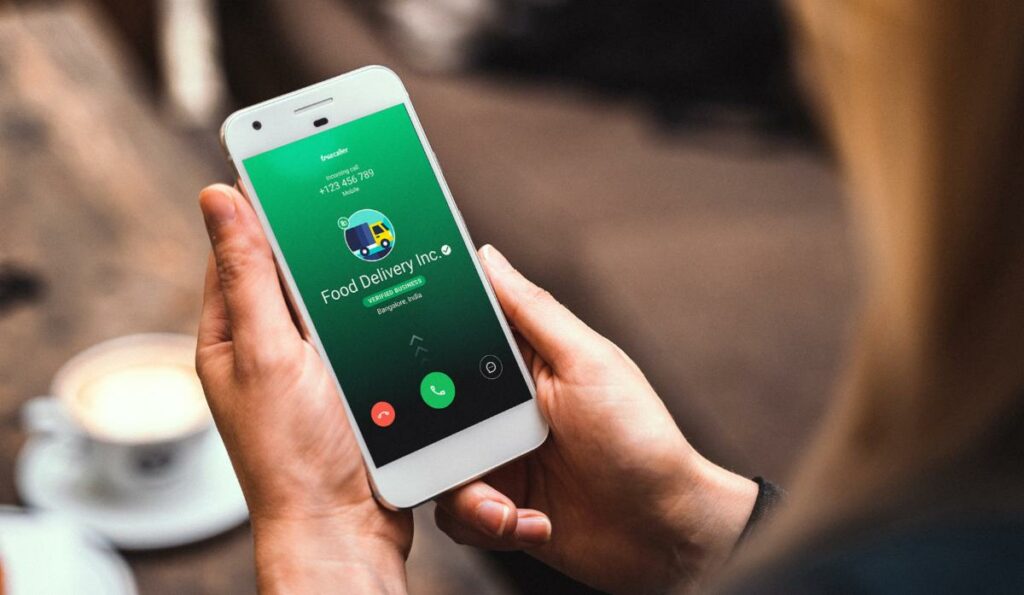
The Nigerian Communications Commission (NCC) has cautioned Nigerians against relying on Truecaller as an official identity verification tool, stressing that the popular caller ID application is not connected to the country’s Subscriber Identity Module (SIM) registration database.
Speaking at a press briefing on Monday in Abuja, Dr. Aminu Maida, the Executive Vice-Chairman (EVC) of the NCC, said the platform’s results are not always reliable, as they largely depend on crowdsourced data uploaded by users rather than verified official records.
“Every time you install Truecaller, what happens is that they upload your entire address book. If you have stored a number with a derogatory name, Truecaller will record that. It may also compare it against what other users have uploaded. So, whatever we see on Truecaller is not necessarily a reflection of the truth. It is not an authority on record,” Maida explained.
The NCC boss noted that phone numbers are a limited national resource assigned by the International Telecommunication Union (ITU), a United Nations body responsible for global telecoms regulation.
Because of this, unused numbers are often recycled after a period of inactivity, usually a year. This means that a number once linked to one individual could later be reassigned to someone else.
“If Truecaller has linked a number to somebody’s name, the link could remain even after the number has been reassigned. This is why its results can be misleading,” Maida added.
To address the challenge, Maida revealed that the NCC is collaborating with other regulators to establish a system that will flag recycled numbers and make updated information available across relevant agencies.
He emphasized that while all SIM cards in Nigeria are registered, there are loopholes that allow misuse.
“There is no unregistered SIM operating on Nigerian networks. However, the person using a SIM may not always be the same as the person who registered it. Some people send their drivers or domestic staff to register SIMs on their behalf, which is illegal,” he warned.
READ ALSO: NCC takes data depletion awareness to NYSC camps, donates food Items to Corps members
Maida condemned the practice of individuals paying others to register SIM cards in their names, describing it as a criminal offence with serious consequences.
He explained that in the event of a security incident, investigators would rely on the name associated with the SIM registration, potentially exposing innocent people to legal trouble.
“If anything happens, I can provide the name of the person who registered that SIM. But when you are held, you will start explaining that someone else used the SIM. This is why we must correct the behaviour before people are embarrassed,” he said.
While Truecaller may help identify numbers in certain cases, the NCC reiterated that it is not an official identity verification tool and cannot substitute Nigeria’s SIM registration database.
The regulator also promised to intensify public enlightenment campaigns on the dangers of proxy SIM registrations and the legal implications of violating Nigeria’s telecom regulations.



 Football5 days ago
 Crime1 week ago
 Crime6 days ago
 Business5 days ago
 Business1 week ago
 Business6 days ago
 Business5 days ago
 Football6 days ago