
Business
NESG hosts pre-Summit Dialogue on driving state-led reforms for MSME growth

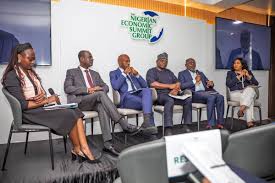
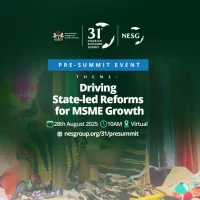
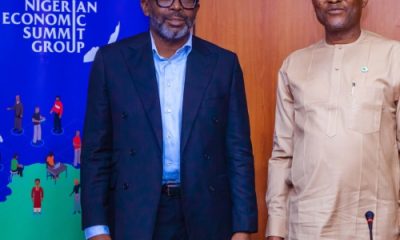
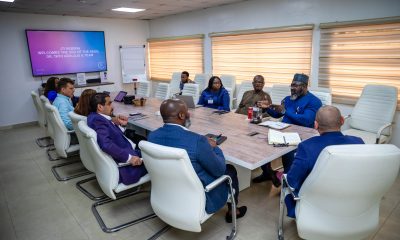
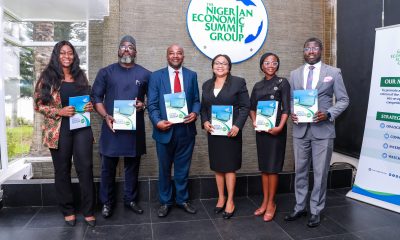
The Nigerian Economic Summit Group (NESG), in partnership with the Federal Ministry of Budget and Economic Planning on Thursday, August 28 2025, convened a high-level Pre-Summit Dialogue on “Driving State-led Reforms for MSME Growth.”
The Group in a statement on Modnay indicated that the virtual event brought together government officials, business leaders, and development experts to explore how states can catalyze reforms that unlock the full potential of Micro, Small and Medium Enterprises (MSMEs)—the engine of Nigeria’s economy.
NESG holds pre-Summit Dialogue on driving state-led reforms for MSME growth
In his keynote address, Dr. Bunmi Kole-Dawodu, Director of SMEDAN Lagos, emphasized that MSMEs are not just the “backbone” of Nigeria’s economy but the “engine and the oil” driving growth, contributing nearly 50% of GDP and over 80% of jobs. He explained Nigeria’s MSME governance framework, led nationally by the Vice President through the National Council on MSMEs with SMEDAN as secretariat, cascading down to state-level councils chaired by governors. He cited Lagos as an example of a vibrant council actively broadening stakeholder involvement and stressed the need for coordinated action across all tiers of government to maximize MSME impact. Dr. Kole-Dawodu concluded by noting that state-led reforms are a critical pathway to advancing national economic growth, especially if driven through strategic partnerships with institutions like NESG, SMEDAN, and state development agencies.
Panel Insights
The panel session, moderated by Dr. Weyinmi Eribo, Thematic Lead, Access to Markets, NESG MSME Community of Practice, spotlighted best practices from Lagos, Enugu, and Plateau states while stressing that financing alone cannot deliver MSME sustainability without complementary reforms.
Ms. Feyisayo Ayanlade, Executive Secretary, LSETF, showcased Lagos’ model of affordable finance—providing MSMEs with loans at a 9% annual interest rate and maintaining a 92% repayment rate through financial literacy and business support. She highlighted LSETF’s integrated approach, combining capital with business training, insurance, and tax education, noting that MSMEs account for 85–90% of businesses and are Nigeria’s largest source of jobs.
Arinze Chilo Offiah, DG, SME Center, Enugu State, stressed the importance of reliable MSME data. By linking data collection to grant access, his team overcame mistrust from nano enterprises, formalized businesses, and generated actionable insights for targeted interventions. This approach strengthened Enugu’s SME ecosystem and improved access to finance for small businesses.
Bomkam Ali Wuyep, DG, Plateau State Microfinance Development Agency (PLASMIDA), asserted that MSMEs remain the most viable pathway for job creation in states with limited white-collar opportunities. He emphasized their role in reducing poverty and driving local economic development.
Dr. Tunde Ayeye, GMD, Init Facilities Services, urged Nigeria to shift performance measurement from abstract macroeconomic figures to people-centered indicators such as jobs, poverty reduction, healthcare, and education. He cautioned against short-term, unsustainable interventions and called for structural reforms that directly improve livelihoods, creating an environment where MSMEs can thrive.
Key Takeaways
Discussions underscored four priority areas for state-led MSME reforms:
Expanding access to affordable finance paired with financial literacy.
Building reliable data systems for evidence-based policymaking.
Reducing regulatory bottlenecks and promoting business formalization.
Strengthening local value chains through skills, digital adoption, and market access.
Speakers agreed that MSMEs are central to job creation, poverty reduction, and inclusive development, and that state governments in collaboration with the private sector and development partners must lead reform implementation at scale.
This Pre-Summit Dialogue sets the stage for the 31st Nigerian Economic Summit (NES #31), themed “The Reform Imperative: Building a Prosperous and Inclusive Nigeria by 2030.” NES #31, scheduled to hold later this year, will deepen national conversations on bold reforms, strategic investments, and collaborative actions required to position MSMEs as catalysts of long-term prosperity and inclusive growth for all Nigerians.








 Football1 week ago
Manchester City storm into FA cup semi-finals with 4-0 rout of Liverpool
 Business7 days ago
Soaring fuel prices worsen economic hardship for Nigerians
 Latest1 week ago
2027: Fresh details emerge on Peter Obi’s political strategy amid ADC crisis

 Latest7 days ago
Inside the daring U.S. mission to rescue stranded airman in Iran

 Health1 week ago
Study finds higher risk of heart inflammation in teens after mRNA COVID-19 vaccination
 Latest7 days ago
Breaking: Internal pressure mounts as ADC considers leadership shift to Ralph Nwosu

 Crime7 days ago
Fear grips Zamfara villages as bandits demand N16m or face attacks

 Latest6 days ago
APC plotting to frustrate Peter Obi’s 2027 ambition — Obidient Movement