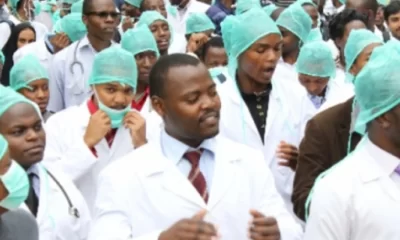
Nigeria’s healthcare system stands on the brink of a major crisis as the Nigerian Medical Association (NMA) confirmed its readiness to commence a nationwide strike of medical services from July 23, 2025.
The looming strike, triggered by the government’s perceived failure to address long-standing demands regarding doctors’ welfare and allowances, threatens to cripple an already fragile health sector and exacerbate the country’s severe brain drain of medical professionals.
The NMA’s ultimatum, issued on July 2, 2025, is in direct protest against a circular released by the National Salaries, Incomes and Wages Commission (NSIWC) on June 27, 2025.
This circular, which purportedly revised allowances for medical and dental officers under the Consolidated Medical Salary Structure (CONMESS), has been vehemently rejected by the NMA.
The association, led by its President, Professor Bala Audu, argues that the circular was issued unilaterally and violates established Collective Bargaining Agreements (CBAs) from 2001, 2009, and 2014.
ALSO READ :Governors, media leaders, others Set for 3rd Lateef Jakande Memorial Lecture
“We have made our position clear,” Prof. Audu stated in a recent interview. “The ultimatum ends on July 23, and if the Federal Government does not address our demands, we may have no choice but to proceed with a strike.”
He emphasized that the demands are not new but are crucial for the survival of Nigeria’s healthcare system and the welfare of its medical professionals.
Key among the NMA’s demands is the immediate withdrawal of the contentious June 27, 2025 circular and the correction of consequential adjustments to allowances, including call duty allowances, in line with previous agreements.
They also demand the immediate settlement of all outstanding arrears of 25/35 percent CONMESS, clinical duty, and accoutrement allowances owed to medical and dental practitioners over the last 18 months, which Prof. Audu claims President Bola Tinubu had already approved for payment.
Other critical demands include the immediate payment and review of the Medical Residency Training Fund (MRTF) for 2025, implementation of scarce skills and specialist allowances for doctors, comprehensive health insurance, and the constitution of management boards for federal hospitals.
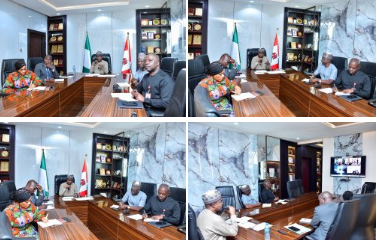
While acknowledging engagements with the Coordinating Minister of Health and Social Welfare, Prof. Muhammad Pate, and the Minister of State for Health and Social Welfare, Dr. Iziaq Salako, the NMA expressed concern over the postponement of a crucial meeting with the NSIWC and Ministry of Finance.
The association expects this meeting to be convened urgently to avert the impending strike.
Medical professionals across various states, including Lagos, Katsina, Niger, and the FCT, have publicly backed the national body’s ultimatum, further solidifying the potential for a nationwide shutdown.
Local NMA chapters describe the NSIWC circular as “unjust, unprofessional, and capable of further destabilizing Nigeria’s healthcare system,” highlighting that it undermines salary relativity and the recognition of specialist training.
The NMA has consistently highlighted the severe brain drain, or “japa syndrome,” plaguing Nigeria’s health sector, with the doctor-to-patient ratio currently estimated to be as low as 1:10,000, significantly below the WHO-recommended 1:600.
Doctors argue that the government’s insensitivity to their welfare will only accelerate the exodus of skilled professionals.
Previous strikes by medical practitioners have historically led to severe disruptions in public healthcare services, resulting in increased patient suffering and preventable deaths.
As the deadline fast approaches, the nation watches with bated breath, hoping for a resolution that will prevent a catastrophic disruption to medical services and further compound the challenges facing Nigeria’s already overburdened healthcare system.












 Football5 days ago
 Crime5 days ago
 News1 week ago
 Crime7 days ago
 Business7 days ago
 Business5 days ago
 Football6 days ago
 Business4 days ago