Nigeria’s escalating electronic waste crisis has reached a dangerous tipping point, prompting urgent calls from regulators, industry experts, and digital stakeholders for coordinated national action.
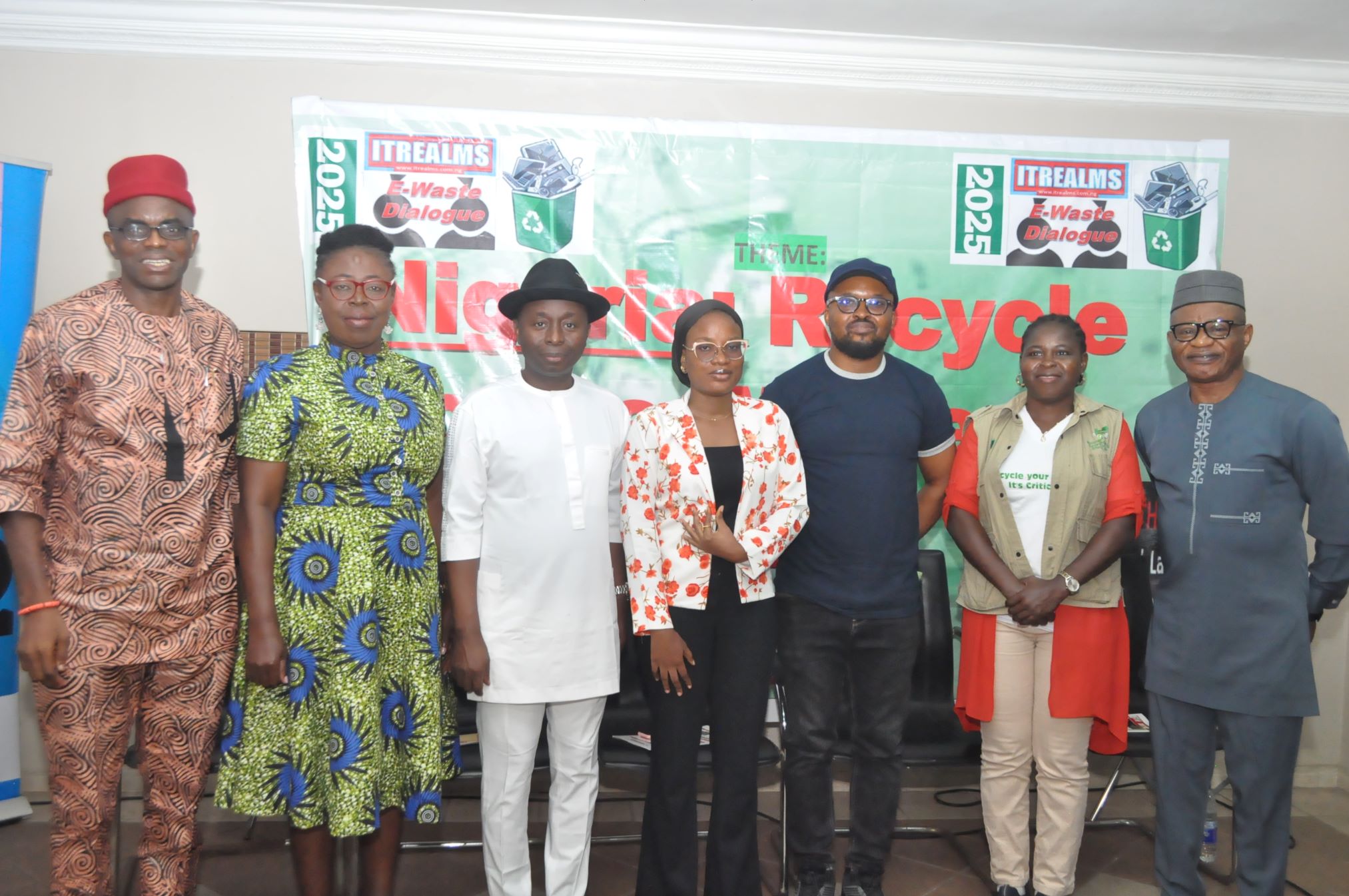
This collective alarm was sounded at the 2025 ITREALMS E-Waste Dialogue held in Lagos, where the country’s top environmental authority warned that the nation stands at the brink of an environmental and public health disaster if immediate measures are not taken.
Delivering the keynote address, the Director General/CEO of the National Environmental Standards and Regulations Enforcement Agency (NESREA), Professor Innocent Barikor, represented by Olaide Oyedele-Taiwo, Chief Scientific Officer at the NESREA Lagos Liaison Office, stressed that Nigeria’s rapidly rising e-waste generation is no longer a mere environmental concern but a deepening health hazard and a missed economic opportunity.
Barikor highlighted the global surge in demand for critical raw materials such as lithium, cobalt, and rare earth elements—key components in mobile phones, laptops, and other electronics.
He insisted that Nigeria must move from being a passive consumer to an active participant in the circular economy by recovering and reusing these valuable materials from discarded electronics.
“Nigeria must position itself not just as a consumer, but as a key player in the circular economy,” he said. “Every improperly disposed device is a lost economic asset and a direct threat to the wellbeing of our communities.”
He warned that the widespread informal recycling of e-waste—where hazardous materials including lead, mercury, and cadmium are carelessly released into the environment—could have devastating long-term effects on public health.
“When you don’t recycle responsibly, it’s not just clutter; it’s a silent killer in our landfills,” he cautioned, calling for urgent behavioral change from citizens.
Earlier, the Convener and Group Executive Editor of ITREALMS Media Group, Ogbuefi Remmy Nweke, set the tone for the Dialogue by welcoming representatives from NESREA, the Nigerian Communications Commission (NCC), the Association of Licensed Telecommunications Operators of Nigeria (ALTON), the Internet Exchange Point of Nigeria (IXPN), Nigeria LNG, and EPRON, among others. Their presence, he stated, reflected the national importance of Nigeria’s e-waste challenge.
Nweke traced the Dialogue’s five-year journey from basic awareness creation to a platform demanding concrete national reforms.
“Nigeria now generates an estimated 1.2 million tonnes of e-waste annually,” he explained. “We are far beyond acknowledging the problem. The burden requires immediate and unified action.”
He said the 2025 theme—“Nigeria: Recycle Your e-Waste … It’s Critical!”—was intentionally direct, reflecting the urgent need for a nationwide recycling culture and a clearly defined national strategy.
Nweke also previewed a panel session featuring leading experts, tasked with identifying practical, multi-stakeholder solutions capable of transforming Nigeria’s e-waste crisis into an economic opportunity rooted in the circular economy.
In his keynote, Professor Barikor reaffirmed the federal government’s commitment to enforcing the Extended Producer Responsibility (EPR) programme for the Electrical and Electronics sector.
The EPR framework mandates manufacturers and importers to account for the entire lifecycle of their products, including collection, treatment, and safe recycling.
He emphasized that the National Environmental (Electrical and Electronics) Sector Regulations are enforceable laws, not suggestions, and warned that NESREA will intensify compliance monitoring and impose stiff penalties on violators.
Before the event closed, Nweke reiterated the broader implications of Nigeria’s e-waste crisis.
“E-waste management is not just an environmental issue; it is a public health, economic, and national security issue,” he stated, expressing confidence that the Dialogue would produce actionable policy recommendations to shape national planning.
Professor Barikor rounded off his remarks by urging participants to become “e-waste ambassadors,” promoting responsible disposal practices and helping to drive national transformation through everyday actions.
The Dialogue ended with a resounding consensus: Nigeria can no longer delay. Without immediate, coordinated intervention, the nation’s e-waste crisis threatens to overwhelm its environment, its economy, and its future generations.



 Entertainment7 days ago
 Crime1 week ago
 Crime7 days ago
 Football6 days ago
 Politics6 days ago
 Business6 days ago
 News6 days ago
 Latest6 days ago