Connect with us

Latest

Nigeria Is losing Its Independence, Returning to Economic Slavery – Princewill Okorie

Spread The News

Nigeria is fast losing its economic independence due to a rising debt burden, warns civil society advocate Princewill Okorie, as he criticizes a new $238 million power sector loan. He calls for transparency, accountability, and citizen involvement in loan utilization to prevent a return to what he calls “economic slavery.”

Published

on

Nigeria Is Losing Its Independence, Returning to Economic Slavery – Princewill Okorie
Spread The News

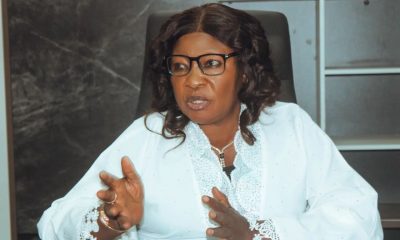
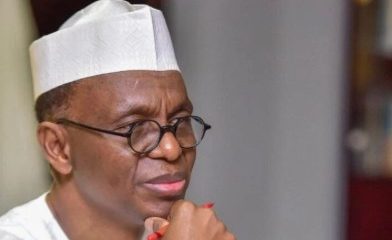
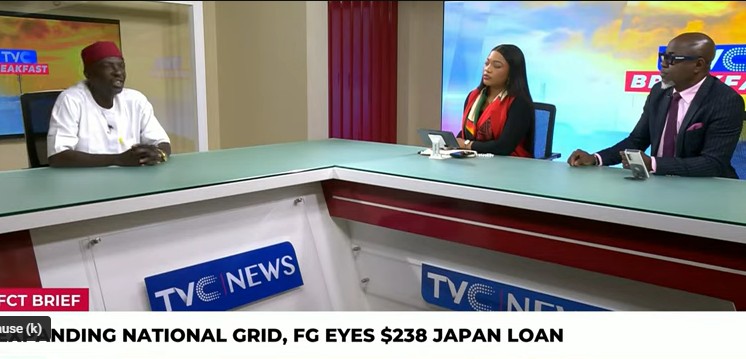
Civil society advocate, Princewill Okorie, has strongly criticized the government’s reliance on foreign loans, warning that “Nigeria is losing its independence and returning to economic slavery.”

A newly proposed $238 million loan by the Nigerian government aimed at boosting electricity infrastructure has stirred both support and skepticism. While the move is seen by some as a step towards addressing the country’s persistent power challenges, concerns have been raised over transparency, accountability, and the broader implications of Nigeria’s growing debt burden.

According to Okorie, the country is rapidly becoming economically enslaved due to its increasing dependence on external borrowing, a situation that threatens the nation’s sovereignty and the future of its citizens.

“If you are economically enslaved, you are not free,” he said during a televised discussion on national infrastructure financing. “Even unborn children will grow up to meet these debts and suffer their consequences.”

Okorie questioned why government officials, particularly those from the Ministries of Power and Finance, are absent from critical public discussions on loans, leaving civil society voices to speculate and raise alarms. He described this lack of engagement as deliberate and damaging, allowing misinformation and public confusion to thrive.

Nigeria’s external loan profile continues to raise eyebrows. As of May 2025, the country reportedly owes about $18.2 billion to the World Bank, $5.16 billion to China, $652.7 million to France, $125.62 million to Germany, and $3.44 billion to the IMF.

Despite these substantial borrowings, improvements in essential infrastructure, especially in the power sector, remain minimal.

The House of Representatives is currently investigating a ₦59 billion component of a ₦200 billion loan issued in 2020 for power sector improvements, specifically for the national metering program. Okorie noted that only ₦55 billion of the released funds reportedly reached project implementation, with little public information on how many meters were actually installed or the overall impact of the initiative.

“What is the report on that ₦200 billion loan? What happened to the ₦59 billion that was released, and how many meters were actually installed?” he asked. “Has there been any verification? We hear about loans. We don’t hear about the utilization.”

He also questioned the current policy framework guiding the decentralization of the power sector. With states now running independent electricity markets, there is uncertainty over how federal loans will be shared and managed across states for infrastructure development such as transmission lines.

Okorie further criticized international lenders like the World Bank and IMF, accusing them of complicity in poor governance by failing to support local accountability institutions.

ALSO READ : Peter Obi’s Son, Oseloka, Breaks silence on viral photos and online speculations

“Why are these international agencies not funding anti-corruption bodies like the ICPC, EFCC, or the Consumer Protection Commission to monitor how these funds are spent?” he asked. “They claim to be supporting good governance, but when CSOs approach them, they insist on government-to-government arrangements. Are these agencies not part of the government?”

He emphasized that the issue is not about borrowing in itself, but about how borrowed funds are used.

Okorie called for a comprehensive review of all loans taken since the 2013 power sector privatization, including their impact and the level of citizen engagement in monitoring outcomes.

As public frustration grows over rising electricity tariffs, fuel prices, and taxes without a corresponding improvement in services Okorie lamented the current state of affairs.

“Every administration comes and uses the power sector as a cash cow. Nigerians are suffering, yet the government keeps borrowing. This is not sustainable. We are creating poverty and pain for both the living and future generations,” he concluded.

The message from stakeholders like Okorie is clear: before incurring more debt, the government must provide transparent reports on past expenditures, engage the public meaningfully, and implement reforms that ensure borrowed funds genuinely serve the interests of the Nigerian people.

Photocredits – TVC 

Trending