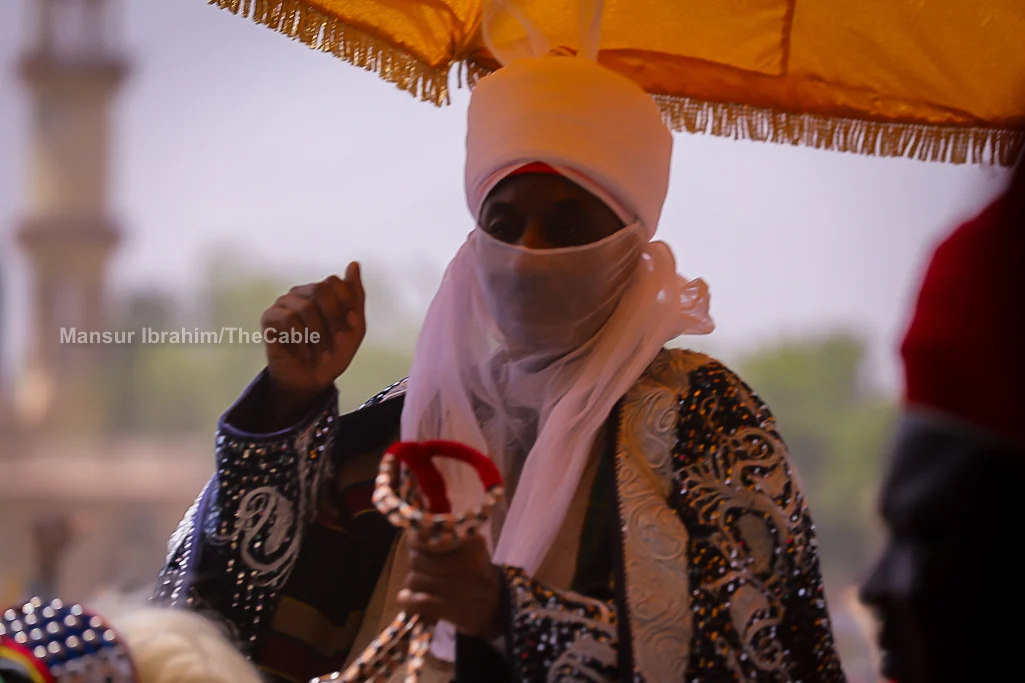
Muhammadu Sanusi II, the Emir of Kano and former Governor of the Central Bank of Nigeria (CBN), has expressed deep concern over what he describes as the moral decay and erosion of values in Nigeria, where corruption is rewarded with power and material wealth is glorified—regardless of its origin.
Speaking on Politics Today, a Channels Television programme aired on Wednesday, Sanusi painted a grim picture of a society in decline, blaming both the political class and the general populace for normalising theft and impunity in public service.
“The entire value system of the country has been eroded,” he said. “We have been ruled by people who have no values, no name behind them, and no desire to leave a name after them.”
Sanusi lamented that Nigeria has become a society where individuals known to have stolen public funds are not only celebrated but also elevated into positions of greater authority.
“It is not important to them that people look at them and only see thieves, they see criminals, they see people who have taken the commonwealth.
A society in which material wealth, no matter how you get it, is respected and glorified… that society will continue to reproduce itself.”
According to him, such value distortion has created a cycle of corruption and moral bankruptcy, where wrongdoers are rewarded with ministerial, senatorial, or gubernatorial appointments, while integrity is sidelined.
Sanusi further stated that the absence of moral outrage from the general public has entrenched a culture of impunity, where public officials enrich themselves at will, knowing they will face neither consequences nor condemnation.
“We don’t have a sense of disgust for people who hold public office and amass wealth. We reward them with more appointments and opportunities to steal.”
He condemned the perception among many political actors that public office is a route to personal enrichment, rather than a platform for national service and legacy-building.
“Many people go into the government to make money. But you don’t go into the government to make money.”
READ ALSO: Police cancel Sanusi invitation to Abuja, hold interrogation in Kano
Sanusi drew a sharp contrast between Nigeria’s current leadership and past leaders like General Murtala Muhammed, whose tenure, though brief, was defined by a strong commitment to public good and national legacy.
He accused many contemporary leaders of lacking a vision beyond personal wealth accumulation, saying:
“They define themselves by how many houses they own, how many private jets they have, how much money they have in the bank. They don’t care what name they leave behind.”
The Emir said the solution lies in a collective national rebirth — a deliberate effort to reorient values at every level of society, not just at the level of the presidency or state governors.
“We need an entire regeneration of values. It is not about one person. The president, the governors, or the ministers cannot on their own change this country.”
He stressed that rebuilding Nigeria’s broken value system must involve citizens, communities, institutions, and faith-based organisations, all playing an active role in championing integrity, accountability, and service above self.
Sanusi also criticised politicians for weakening Nigeria’s civil service, saying that decades of political interference have eroded the strength of the bureaucracy that once acted as a stabilising force for governance and public accountability.
He called for urgent reforms to restore professionalism, integrity, and independence to the civil service.
“We must go back to building institutions. Institutions that will outlive individuals and protect the country from arbitrary power.”



 Football6 days ago
 Business5 days ago
 Latest4 days ago
 Business5 days ago
 Crime1 week ago
 Business6 days ago
 Football1 week ago
 Business1 week ago