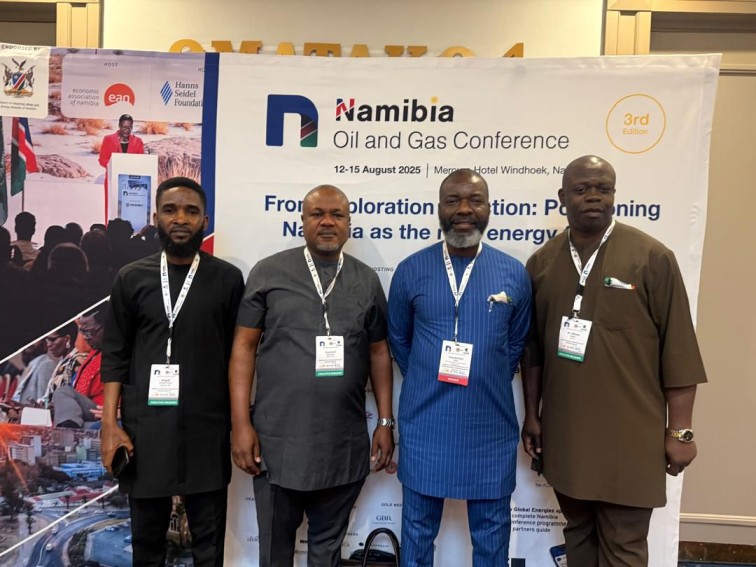
Nigeria’s achievements in local content development took centre stage on Tuesday at the opening of the 2025 Namibia Oil and Gas Conference in Windhoek, where industry leaders and policymakers are exploring strategies to build a robust indigenous oil and gas ecosystem in the Southern African nation.
The high-profile event, which runs until Friday, has drawn policymakers, international oil and gas companies, service providers, Namibian indigenous operators, and other stakeholders committed to fostering local participation in the country’s emerging energy sector.
The Nigerian Content Development and Monitoring Board (NCDMB) and the Petroleum Technology Association of Nigeria (PETAN) are representing Nigeria as part of a broader push to promote African local content, open new markets, and create opportunities for Nigerian companies.
NCDMB’s delegation is led by Executive Secretary, Engr. Felix Omatsola Ogbe, represented by Director of Corporate Services, Dr. Abdulmalik Halilu, while PETAN’s team is headed by its Chairman and NCDMB Governing Council member, Mr. Wole Ogunsanya.
Delivering a keynote at the Local Content Masterclass, Dr. Halilu outlined strategies African oil-producing countries can adopt to grow their capacity and participation in the oil and gas value chain.
READ ALSO: ADC, Atiku, Obidient movement slam EFCC over Tambuwal arrest, alleged 2027 crackdown
He identified key pillars of local content value for Africa, including research and technology development, local employment creation, strategic partnerships, asset ownership and control, value chain optimisation, sustainable operations, increased use of locally manufactured goods, and GDP contribution.
He noted that Nigeria’s “new wave” of local content growth now focuses on equipment assembly, component manufacturing, small and medium enterprise development, research and development enforcement, technology transfer, and gas-based industrialisation.
Halilu urged African oil producers to specialise in different manufacturing and service segments, trading with one another to meet complex equipment needs—similar to how Boeing sources aircraft components globally before final assembly.
“Local content implementation is not a sprint but a marathon. It must be approached as a business, not corporate social responsibility, and should be cost-effective while reflecting local realities,” he stressed.
He also emphasised that regulations should apply to all industry players—not only foreign firms—and that capacity building must extend to grassroots communities. Sustained project development, he added, is essential for maintaining momentum.
The NCDMB assured Namibia and other African countries of Nigeria’s readiness to partner in building an energy sector that empowers citizens and drives shared prosperity.
NCDMB’s General Manager for Human Capacity Development, Esueme Dan Kikile, Esq., also shared Nigeria’s track record in skills development, highlighting training programmes that have created thousands of skilled professionals in the oil and gas sector.
The conference will continue with further sessions, including a Wednesday presentation by NCDMB’s Executive Secretary and a panel discussion featuring PETAN Chairman Wole Ogunsanya.



 Football4 days ago

 Crime5 days ago
 News7 days ago
 Business6 days ago
 Crime6 days ago
 Business5 days ago
 Business6 days ago