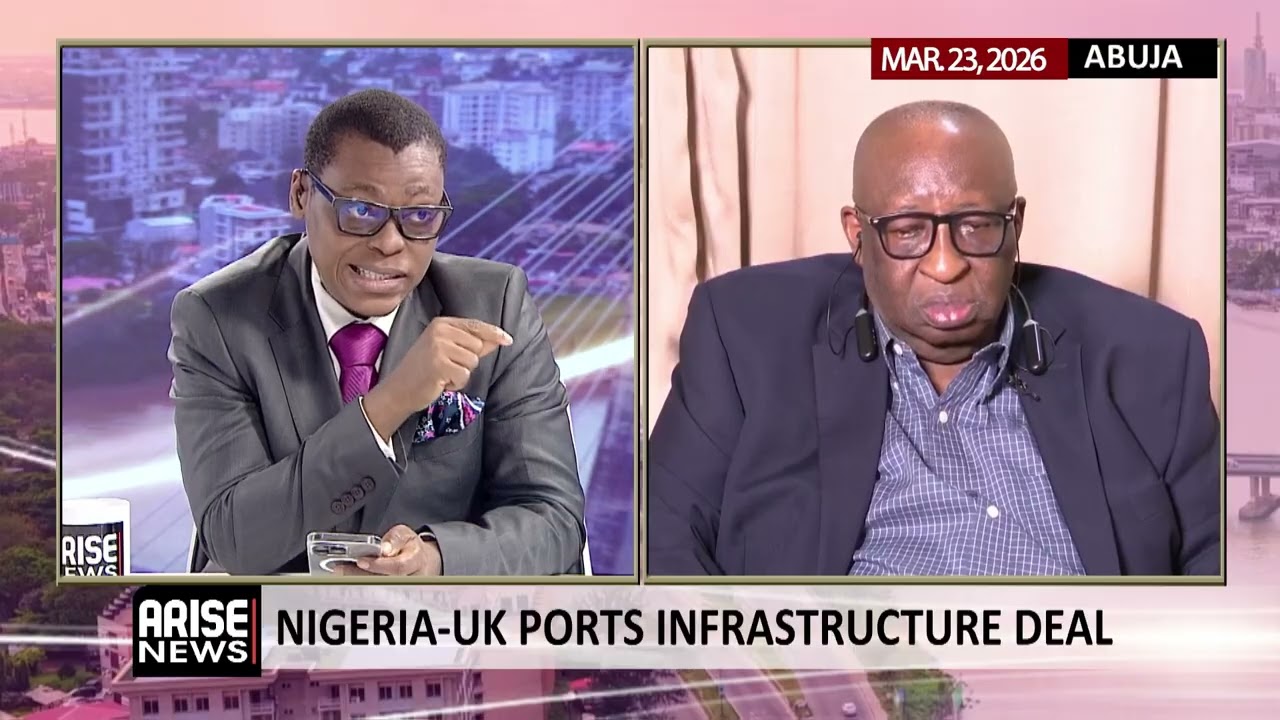
An economist, Akpan Ekpo, has raised concerns over the recently signed agreements between Nigeria and the United Kingdom, warning that the proposed port rehabilitation deal could leave Nigeria worse off economically.
Ekpo made the remarks on Monday during an interview on Arise Television, where he criticised the potential implications of the Memoranda of Understanding (MoUs) signed between both countries.
The agreements, which aim to strengthen bilateral cooperation, cover areas such as migration partnerships, collaboration on organised immigration crime and border security, as well as plans to expand business visa access for UK companies operating in Nigeria.
However, Ekpo expressed strong reservations about the economic value of the deal to Nigeria, particularly the proposed rehabilitation of key ports, including Apapa Port and Tin Can Island Port.
According to him, the arrangement primarily serves British economic interests rather than Nigeria’s development needs.
“The British government is very clever. They’ve turned economic diplomacy upside down and reinforced our neo-colonial status,” he said.
READ ALSO: Explained: Nigeria-UK deportation deal and its implications
Ekpo argued that the port rehabilitation initiative would largely benefit the UK by boosting its steel industry and strengthening its financial institutions, while Nigeria could be saddled with additional debt.
“The rehabilitation deal for Apapa and Tin Can ports will only benefit the British economy. It will revitalise their ailing steel industry and enhance their banks, leaving Nigeria in debt. Even the job creation will benefit the British, not Nigerians,” he stated.
He further criticised the structure of the agreement, noting that most of the equipment and technical inputs required for the port upgrades would be sourced from the UK, thereby limiting local economic participation and value retention.
The economist also faulted the process leading to the deal, suggesting that relevant domestic institutions such as the Nigerian Investment Promotion Commission should have played a more active role in negotiating terms that better protect national interests.
“So my view is that, aside from the glamorous reception, they should have allowed the experts to handle the negotiations. If you look closely, most of the inputs for the project will come from the British government, meaning there is little real gain for Nigerians,” he added.
Ekpo’s comments add to the growing debate over the long-term economic implications of Nigeria’s bilateral agreements, particularly those involving critical infrastructure and foreign financing.



 Trending Stories1 week ago
 Latest7 days ago
 Latest1 week ago
 Energy1 week ago
 Football6 days ago
 Latest1 week ago
 Football6 days ago
 Latest1 week ago