The Nigerian High Commission in South Africa has apologised following widespread outrage in the Eastern Cape Province over the alleged coronation of an “Igbo king,” an incident that sparked protests and violence.
The controversy erupted after reports emerged that Solomon Eziko had been crowned “Igwe” of Kugompo in South London, a city in South Africa’s Eastern Cape Province. News of the event triggered anger among some South Africans, who viewed the ceremony as an attempt to establish a parallel traditional authority structure.
On Monday, protests escalated into violence, with demonstrators reportedly torching vehicles and buildings said to belong to foreign nationals. Groups of angry residents marched through parts of the province demanding swift government intervention and warning that failure to address the issue could result in further unrest.
Some protesters called for the deportation of Nigerians allegedly linked to the ceremony, while one demonstrator was quoted as saying residents were prepared to take up arms if the matter remained unresolved.
In a statement dated March 26, the Nigerian High Commission described the Igbo East London gathering as a cultural festival rather than a political coronation.
The mission explained that cultural expressions within the Igbo community are sometimes misunderstood outside Nigeria and stressed that such ceremonies are symbolic and rooted in heritage rather than governance.
READ ALSO: Deadly floods ravage South Africa, Mozambique as Ramaphosa pledges support for affected families
It highlighted traditional Igbo practices such as the New Yam Festival (Iri Ji), masquerade displays (Mmanwu), traditional marriage rites (Igba Nkwu), and chieftaincy title ceremonies as examples of longstanding cultural traditions.
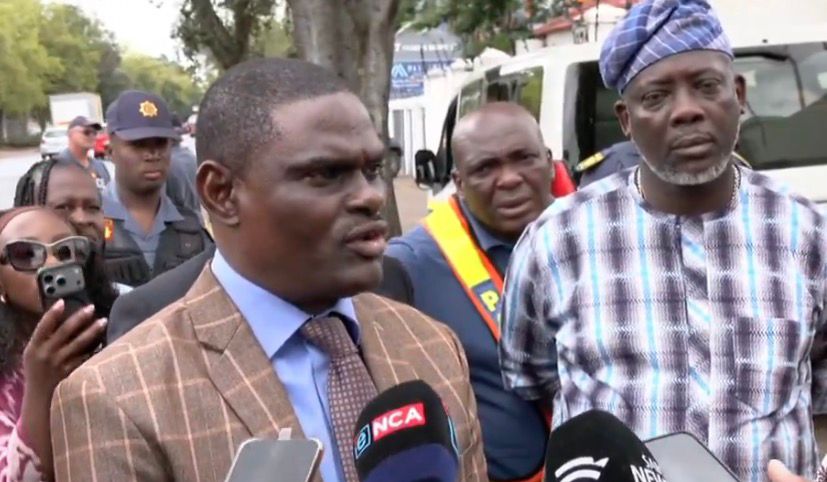
On Tuesday, Deputy High Commissioner Olajide Ogunmadeji addressed a group of protesting South Africans and offered a formal apology.
“They are just there to celebrate their cultural activity. It is not a political institution or a traditional institution,” Ogunmadeji said.
“I offer our apology to the traditional institutions in South Africa. We say sorry for what has happened. The embassy would never encourage the undermining of the authority or institutions; we will not do this.”
He reiterated that the event had been misinterpreted and did not represent the installation of a traditional authority in defiance of South Africa’s established system.
Amid rising tensions, the High Commission issued an advisory on Monday urging Nigerians living in South Africa to remain vigilant and restrict their movements.
The mission also advised Nigerians to temporarily suspend socio-cultural activities and refrain from making inflammatory statements on social or mainstream media that could escalate tensions.
Authorities in the Eastern Cape are yet to release an official statement detailing the full extent of the damage caused by the protests, but the incident has reignited conversations about migration, cultural expression, and community relations in South Africa.


 Football1 week ago
 Business1 week ago
 News1 week ago
 Politics1 week ago
 Football1 week ago
 Latest1 week ago
 Energy7 days ago
 Energy5 days ago