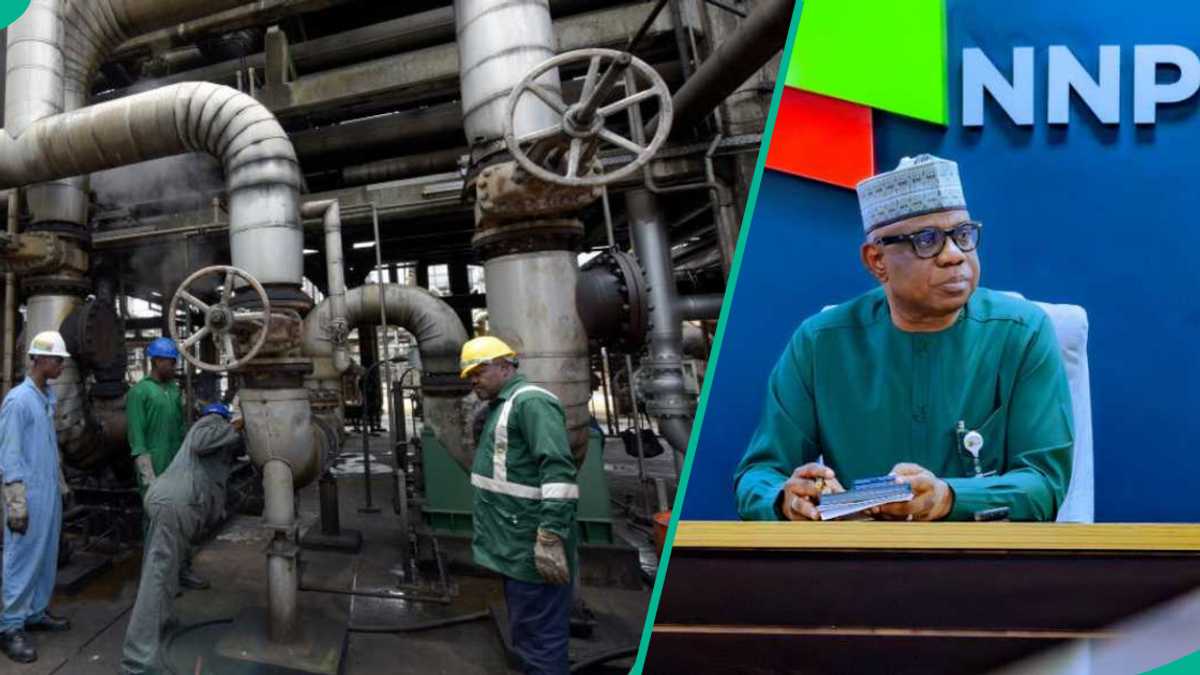
Nigeria’s domestic refining sector could soon see a significant turnaround as the Nigeria National Petroleum Company (NNPC) Limited has initiated discussions with a leading Chinese petrochemical company over the potential revival of one of its state-owned refineries.
The development was disclosed by NNPC Group Chief Executive Officer, Bayo Ojulari, during a fireside chat at the Nigeria International Energy Summit 2026 in Abuja on Wednesday, February 4.
Ojulari explained that the initiative forms part of a broader strategy to attract experienced refinery operators as equity partners, aimed at revamping NNPC’s four major refineries, which have long struggled with operational inefficiencies, weak utilization, and sustained losses.
“An internal review conducted shortly after I assumed office in April 2025 revealed that our refineries were running at huge losses, largely due to high operating costs and excessive contractor spending despite low processing volumes,” Ojulari said.
“The current strategy, as approved by our board, focuses on bringing in partners with proven refinery expertise. We are not looking for contractors or simple operations and maintenance support. We want entities that run refineries and are willing to take equity positions, so they have a stake in the business.”
The NNPC CEO emphasized that while the company does not intend to sell its refineries outright, it is open to equity partnerships that would ensure sustainable operations and financing models.
“We will probably look at options to sell down some equity, but the goal is not a complete divestment. We want partners who have skin in the game,” Ojulari said.
READ ALSO: SERAP drags NNPCL to court over alleged N22.3bn, foreign currency oil revenue discrepancies
The discussions with the Chinese firm, which operates one of China’s largest petrochemical plants, mark the first tangible step toward realizing the new downstream strategy.
Since October 2025, NNPC has been conducting a detailed technical and commercial review of its refineries in Port Harcourt, Warri, and Kaduna.
The review assesses refinery configuration, operating costs, maintenance records, and commercial performance to reposition the assets as modern, revenue-generating facilities. Ojulari said the exercise is designed to align Nigeria’s refineries with global best practices in operations and governance.
Nigeria has long faced challenges in revitalizing its aging refineries, which consistently operate well below installed capacity. Despite nearly $4 billion spent on turnaround maintenance over the years, the facilities have remained largely non-functional, forcing the country to rely heavily on fuel imports.
This dependency has exposed the economy to foreign exchange pressures, supply disruptions, and recurring fuel shortages.
Reviving state-owned refineries is widely regarded as a key strategy for enhancing energy security, stabilizing fuel supply, and supporting industrial growth.
According to Ojulari, successful rehabilitation could reduce import dependence, improve domestic fuel availability, and strengthen Nigeria’s energy sector sovereignty.
In addition to operational reforms, NNPC has implemented a new security model for crude infrastructure in collaboration with government agencies and local community surveillance groups.
The enhanced security framework has already improved pipeline availability, creating a more stable operating environment that would support potential partnership models.
“The downstream reforms we are pursuing, including equity partnerships, operational overhauls, and enhanced security, signal a new phase in Nigeria’s refinery rehabilitation journey,” Ojulari said.
“Our goal is to make these assets globally competitive and capable of meeting Nigeria’s domestic fuel demand.”



 Latest1 week ago
 Football6 days ago
 Business6 days ago
 Latest6 days ago
 Health7 days ago
 Latest1 week ago
 Latest6 days ago
 Latest6 days ago