
Business
NNPC’s N30.3tn inter-company debt poses governance test despite record profits

Published
3 months agoon
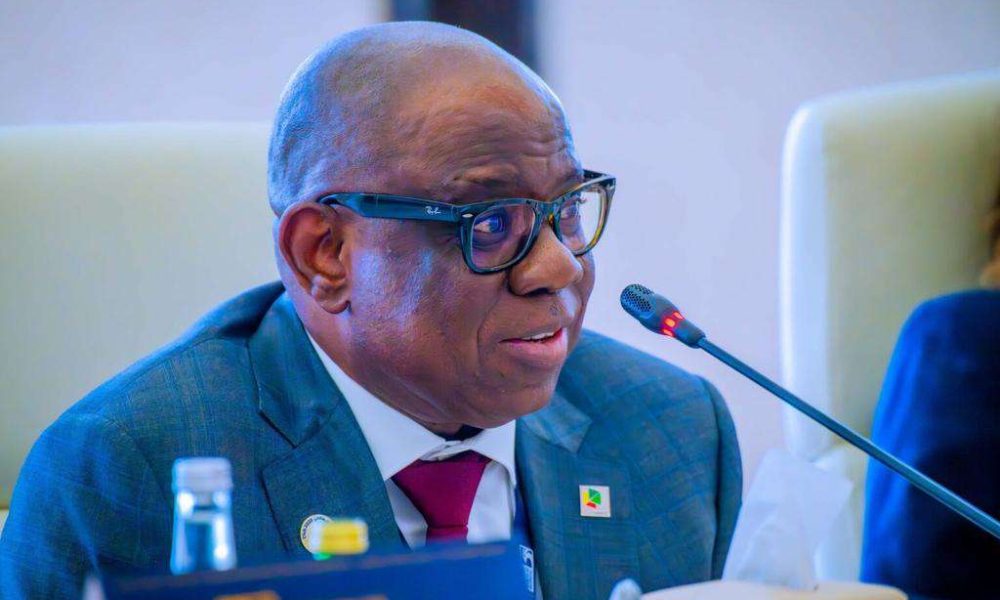
Nigeria’s national oil company, Nigerian National Petroleum Company Limited (NNPCL), is facing intensifying financial pressure as mounting inter-company debts threaten to undermine its transition into a commercially driven enterprise, despite posting record profits in 2024.
Findings from NNPC’s 2024 audited financial statements reveal that outstanding obligations owed to the parent company by its subsidiaries, joint ventures and related entities surged by 70.4 per cent to N30.30 trillion, up from N17.78 trillion in 2023.
The N12.52 trillion year-on-year increase has raised fresh concerns among analysts about liquidity management, internal financial discipline and the long-term sustainability of the restructured oil firm.
An analysis of the audited accounts shows that several of NNPC’s core operating subsidiaries—particularly its refineries, trading arms and gas infrastructure companies—account for the bulk of the ballooning inter-company receivables.
Of the company’s 32 subsidiaries, only eight were debt-free as of December 31, 2024, leaving the majority operating with varying degrees of financial dependence on the parent company.
This development comes at a delicate moment for NNPC, which is still contending with public scrutiny over legacy debts to the Federation, while advancing plans to divest non-core assets and sell stakes in selected oil and gas infrastructure as part of its post–Petroleum Industry Act (PIA) transformation.
Announcing the company’s 2024 results, Group Chief Executive Officer, Bashir Bayo Ojulari, disclosed that NNPC recorded a Profit After Tax of N5.4 trillion on revenue of N45.1 trillion, representing increases of 64 per cent and 88 per cent respectively over 2023.
While these headline figures underscore improved commercial performance, analysts warn that the swelling inter-company debt burden could weaken the company’s balance sheet if left unresolved.
A breakdown of the figures shows that the Port Harcourt Refining Company Limited topped the list of indebted subsidiaries, owing N4.22 trillion in 2024, up from N2.00 trillion a year earlier.
The Kaduna Refining and Petrochemical Company Limited followed with N2.39 trillion, rising from N1.36 trillion, while the Warri Refining and Petrochemical Company Limited owed N2.06 trillion, compared to N1.17 trillion in 2023.
These increases reflect years of rehabilitation spending, prolonged operational downtime and continued reliance on financial support from the parent company, keeping the refineries largely unviable and deepening NNPC’s internal debt exposure.
READ ALSO: NNPCL cuts petrol price to N815 per litre, deepens competition in downstream market
NNPC’s trading operations were the single largest contributor, with NNPC Trading SA owing N19.15 trillion in 2024—more than double the N8.57 trillion recorded the previous year.
Other notable receivables included N847.98 billion from NNPC Gas Infrastructure Company Limited, N466.74 billion from the Nigerian Pipelines and Storage Company Limited, and N179.33 billion linked to the Maiduguri Emergency Power Plant.
Smaller but significant balances were also recorded across several subsidiaries involved in shipping, power, gas marketing, engineering and property management, reinforcing concerns that internal debt has become systemic across the NNPC group.
In total, amounts owed by related parties climbed to N30.30 trillion in 2024, underscoring deepening liquidity pressures within the group structure.
Conversely, NNPC’s obligations to its subsidiaries and related entities also expanded sharply, rising by 44.7 per cent to N20.51 trillion in 2024 from N14.17 trillion in 2023. The bulk of this exposure was to NNPC Trading Limited, which was owed N16.36 trillion as of December 2024, up from N6.70 trillion a year earlier.
NNPC Exploration and Production Limited was owed N4.02 trillion, slightly down from N4.85 trillion in 2023, while smaller balances were due to NNPC Retail Limited, NNPC Gas Infrastructure Company Limited, and other affiliates.
Analysts say the growing web of receivables and payables reflects unresolved financial complexities arising from NNPC’s shift from a state corporation to a limited liability company under the PIA, with legacy practices still weighing on the new structure.
Commenting on the figures, petroleum economist Prof. Wumi Iledare described the N30.3 trillion inter-company debt as a governance challenge rather than a sign of insolvency.
“The audited report showing N30.3 trillion in debts between NNPC and its subsidiaries should worry us, not because NNPC is bankrupt, but because it exposes a deep structural problem,” Iledare said.
“Most of this debt is NNPC owing itself, which happens when subsidiaries continue operating without paying for crude, products or services, while losses are quietly carried forward.”
READ ALSO: Tinubu approves $1.42bn debt write-off for NNPC, clears legacy obligations to federation account
He warned that the 70 per cent increase within a single year is a red flag. “Inefficiencies are growing faster than reforms. Only eight out of 32 subsidiaries being debt-free tells us this is weak commercial discipline, not bad luck,” he added.
According to Iledare, internal debts still have real economic consequences. “Cash that should go into maintenance, investments and growth is tied down. Profitable units end up subsidising weak ones, accountability disappears and performance suffers,” he said, urging NNPC to enforce strict settlement timelines, restructure or merge non-viable subsidiaries and hold CEOs accountable for cash flow and profitability.
“This is a governance test. If tolerated, it will recreate the old NNPC problems under a new name. If confronted honestly, it could become the turning point toward a truly profitable, PIA-compliant NNPC,” he concluded.
Also reacting, Chief Executive Officer of Petroleumprice.ng, Jeremiah Olatide, described the surge in inter-company debt as “alarming” and indicative of financial recklessness.
“A 70 per cent increase from 2023 is troubling, especially when 25 out of 33 subsidiaries are in debt,” Olatide said. He noted that without the Federal Government’s intervention to cancel $1.42 billion in legacy debts, NNPC’s financial strain would have been worse.
However, he warned that recurring debt cycles must be urgently addressed. “Proper debt management, restructuring, regular audits and transparent reporting are critical if NNPC is to remain sustainable and avoid recycling the same debts year after year,” he added.
Compounding concerns, NNPC’s borrowings more than doubled in 2024, rising to N122.76 billion from N55.7 billion in 2023, driven by new loan arrangements and accrued interest tied largely to strategic projects such as the Gwagwalada Independent Power Project.
The audited accounts show that N70.56 billion of the loans were classified as current borrowings, with N52.20 billion as non-current, reflecting repayment obligations extending beyond 12 months.

You may like
Trending
 Energy7 days ago
Nigeria leads Africa in refining as Dangote exports 456,000 tonnes of fuel

 Crime6 days ago
Delta Police Arrest Over 270 Suspects in Warri, Ughelli Raids as Activists Accuse Officers of Rights Abuses

 Football7 days ago
Italy lead World Cup playoff team valuations at €839m as DR Congo stand out

 Business7 days ago
Air Peace announces resumption of direct Lagos–Barbados flights from May 2026

 Business7 days ago
NCC launches TIRMS platform to strengthen digital security, combat mobile fraud

 Crime6 days ago
Tragedy of Benue’s Forced Relocation, Armed Attacks Clear Communities
 Football5 days ago
Tuchel names Maguire as fifth-choice centre-back
 Business7 days ago
CBN: Banking sector strengthened as 32 Banks complete recapitalization