Former President Olusegun Obasanjo has identified the financing and arming of proxy forces by external actors as one of the “greatest obstacles” to sustainable peace on the African continent.
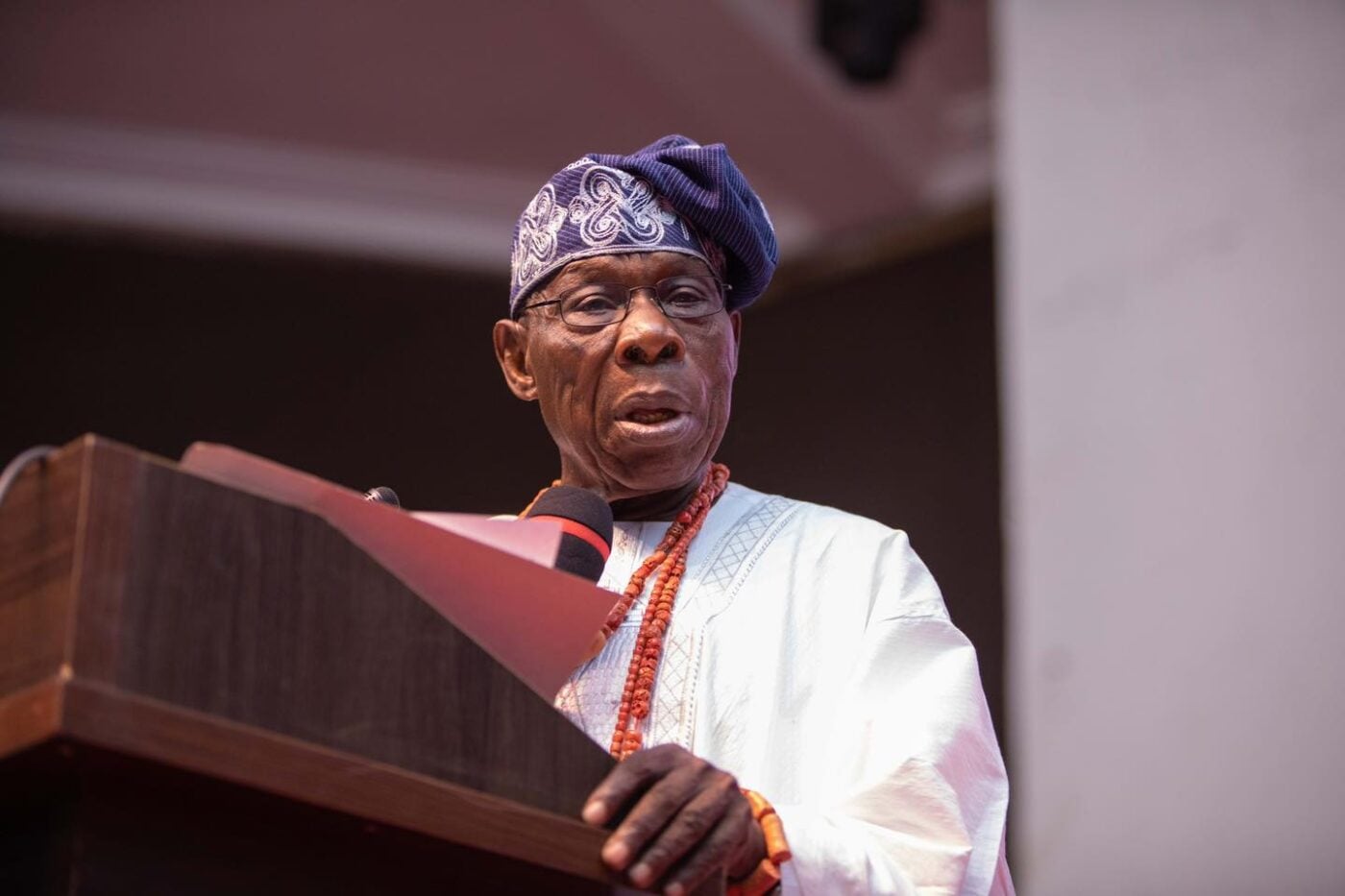
Obasanjo made the remarks on Thursday while addressing the third Mashariki Cooperation Conference in Diani, Kwale County, Kenya. The event focused on “Emerging Geopolitical Dynamics and Africa’s Security Architecture,” gathering policymakers, regional security experts, and diplomats.
Drawing on over four decades of experience in African security and conflict resolution, Obasanjo emphasized that military intervention in regional conflicts, when not accompanied by a credible political process, often serves only to pause fighting temporarily—or, in the worst cases, prolong it.
The former president cited recent coups in the Sahel region, stressing that African institutions must hold leaders accountable when they use rhetoric of anti-colonialism or national sovereignty to justify policies that harm citizens’ livelihoods and rights.
While acknowledging the legitimacy of grievances that sometimes fuel support for military takeovers, Obasanjo noted that military regimes have consistently failed to deliver lasting development or genuine security across Africa.
Obasanjo stressed the critical role of intelligence in preventing conflicts, noting that warning signs are often visible long before violence erupts.
READ ALSO: Finally, Buhari begins mother of all probes; why Obasanjo tops list
“In nearly every conflict I have helped to mediate, the warning signs were visible months or years before the first shot was fired,” he said. “Ethnic tensions were being deliberately inflamed. Electoral processes were manipulated. Youth were recruited into militias. Economic marginalisation was deepening. Regional neighbours were beginning to take sides. The information existed. What was missing was the institutional will to act on it.”
He urged African intelligence services to focus systematically on early warning and early action, linking intelligence findings to decision-makers capable of taking timely measures. Obasanjo also called for stronger resourcing, staffing, and integration of the African Union’s continental early warning system.
Highlighting the role of external actors in destabilizing African countries, Obasanjo pointed to several regional conflicts:
In the Democratic Republic of Congo, he noted documented Rwandan and Ugandan support for armed groups over many years.
In Sudan, he said foreign actors provided material and political backing to parties with little incentive to negotiate peace.
In Libya, since the fall of Muammar Gaddafi in 2011, a mix of states—including the UAE, Turkey, Egypt, Russia, and some European governments—have supplied weapons and fighters while publicly claiming to pursue conflict resolution.
Obasanjo described this pattern as “breathtaking hypocrisy” and called on African intelligence agencies to map these interventions and report findings to the African Union and the UN Security Council, highlighting their broader significance for continental peace.
“Financing and arming of proxy forces by external actors is one of the greatest obstacles to durable peace in Africa,” he said. “African intelligence services that can accurately map these interventions perform a service not only to the countries directly concerned but to the entire project of African peace.”


 Business1 week ago
 Latest6 days ago
 Business1 week ago
 Football5 days ago
 Health1 week ago
 Business5 days ago
 Football1 week ago
 Latest1 week ago