
Comments and Issues
Osimhen vs Lookman feud

Published
3 months agoon
By
Matthew Ma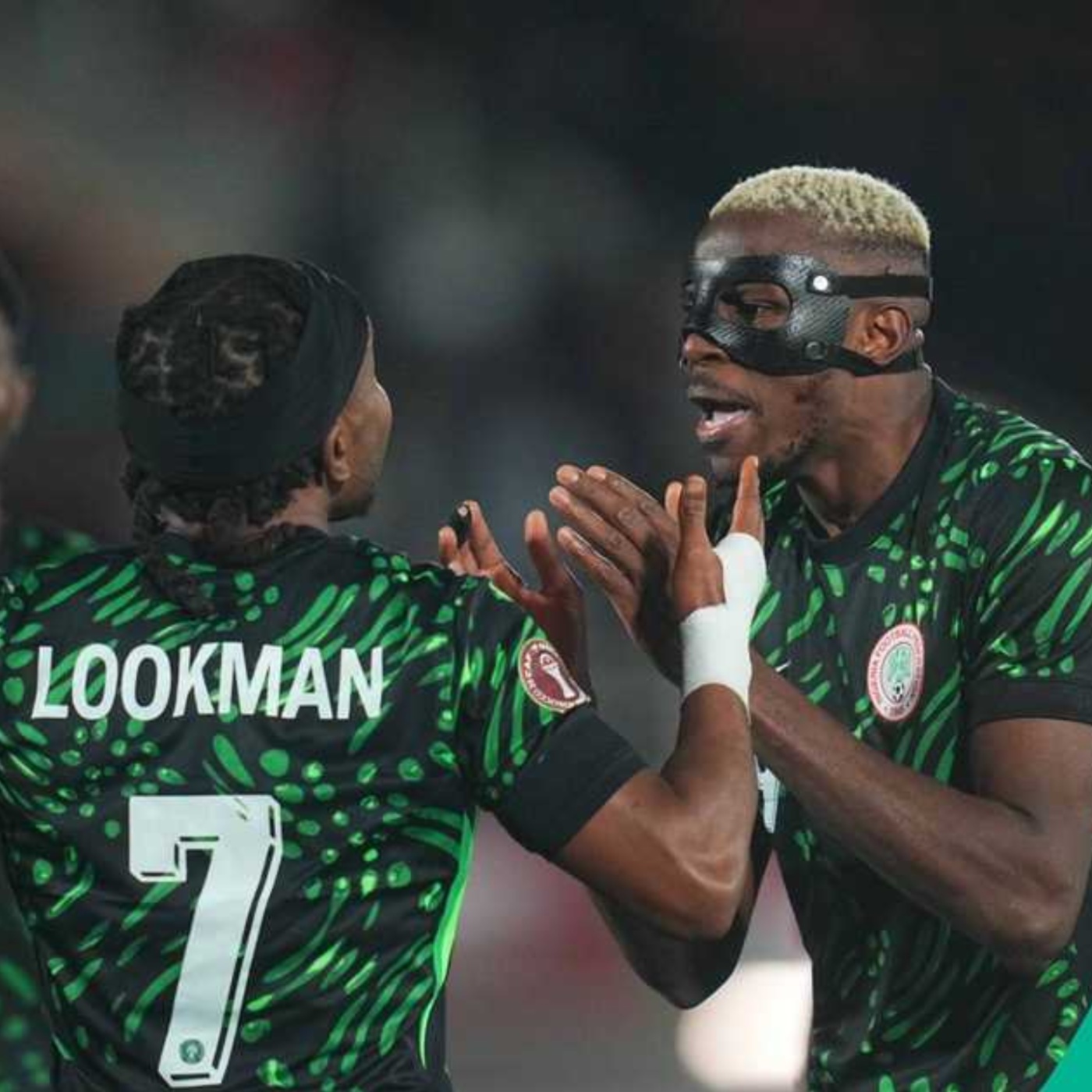
“At this crucial moment in the Super Eagles’ journey, what is truly needed is a sense of institutional unity that prioritizes collective good over individual loyalty. The narrative framing the current tensions as “Team Osimhen versus Team Lookman” is not only misleading but also harmful to the team. Both Victor Osimhen and Ademola Lookman are invaluable players who contribute uniquely to Nigerian football; they should not be seen as opposing figures within the national squad.”
Football, in its essence, is a profoundly emotional sport that stirs intense feelings in both players and fans. The passion that athletes bring to the field is a driving force behind their performance, often distinguishing truly exceptional players from their merely competent peers. In a high-stakes environment, especially during a prestigious tournament like the Africa Cup of Nations (AFCON), qualities such as discipline and teamwork become essential. Consider the on-field encounter between Victor Osimhen and Ademola Lookman during Nigeria’s AFCON match against Mozambique. Rather than viewing this incident as a moment for criticism or disapproval, it invites us to reflect on the complexities of emotions that surface in competitive situations. The question is: What was the source of the dispute?
During Nigeria’s 4–0 victory over Mozambique in the Round of 16 at the Africa Cup of Nations (AFCON), a noticeable on-field disagreement arose between Victor Osimhen and Ademola Lookman in the second half. In the 63rd minute, with Nigeria enjoying a comfortable lead, Osimhen seemed to confront Lookman over a play where he anticipated a pass but did not receive it. Osimhen appeared visibly frustrated and, in the heat of the moment, even pushed captain Wilfred Ndidi aside to express his dissatisfaction. This confrontation was captured on video and circulated widely, garnering significant attention despite Nigeria’s dominant performance. Shortly after the incident, Osimhen was substituted by coach Eric Chelle, reportedly at Osimhen’s own request. After the game, Ademola Lookman downplayed the incident, highlighting the importance of unity and respect for Osimhen’s role as a key player. He insisted that such moments should not overshadow the team’s spirit or the overall result. Coach Eric Chelle described the situation as an internal team matter to be addressed privately within the squad rather than in the public eye.
Although both players and the coaching staff have emphasized that this incident will not affect team unity as they move forward in the tournament, commentary surrounding the confrontation varied widely. Some criticized Osimhen for showing frustration, while others noted that this is a recurring issue among Nigerian players, who often come across as selfish with the ball. I have a deep understanding of Nigerians, but there are times when we take things too far. Some journalists are always on the lookout for something to spark discussions, and when they find it, they tend to exaggerate the situation. Even individuals who have never played football in their lives often analyze events more critically than they actually occurred. While I do not condemn either Osimhen or Lookman, I would like to offer my balanced perspective on the matter.
First, disagreements among elite players are not uncommon, as competitive spirits can often lead to differing opinions and conflicts on the field. However, the specific nature of the exchange between Osimhen and Lookman, along with the timing of their disagreement, raised significant concerns. In a high-stakes tournament where the difference between victory and defeat can be exceedingly narrow, maintaining a strong psychological balance within the team is essential. Public displays of discord, such as the one witnessed between these two players, can disrupt the team’s collective focus and cohesion, which are vital for success in such competitive environments.
Second, Victor Osimhen’s unwavering competitiveness is highly regarded. His insatiable drive for excellence and refusal to accept mediocrity have propelled him to world-class status. On the other hand, Ademola Lookman has consistently proven himself, demonstrating discipline and tactical intelligence whenever called upon. Both players are invaluable assets to Nigeria, and the team cannot afford any division between them. However, when personal frustrations lead to visible confrontations, the team risks projecting a sense of disunity, which opponents can exploit for psychological advantage.
Third, what is even more concerning is the image that such moments convey. For three consecutive World Cups, the Super Eagles have failed to qualify, mainly due to a lack of team commitment, ineffective leadership, and insufficient emotional resilience during pivotal stages of the competition. These issues have caused us to struggle against smaller teams that we could have easily defeated. Today, despite having quality players, Nigeria finds itself unable to qualify for the World Cup. If the recent matter between Osimhen and Lookman remains unaddressed, the incident will further entrench a long-standing narrative. Nigeria’s most significant obstacle is not the abundance of raw talent among its players, but rather persistent issues related to temperament and emotional stability. This notion suggests that, despite having capable athletes, the ability to harness that talent and perform as a unified, emotionally balanced team is where the actual difficulties lie.
That said, it would be unfair to discuss the Osimhen-Lookman issue from only one perspective without considering the opposing viewpoint. The criticism that Nigerian players tend to be selfish in their ball distribution during major tournaments is a common refrain. This behavior usually stems from individual greed, as many Nigerian players sometimes hold onto the ball rather than pass to Osimhen, who may be in a more advantageous position to score. This was evident in matches against both the DRC and Rwanda. In the game against Mozambique, for instance, 21 shots were taken. Out of the 21 shots, 9 were on target, while 12 were off target. We cannot afford to squander opportunities like this against teams such as Egypt, Algeria, or Morocco. Our upcoming AFCON match is against Algeria. The coach needs to address this issue with Lookman and others about their ball-wastage; otherwise, we may not be so fortunate in the future.
Secondly, each member of the Nigerian team possesses a strong ambition to score and enhance their personal reputation on the international stage. This intense desire for individual recognition becomes problematic when it undermines the collective foundations of sport. While ambition and personal drive are essential for elite performance, excessive focus on individual acclaim introduces tactical, psychological, and cultural distortions that ultimately weaken teams. In fact, Nigerian players become overly focused on their personal achievements, which often disrupts the collaborative spirit necessary for the team’s overall success. When the emphasis shifts from collective effort to individual glory, it weakens the team and, ultimately, its overall performance. Without well-practiced automatisms—such as coordinated runs, passing triangles, and structured opportunities for goal creation—Nigeria would consistently miss out on qualifying for major tournaments. Therefore, if these players could channel their competitive drive into a more unified approach, the team’s potential for success could increase significantly.
Third, the Africa Cup of Nations (AFCON) and similar tournaments tend to reward moments of brilliance from individual players. The cultural fabric of African football has long celebrated individual flair, emphasizing creativity and personal expression on the pitch. This celebration of individual talent instills in players the belief that their ability to execute decisive solo actions—think stunning dribbles, powerful strikes, or dazzling displays of skill—holds more value than the collective discipline of maintaining smooth ball circulation and teamwork. As a result, this mindset has led players in high-stakes situations to prioritize their individual skills over teamwork. In crucial games such as this, when the stakes are higher, this inclination for individual heroics can overshadow the benefits of cohesive play and collaboration with teammates. While such moments can capture fans’ hearts and define matches, they may also detract from the overarching need for teamwork and tactical management, which are vital in competitive tournaments.
Nigerians often look for scapegoats each time there is a problem with our national football team. A pertinent example is the appointment of Finidi George as the Super Eagles’ head coach. When the team underperformed under his leadership, many fans and analysts were quick to place the blame squarely on Osimhen. After the Super Eagles failed to qualify for the World Cup, Osimhen found himself at the center of criticism, accused of lacking commitment to the national team. Even during a relatively minor dispute between Osimhen and Ademola Lookman, the narrative continued to cast Osimhen as at fault. Given Nigeria’s history of scapegoating, it would not be surprising if, upon its elimination from the ongoing tournament, the blame would once again be directed at Osimhen. This repetitive cycle of placing blame on him has become a familiar refrain among fans and commentators, often leading to the sentiment of “Osimhen this” and “Osimhen that.” This prompts the question: Is Osimhen the sole player accountable for the team’s success or failure? The reality is that football is a team sport. Thus, placing the burden of performance on a single individual disregards the contributions and responsibilities of all the players.
I have heard that some fans are calling for the coach to drop Osimhen from the team following the Lookman incident. Really? I am not surprised to hear this from Nigerians, as it seems only in this country do people with such opinions emerge and demand bans, even when they have nothing to offer for Nigeria. I hope that now that we desire his departure, we can approach the remaining AFCON matches with confidence. Let us see how the upcoming games unfold, and I am certain we will hear Nigerians once again blaming Osimhen for not being available when we needed him the most. When it comes to criticism, Nigerians certainly excel. There is not a single person in this country who has not faced criticism from Nigerian journalists. Some profit from it, others depend on it for their livelihoods, and some even flourish because of it. Remove this from the equation, and many might struggle for the rest of their lives. While it is natural to criticize Osimhen, let us avoid escalating a single incident into a full-blown war. Nigerian football is not a war zone like Iraq or Afghanistan.
At this crucial moment in the Super Eagles’ journey, what is truly needed is a sense of institutional unity that prioritizes collective good over individual loyalty. The narrative framing the current tensions as “Team Osimhen versus Team Lookman” is not only misleading but also harmful to the team. Both Victor Osimhen and Ademola Lookman are invaluable players who contribute uniquely to Nigerian football; they should not be seen as opposing figures within the national squad. When the focus shifts to personal rivalries and individual differences, it undermines the very essence of what it means to represent Nigeria on the international stage. Thus, it is crucial to remember that wearing the Super Eagles jersey symbolizes much more than individual talent or recent achievements. The jersey embodies the hopes and aspirations of a nation, making it imperative that personal interests take a back seat to national unity. This moment calls for solidarity and collaboration among all players, coaches, and stakeholders in Nigerian football. Now is not the time for division; instead, it is a moment to unite and choose Nigeria above all else.
The disagreement between Victor Osimhen and Ademola Lookman offers several valuable lessons for professional sports, leadership, and team dynamics. First, elite teams thrive when individual aspirations are subordinated to collective goals. When high-achieving individuals allow personal grievances, public criticism, or ego to dictate their decisions, the team’s overall performance and cohesion suffer. Second, disagreements are an inevitable part of high-pressure environments. The real issue arises when these conflicts enter the public sphere. Once disputes become public—whether through interviews, social media, or indirect remarks—positions become entrenched, reputations are damaged, and the potential for resolution diminishes. Third, player feuds often signal deeper governance issues. Effective leadership, whether from coaches, team captains, or federation officials, must establish clear behavioral standards, conflict-resolution protocols, and accountability measures. When authority is ambiguous or inconsistently applied, conflicts are destined to escalate. Regardless of whether the Osimhen–Lookman situation is fleeting or has lasting consequences, the overarching lesson is evident: high-performance environments require a level of maturity that matches the caliber of talent. In settings where discipline, leadership, and communication practices are lacking, even exceptional abilities cannot fill the gaps.
Rev. Ma, S. J., is a Jesuit priest and a public policy analyst. He currently writes from Abuja, Nigeria.

You may like
Trending

 Business1 week ago
Nigeria braces for cost surge amid 2026 inflation projections
 Latest6 days ago
ADC accuses INEC of misinterpreting court order, demands chairman’s removal amidst growing leadership crisis

 Business1 week ago
Naira slips to N1,387/$ in March amid persistent FX market turmoil
 Football5 days ago
Manchester City storm into FA cup semi-finals with 4-0 rout of Liverpool

 Health1 week ago
Emails expose concerns within CDC, FDA over COVID-19 vaccine data mining system
 Business5 days ago
Soaring fuel prices worsen economic hardship for Nigerians
 Football1 week ago
Gravina Resigns as Italy FA President After World Cup Failure
 Latest1 week ago
Political storm in ADC as INEC freezes party status, delists top leaders