
Latest
PANDEF rallies in Lagos, pushes for unity, state police, self-driven development in Niger Delta

By Elizabeth Nta Adejumo
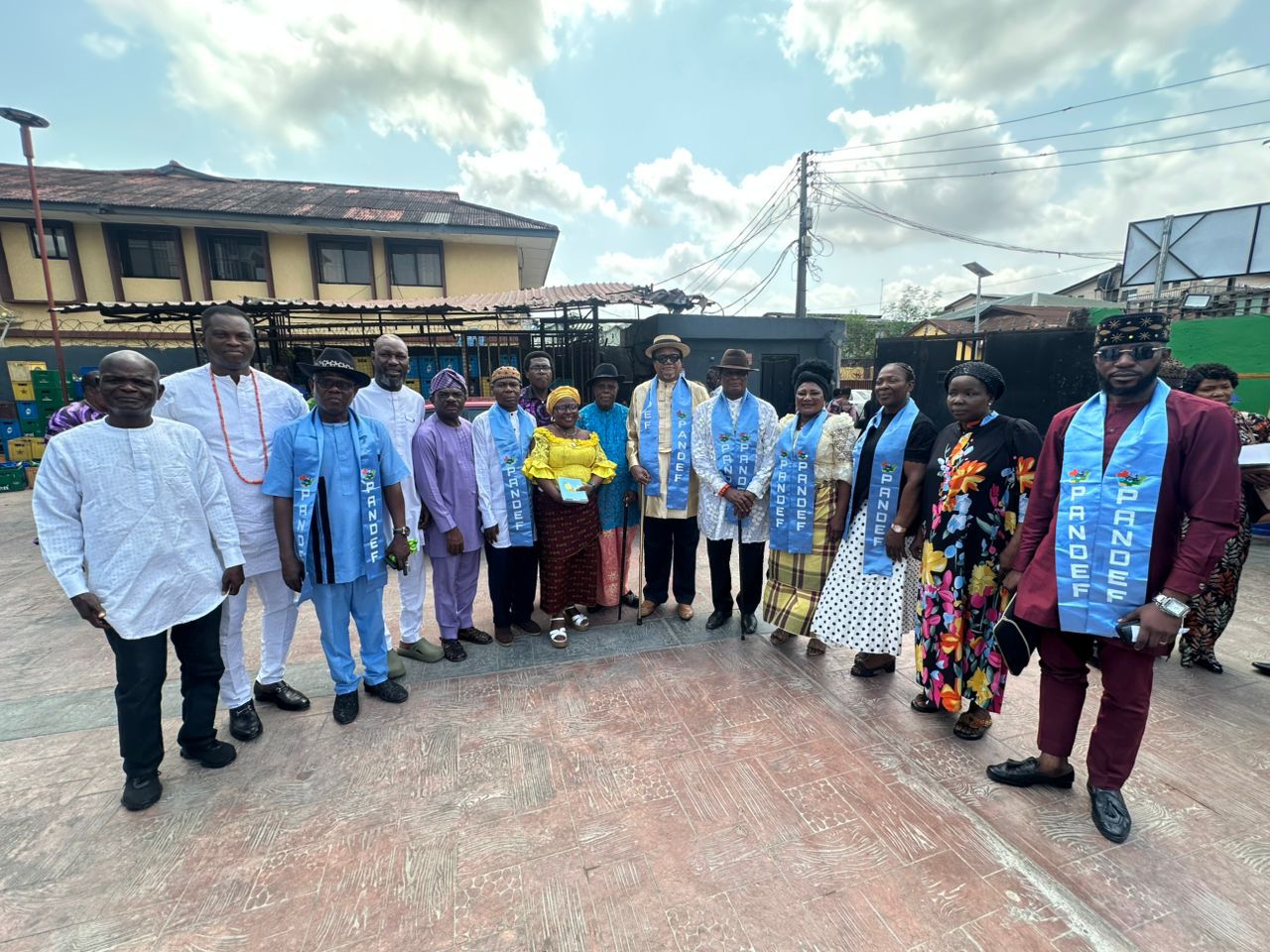
Members of the Pan Niger Delta Forum (PANDEF) convened in Lagos for a landmark “Meet and Greet” aimed at strengthening regional unity, deepening advocacy, and reinforcing the group’s role as a collective voice for the Niger Delta.
The gathering brought together stakeholders, executives, and members from across the oil-rich region, in what leaders described as a renewed push to consolidate purpose and reposition the forum for more impactful engagement on socio-economic and political issues.
Speaking in an exclusive interview with Nationaldailyng.com, the Chairman of PANDEF Lagos Chapter, Hope Eghagha, said the organisation was established to confront long-standing challenges in the Niger Delta, particularly those that gained prominence in the 1990s.
He described PANDEF as a pressure group committed to peaceful advocacy, championing the rights of Niger Delta communities while drawing national attention to environmental degradation and underdevelopment.
“The Niger Delta is like the goose that lays the golden eggs, yet it has little to show for it,” Eghagha said, stressing the forum’s role in pushing for equitable development.
Unity, Self-Reliance and Development Focus
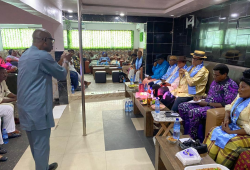
Eghagha noted that the Lagos meeting marked a significant milestone as the chapter’s first major Meet and Greet, designed to foster cohesion among members across different states.
Deliberations at the event emphasised the need for stronger regional collaboration and a shift toward self-driven development. Speakers urged leaders in the Niger Delta to look inward and maximise local resources, rather than relying solely on federal allocations.
Drawing comparisons with Lagos State’s infrastructure strides, particularly in deep seaport development, participants called for similar large-scale investments in the Niger Delta. Despite significant revenues accruing from the region, contributors argued that it still lacks landmark projects that reflect its economic importance.
Historical references were also made to the South-West, where cocoa wealth funded enduring infrastructure such as Cocoa House in Ibadan—contrasting it with the absence of comparable legacy projects in the Niger Delta.
Representation Gaps and Youth Opportunities
Participants raised concerns over limited access to opportunities for Niger Delta indigenes, especially those living outside the region. Issues of employment and education were highlighted, with claims that qualified individuals are sometimes overlooked.
Speakers called for deliberate policies to prioritise Niger Delta youths and ensure they are not disadvantaged in competitive spaces.
A recurring concern was the lack of awareness surrounding empowerment programmes and development initiatives. Attendees noted that many opportunities fail to reach intended beneficiaries due to weak communication and outreach systems.
Discussions also touched on population dynamics and representation, suggesting that demographic strength could influence political and developmental outcomes.
A light-hearted moment emerged when Eghagha jokingly questioned how population growth could be achieved, prompting laughter among participants, though the underlying message of unity and collective strength remained clear.
Leadership Expansion and Organisational Strengthening
The event also featured the election of new executives to strengthen the Lagos chapter’s leadership structure. The expanded executive team, drawn from various Niger Delta states, is expected to enhance inclusiveness and coordination.
Under Eghagha’s leadership, PANDEF reaffirmed its commitment to unified advocacy, positioning itself to more effectively address issues of development, social justice, and regional security.
Security Challenges and Call for State Policing
Security concerns dominated part of the discussions, with questions raised over persistent issues such as oil theft, pipeline vandalism, and political instability.
Data referenced at the event indicated that between 2021 and 2025, the Niger Delta recorded over 3,000 armed clashes and more than 4,500 fatalities. Although there was a reported 15 per cent decline in violent incidents in 2025, the region remains volatile.
Responding to questions on PANDEF’s role in addressing insecurity, Eghagha pointed to constitutional limitations and Nigeria’s centralised security structure.
“Security is in the hands of the federal government. In theory, governors are Chief Security Officers, but in reality, a commander without troops has limited reach,” he said.
He acknowledged that oil theft has significantly affected production levels but noted that recent federal interventions have helped curb the problem.
However, he maintained that lasting solutions lie in structural reforms, particularly the establishment of state policing.
“We are optimistic that the move toward state policing will be the turning point. Empowering regions to manage their own security is key to lasting stability,” he added.
A Region of Wealth amid Persistent Challenges
The Niger Delta remains Nigeria’s economic backbone, housing major oil-producing states such as Akwa Ibom, Bayelsa, Delta, and Rivers.
READ ALSO: $31.5bn oil revenue in 2025: Nigerians ask—where did the money go?
Despite its vast contribution to national revenue, the region continues to grapple with environmental degradation, underdevelopment, and fragile security conditions. Oil spills, gas flaring, and declining livelihoods in farming and fishing communities remain pressing concerns.
Advocacy for Equity and Sustainable Growth
PANDEF leaders reiterated their commitment to transforming the Niger Delta from a resource-dependent zone into a hub of sustainable development. Their advocacy now focuses on human development, policy reform, and economic diversification.
Central to their message is the need to translate the region’s wealth into tangible improvements in infrastructure, security, and environmental restoration.
The Lagos gathering, beyond its social significance, served as a platform for renewed dialogue and strategic direction. As PANDEF continues its advocacy, the emphasis remains on ensuring that the Niger Delta’s economic importance is matched by improved living conditions for its people.
The forum’s message was clear: lasting progress in the Niger Delta will depend not only on national policies but also on regional unity, inclusive leadership, and the empowerment of communities to shape their own future.


 Latest1 week ago
APC plotting to frustrate Peter Obi’s 2027 ambition — Obidient Movement
 Crime1 week ago
Easter tragedy: Gunmen storm churches in Kaduna, kill seven, abduct worshippers

 Latest6 days ago
Third ADC faction surfaces, Norman Obinna claims leadership, dismisses rival groups

 Business1 week ago
Spiro expands electric mobility in Ogun State with 1,000 new bikes
 Latest6 days ago
Atiku affirms loyalty to ADC, expresses confidence in Court ruling on David Mark’s leadership

 Crime1 week ago
Benue Easter horror: 17 dead, several missing, homes razed in Mbalom community attack

 Business1 week ago
Nigeria faces growing debt risks as 2026 borrowing jumps to N29.2trn

 Football6 days ago
Opta SuperComputer backs Arsenal for historic UEFA Champions League triumph