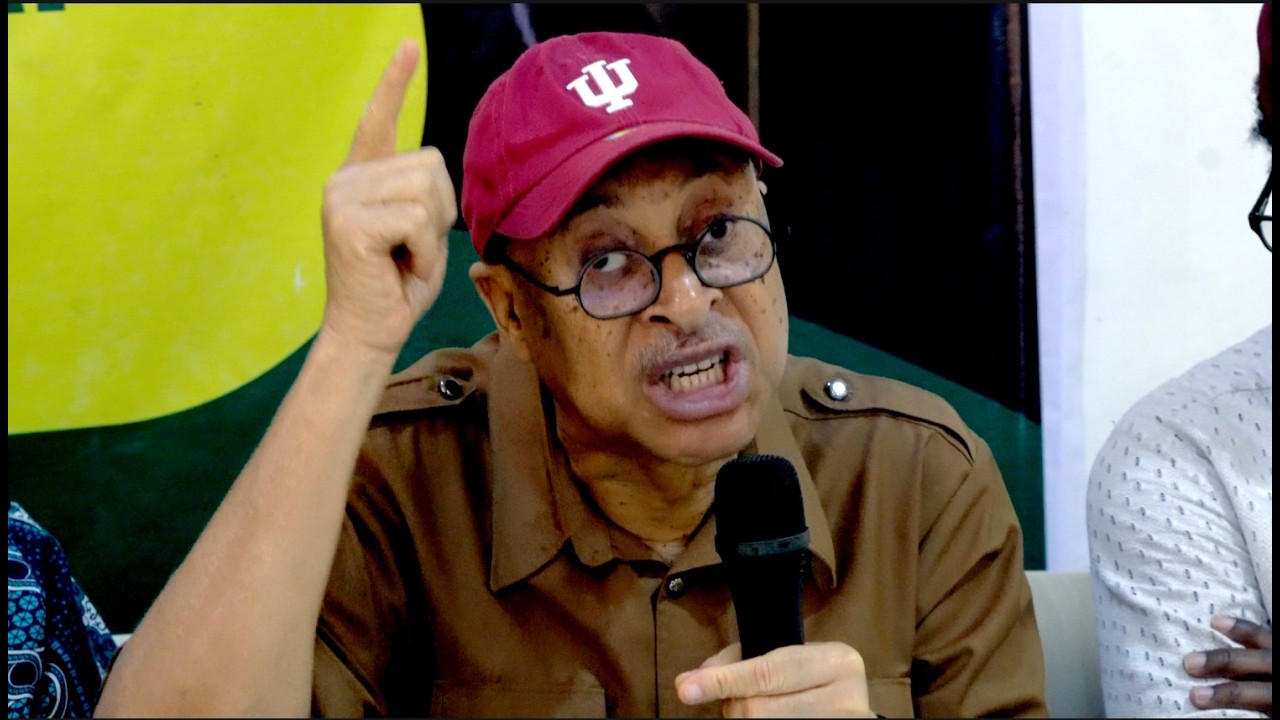
Renowned political economist and politician, Pat Utomi, has strongly criticised the recent amendment to the Electoral Act passed by the Senate and swiftly signed into law by President Bola Tinubu, warning that the move could plunge Nigeria into a “Sudan-style crisis.”
Utomi made his position known on Friday through a post on his verified X (formerly Twitter) account, where he described the development as a “gangster-style assault on the popular will.”
The amendment, recently approved by the National Assembly under the leadership of Senate President Godswill Akpabio and promptly assented to by President Tinubu, has sparked mixed reactions from political stakeholders and civil society organisations.
Critics argue that the revised law does not sufficiently address long-standing public demands for the mandatory real-time electronic transmission of election results — a reform many believe is critical to strengthening electoral transparency and credibility.
Reacting to the development, Utomi said the actions of both the legislative and executive arms of government should not be taken lightly, warning of potentially far-reaching implications for Nigeria’s democratic stability.
READ ALSO: Nigeria faces collapse amid Poverty, insecurity, elite failure–Utomi
“This gangster-style assault on the popular will by the Senate and Executive must not be brushed off. It is treason,” he wrote.
He further alleged that the decision reflects a troubling disregard for democratic norms and accountability, describing it as a display of “lack of character and a sense of shame” by those responsible.
Utomi also drew parallels between Nigeria’s current political trajectory and the crisis in Khartoum, the capital of Sudan, which has been at the centre of prolonged political unrest and armed conflict.
According to him, the amendment could create conditions of instability in major Nigerian cities such as Lagos and Abuja if not urgently addressed.
“Beyond a show of lack of character and a sense of shame, it sets up conditions that may bring Lagos and Abuja to what Khartoum, Sudan is. So, we must stop them,” he stated.
The Electoral Act amendment continues to generate heated debate nationwide, with opposition figures and advocacy groups calling for greater transparency and adherence to democratic principles.
While supporters of the amendment argue that electoral integrity depends on broader institutional and human oversight mechanisms, critics insist that weakening provisions for real-time result transmission undermines public confidence in the electoral process ahead of future polls.
As reactions continue to trail the development, analysts say the controversy underscores deepening tensions over electoral reforms and the future of democratic governance in Nigeria.



 Crime1 week ago
 Football7 days ago
 Football7 days ago
 Business7 days ago

 Football7 days ago
 Business6 days ago
 Football6 days ago